
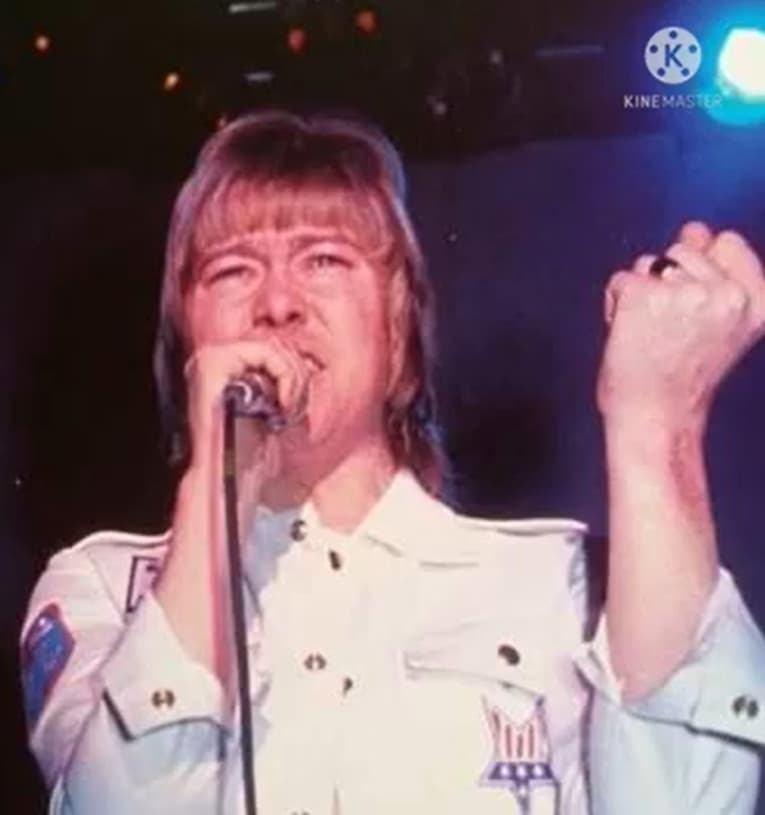
A Voice That Turned Glam Rock’s Glitter Into Human Heartbreak
Before the mythology hardened around The Sweet as glam rock’s riotous architects of noise and decadence, there was the voice of Brian Connolly — wounded, yearning, impossibly human beneath the lacquered thunder of the early 1970s. While the band stormed international charts with towering singles like “Ballroom Blitz,” “Fox on the Run,” “Block Buster!”, and “Love Is Like Oxygen,” Connolly became the emotional axis around which the spectacle revolved. His voice was not merely the engine of the band’s success; it was the contradiction that made The Sweet unforgettable. In an era obsessed with excess, he sang with vulnerability.
To call Connolly one of rock history’s greatest lead vocalists is not hyperbole born from nostalgia. It is a recognition of a singer whose range extended beyond octave and power into something far rarer: emotional immediacy. Glam rock often thrived on masks — glitter, platform boots, theatrical rebellion — yet Connolly sounded startlingly exposed. Listen closely to the aching melodic lift in “Love Is Like Oxygen” or the desperate urgency beneath the chaos of “Ballroom Blitz.” Even amid distorted guitars and thunderous drums, his voice carried traces of loneliness, hunger, and longing. He could snarl like a street fighter one moment and break into near-operatic melancholy the next.
Much of The Sweet’s commercial dominance during the first half of the 1970s rested on that delicate balance. The band scored multiple UK Top 10 hits and became one of the defining acts of the glam era, yet unlike many contemporaries, their records endured because they possessed emotional depth hidden beneath the flamboyance. Connolly’s delivery transformed songs that could have been disposable pop-rock into enduring emotional documents. He did not sing above the music; he bled through it.
What makes Connolly’s legacy especially haunting is the tragic arc that followed. Fame arrived violently and disappeared just as fast. By the late 1970s, internal fractures, relentless touring, and personal struggles began eroding both the band and the singer himself. A severe throat injury after an altercation reportedly damaged the very instrument that had elevated The Sweet beyond novelty. The deterioration of his voice became symbolic of something larger — the brutal cost of rock stardom during an age when artists were celebrated publicly while collapsing privately.
Yet history has a peculiar way of correcting itself. Over time, critics and devoted listeners began hearing past the glitter. Younger generations discovered that behind the visual flamboyance stood a vocalist of extraordinary nuance. Connolly belonged to a lineage of emotionally charged rock singers who understood that power without fragility is forgettable. His phrasing carried the desperation of soul music, the theatricality of hard rock, and the melodic instincts of classic British pop. Few frontmen could command arena-sized chaos while simultaneously sounding heartbreakingly alone.
That contradiction remains the essence of Brian Connolly’s greatness. He represented the human pulse inside glam rock’s neon machinery. Long after fashions faded and trends dissolved into nostalgia, his voice endured because it carried something timeless: the sound of a man trying to hold himself together inside the roar of fame. In the history of rock frontmen, many possessed charisma, many possessed power, but very few possessed the emotional gravity that Brian Connolly brought to every note he sang.
And perhaps that is why his performances still linger decades later — not as relics of a glitter era, but as reminders that even the loudest rock music can carry an unmistakably fragile soul.