
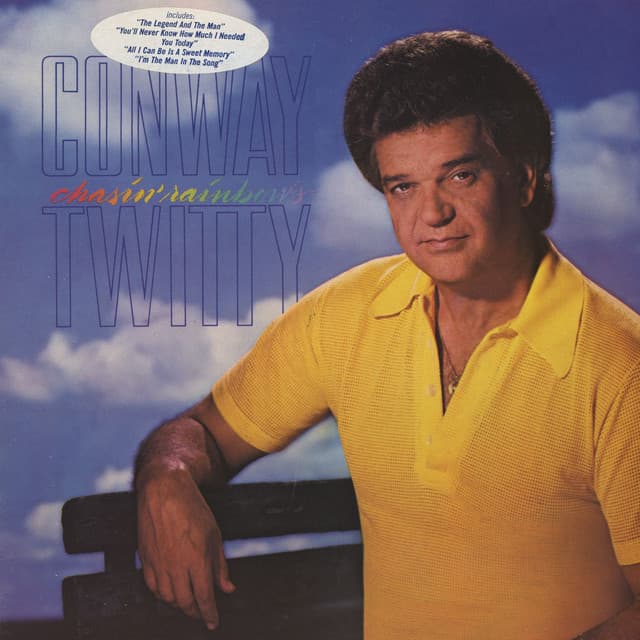
A love that lingers not in presence, but in the quiet permanence of memory
By the mid-1970s, Conway Twitty had firmly established himself as one of country music’s most emotionally precise vocalists, and All I Can Be Is A Sweet Memory stands as a testament to that mastery. Released in 1975 as the title track from the album All I Can Be Is A Sweet Memory, the song climbed to No. 4 on the Billboard Hot Country Singles chart, reinforcing Twitty’s remarkable consistency during one of the most prolific stretches of his career. It is a recording that does not rely on grand gestures, but instead draws its power from restraint, nuance, and a deep understanding of heartbreak’s quieter dimensions.
At its core, All I Can Be Is A Sweet Memory is not a song about love lost in anger or betrayal. It is something far more delicate. The narrative unfolds from the perspective of a man who has already accepted his place in the past. There is no attempt to reclaim what has slipped away. Instead, there is a quiet resignation, an acknowledgment that his role in the life of the one he loves has been reduced to memory. This emotional positioning is what gives the song its enduring weight. It is not about the moment of loss, but about what comes after, when time has settled the dust and only echoes remain.
Conway Twitty’s vocal performance is central to this emotional architecture. His delivery is measured, almost conversational, yet every phrase carries a subtle ache. He avoids melodrama, allowing the listener to feel the depth of the sentiment without being overwhelmed by it. This was a hallmark of Twitty’s artistry during this period. He understood that the most profound expressions of sorrow often come not from raised voices, but from those barely above a whisper.
Musically, the arrangement reflects the Nashville sound’s evolution in the 1970s. Gentle instrumentation, understated steel guitar, and a steady rhythm section create a soft, enveloping backdrop. Nothing distracts from the voice, and nothing needs to. The production serves the song’s emotional intent with precision, reinforcing the sense of reflection rather than confrontation. It feels less like a performance and more like a private confession overheard.
What makes All I Can Be Is A Sweet Memory particularly compelling is its universality. The idea of becoming a memory in someone else’s life is a deeply human experience, one that transcends the specifics of romance. The song speaks to the passage of time, to the inevitability of change, and to the quiet dignity of acceptance. It suggests that even when love cannot endure in the present, it can still retain a kind of grace in remembrance.
Within the broader arc of Conway Twitty’s catalog, this song occupies a space of introspection rather than intensity. It does not seek to dominate the listener’s attention, but rather to linger. Like the memory it describes, it stays softly, persistently, long after the final note fades.