
The Quiet Confession of a Heart That Moves Before It Speaks
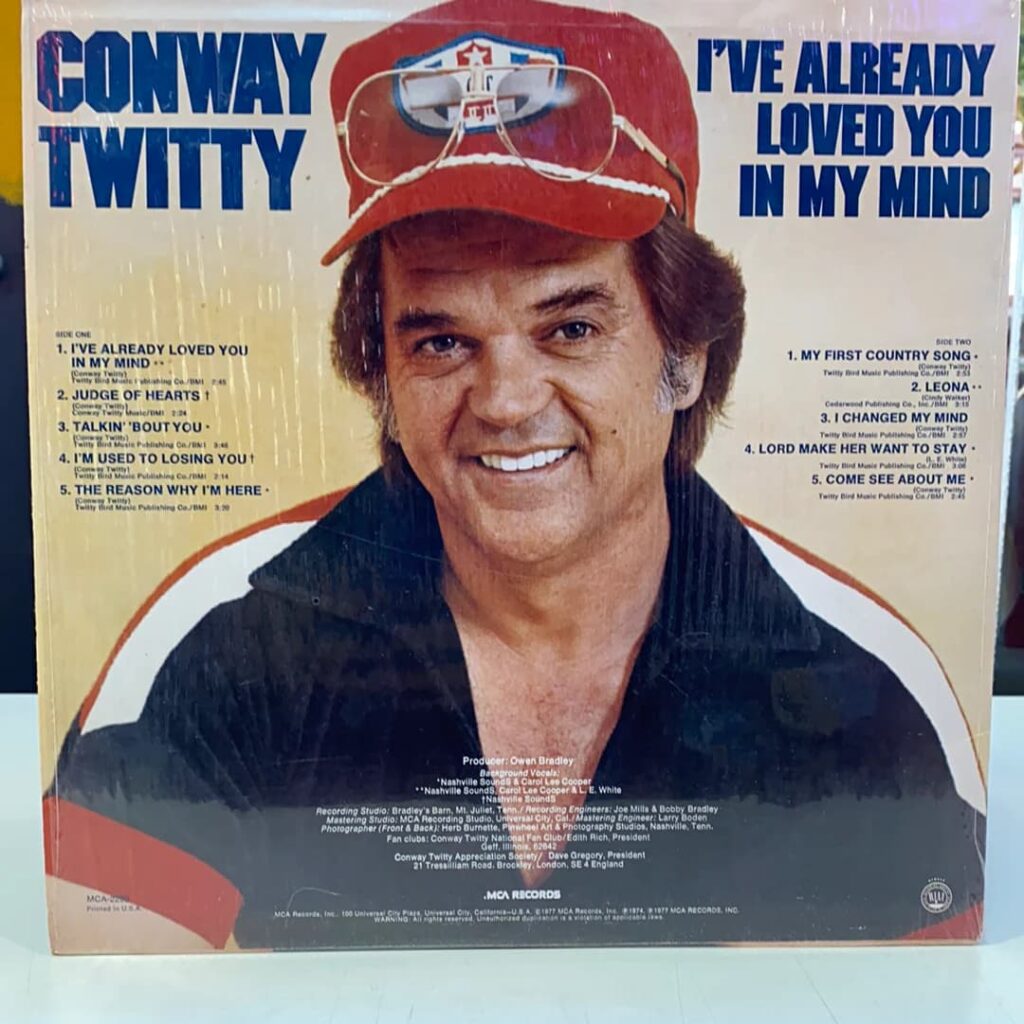
Upon its release in 1977, Conway Twitty‘s I’ve Already Loved You In My Mind swiftly climbed the Billboard Hot Country Singles chart, eventually securing the coveted number one spot and cementing its place among the era’s most poignant country ballads. Featured on the album I’ve Already Loved You In My Mind, this song arrived at a moment when Twitty had already established himself as a master of intimate, emotionally charged storytelling, and it showcased his uncanny ability to inhabit the inner world of longing and desire with both subtlety and authority.
The song’s brilliance lies not in grand declarations of love, but in its delicate portrayal of anticipation and emotional prelude. I’ve Already Loved You In My Mind captures a universal human experience: the private, often unspoken reverence we hold for someone before it is ever reciprocated or even acknowledged. Twitty’s vocal delivery, with its smooth, resonant timbre, conveys a nuanced intimacy. Every note seems to linger in the space between thought and confession, making the listener feel as if they are eavesdropping on the innermost recesses of the narrator’s heart.
Musically, the arrangement exemplifies late-1970s country sophistication, pairing a gentle rhythm with understated guitar flourishes that allow Twitty’s voice to remain the undeniable focal point. The instrumentation functions as a quiet companion, supporting the lyrical narrative without overshadowing it. This restraint reinforces the song’s thematic core: love is as much about silent yearning as it is about overt declaration. Each pause, each careful inflection, draws the listener deeper into the emotional landscape, where desire exists simultaneously as memory and premonition.
Lyrically, the song is an exercise in anticipation and moral contemplation. Twitty’s narrator inhabits the tension between imagination and reality, creating a narrative that is both morally aware and emotionally vulnerable. There is a subtle ethical consciousness here: the love professed exists initially only in thought, yet it carries the full weight of intention and longing. This duality—of thought versus action, feeling versus permission—elevates the song from simple romantic reflection to a meditation on the nature of desire itself.
Over time, I’ve Already Loved You In My Mind has endured not only as a chart-topping hit but as a timeless exemplar of Twitty’s artistry. It stands as a testament to his gift for transforming everyday human emotion into lyrical poetry and musical resonance. Decades later, the song continues to speak to listeners who recognize the quiet, often unspoken power of preemptive love, revealing how Conway Twitty could make the most private of sentiments feel universally understood and profoundly moving.