
A playful country Christmas meditation on yearning family warmth and the small wonders of childhood imagination
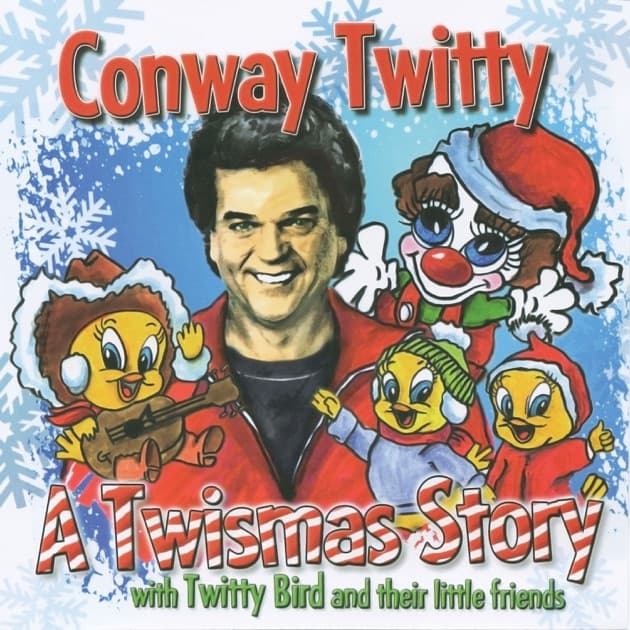
Nine Little Reindeer is a charming seasonal vignette by Conway Twitty that first appeared on his 1983 holiday collection Merry Twismas from Conway Twitty and His Little Friends, a record that gathered traditional yuletide standards and original moments of festive storytelling under one roof. While this track did not register on the major Billboard charts as a single in its own right, its life has been sustained through holiday rotations on country radio and in live performance settings, and it remains an affectionate seasonal favorite among Twitty’s extensive catalog. Merry Twismas from Conway Twitty and His Little Friends encapsulated a moment in Twitty’s career when the venerable artist embraced the Christmas repertoire with both reverence and a measured sense of fun.
To understand Nine Little Reindeer in context one must first situate it within the singular career arc of Conway Twitty, a singer whose journey from 1950s rockabilly to becoming one of country music’s most beloved voices is one of the great sagas of American popular song. Twitty’s record of 56 number one country hits and his effortless ability to convey complex emotions in plainspoken vocal tones made him a defining figure in the genre. By the early 1980s the artist was an elder statesman whose voice carried the lived weight of romantic disappointment, longing, and gentle humor alike.
Nine Little Reindeer is not a heartbreaker in the traditional Twitty sense. Instead it foregrounds a playful narrative rooted in holiday imagery and a nostalgic reflection on childhood. The song’s title conjures instantly the visual of Santa’s famed helpers, a familiar pantheon in Christmas lore. Twitty’s interpretation turns this imagery into a warm country moment, one that evokes family gatherings, the magic of winter nights, and the way that seasonal music can reawaken memories of simpler times. The number does not push against the boundaries of country music’s stylistic conventions, nor does it attempt to reinvent Christmas songwriting. Rather, Twitty uses his seasoned vocal presence to inhabit the story with sincerity and an affectionate nod to tradition.
Lyrically the song moves through the familiar with a wholesome precision. Each of the nine reindeer becomes not only a character in Santa’s retinue but a gentle anchor for the listener’s own associations with holiday ritual. In a Twitty performance the emphasis is rarely on flashy vocal acrobatics; it is instead on the lived emotional core beneath each phrase. In Nine Little Reindeer that core is the recognition of joy shared, the comforting continuity of tradition, and the fleeting, crystalline moments of childhood wonder that return with each return of the Christmas season.
Musically the arrangement stays true to a classic country Christmas palette: acoustic textures, steady rhythms that feel akin to an evening conversation, and melodic lines that allow Twitty’s voice to guide the listener without distraction. This is a song built for front porches and living rooms bathed in lamplight as much as for formal concert halls.
In the broader cultural legacy of Twitty’s work Nine Little Reindeer occupies a quiet but genuine place. It reminds us that even in a catalog dominated by tales of love lost and found, there was room for seasonal joy and the communal pleasantness of shared memory. The song does not attempt to rewrite the Christmas canon, yet in Twitty’s hands it becomes a testament to the power of familiar stories told with heartfelt sincerity, and to the enduring bond between artist and listener in moments that matter most.