
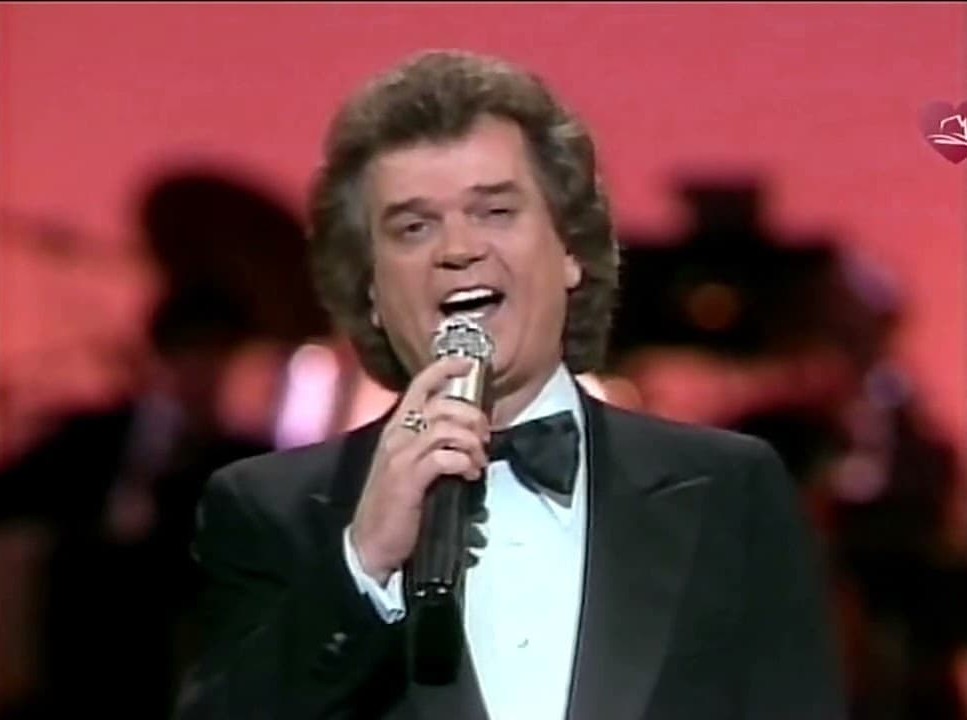
A Whispered Desire Became One of Conway Twitty’s Most Effortless Late-Career Triumphs
When Conway Twitty released “Slow Hand” in 1982 for the album Dream Maker, the song did more than climb the country charts. It became another defining moment in a career built on emotional precision and quiet persuasion. The single reached No. 1 on the Billboard Hot Country Singles chart, reaffirming Twitty’s extraordinary ability to inhabit a song so completely that it no longer sounded performed, but lived. Originally recorded by The Pointer Sisters just a year earlier, “Slow Hand” could have remained tied to its silky R&B origins. Instead, Twitty transformed it into something earthier, lonelier, and unmistakably Southern.
There was always a peculiar magic in the way Conway Twitty approached intimacy in song. He never rushed emotion. He understood that desire, especially in country music, often carried more power when restrained rather than unleashed. That is precisely what makes “Slow Hand” endure decades later. The song does not explode with passion. It lingers in it. Every line unfolds like a confession spoken after midnight, somewhere between exhaustion and longing.
By the early 1980s, Twitty was already a towering figure in country music. He had survived stylistic changes, industry shifts, and changing radio tastes while maintaining one of the most recognizable voices in American music. Yet “Slow Hand” arrived during a fascinating stage of his career. Rather than chasing youthful trends, he leaned further into maturity. His performances from this era carried the weight of experience. He sang not as a man discovering romance, but as one who understood its complications, its patience, and its aching silences.
The brilliance of “Slow Hand” lies in what it refuses to overstate. The lyrics speak of wanting tenderness over recklessness, warmth over performance. In lesser hands, the song might have drifted into cliché. But Conway Twitty specialized in emotional realism. His voice moved with a deliberate calmness, almost conversational, allowing every pause to matter as much as every lyric. That famous baritone never demanded attention. It drew listeners closer instead.
Musically, the arrangement reflects the soft sophistication country music was beginning to embrace in the early 1980s. Gentle electric piano, restrained percussion, and understated steel guitar create an atmosphere thick with late-night vulnerability. Twitty understood the importance of space in a recording. He allowed the melody room to breathe, and in that breathing space, listeners found themselves.
What separates “Slow Hand” from countless romantic country singles of its era is its emotional maturity. The song is not about conquest. It is about comfort. About finding safety in another person after life has worn away illusion. Twitty’s interpretation carried the wisdom of a man who knew that affection often speaks most truthfully in softness rather than spectacle.
Over time, the song became one of the signature recordings of Conway Twitty’s later years, standing beside the great intimate performances that defined his catalog. Even now, decades removed from its release, “Slow Hand” still sounds remarkably unhurried in a world addicted to immediacy. That may be its greatest achievement. Conway Twitty turned patience itself into romance, and in doing so, left behind a recording that continues to feel timeless long after the last note fades.