
Reckoning with love remembered not for its ending, but for how completely it once filled a life
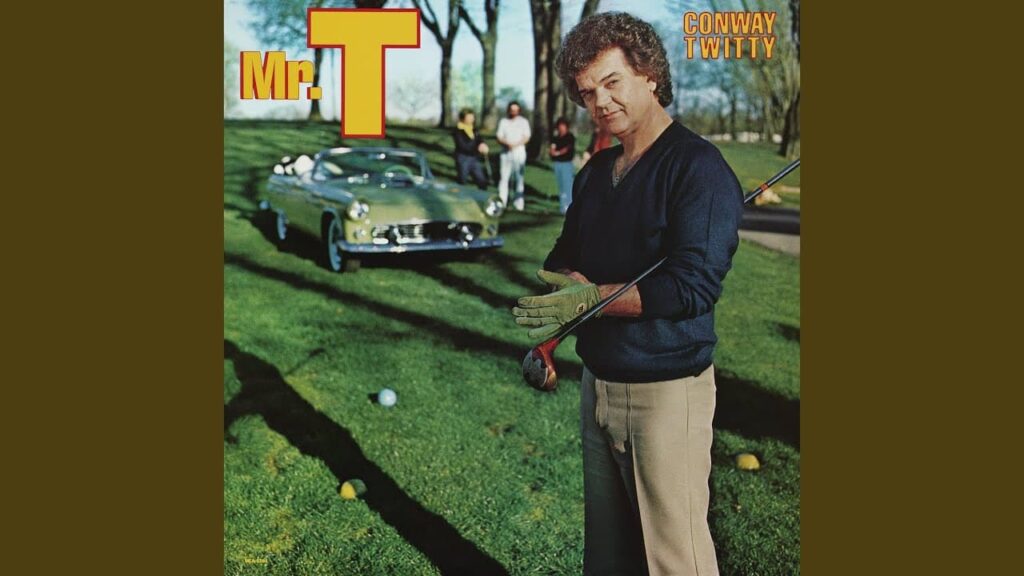
Released in 1972, We Had It All became one of Conway Twitty’s most enduring recordings, rising to the upper reaches of the Billboard Hot Country Singles chart and solidifying its place in his early 1970s canon. The song appeared on the album Conway Twitty Sings Songs of Love, a record that captured Twitty at a moment when his voice had fully settled into its mature authority, warm, weathered, and unafraid of emotional stillness. In a career defined by romantic drama and conversational intimacy, this song stood apart for its restraint, reaching listeners not through spectacle, but through recognition.
We Had It All was written by Donnie Fritts and Troy Seals, two writers deeply attuned to the language of lived experience. Their composition does not build toward revelation or accusation. Instead, it opens with acceptance. The narrator looks back not to argue with the past, but to acknowledge it. The song’s central assertion is disarmingly simple. Love did not fail because it was false. It ended because time moved on. That distinction is crucial, and it is what gives the song its quiet power.
Twitty’s interpretation understands this completely. He sings not as a man pleading or confessing, but as someone standing still long enough to tell the truth. His phrasing lingers on ordinary images. Laughter, borrowed dreams, nights that seemed endless at the time. These are not embellished memories. They are fragments, chosen carefully, because that is how memory works when regret has softened into clarity. The song never asks the listener to take sides. There is no villain here, only two people who once shared something real.
Musically, the arrangement mirrors the lyric’s emotional economy. The production is spare by design, allowing Twitty’s voice to carry the full weight of the narrative. The melody moves gently, almost cautiously, as if aware that too much emphasis would break the spell. This is not a song about heartbreak in the moment. It is about the echo left behind years later, when the pain has faded but the meaning remains.
Within the broader landscape of country music, We Had It All occupies a rare emotional register. Many songs chronicle love lost, but few grant it dignity after the fact. This one does. It refuses bitterness and avoids sentimentality. Instead, it offers gratitude. That perspective resonated deeply with listeners, particularly those who had lived long enough to understand that some relationships are complete even if they do not last forever.
For Conway Twitty, the song became a quiet cornerstone of his catalog. It aligned perfectly with his ability to sound conversational while carrying profound emotional weight. There is no performance trick here, only trust in the material and respect for the listener’s own memories.
Decades later, We Had It All endures because it tells a truth that does not age. Some loves are not meant to be reclaimed or revised. They are meant to be remembered, intact, as proof that for a moment in time, everything important was already there.