
Solitary question posed at twilight, asking who will carry a soul home when the applause has faded
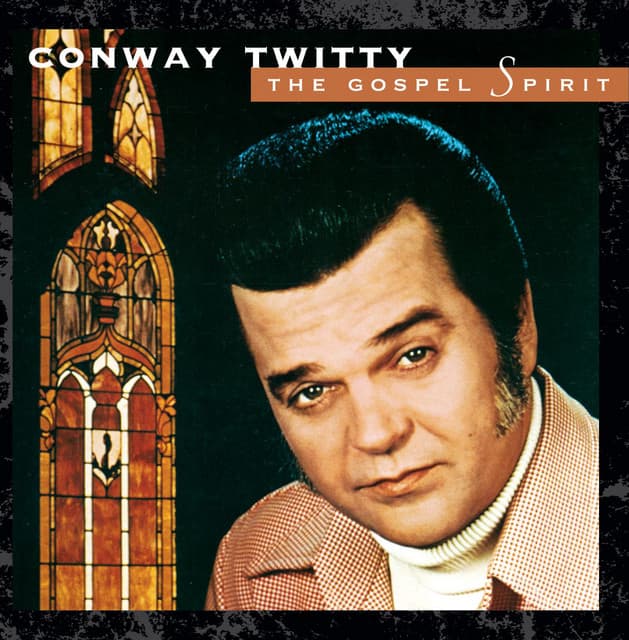
Released during the early 1970s gospel chapter of Conway Twitty’s career, Who Will Pray For Me appears on the album Conway Twitty Sings the Gospel Songs, a record that was not designed for the singles charts but for the quiet, enduring space of personal reckoning. The song was not issued as a commercial single and therefore did not register a formal chart run upon release, yet its absence from the rankings only underscores its purpose. This was not a performance aimed at radio rotation. It was an offering, placed deliberately outside the machinery of hits, delivered by an artist at the height of his secular fame who chose, at least for a moment, to turn inward.
The power of Who Will Pray For Me lies in its restraint. The lyric does not preach, threaten, or console with easy assurances. Instead, it frames salvation as a question, one asked not in panic but in sober awareness. The narrator looks beyond the immediacy of life, beyond success and companionship, and wonders who will remain when the final accounting arrives. It is a theme deeply rooted in traditional gospel, yet Twitty’s interpretation strips it of grandiosity. There is no choir swelling to overwhelm the listener. The arrangement is spare, allowing the words to carry the weight they were always meant to bear.
Vocally, Conway Twitty sings with a measured gravity that differs sharply from his country chart staples. The familiar velvet baritone is still present, but it is tempered, almost humbled. He does not lean on vocal flourishes. Each line is delivered with the careful pacing of someone who understands that the question being asked cannot be rushed. This is a man who has spent years commanding rooms, now acknowledging that applause offers no protection against mortality.
The song’s theological core is deceptively simple. It does not dwell on doctrine or dogma. Instead, it focuses on intercession, the act of being remembered, named, and carried by others when one can no longer speak for oneself. In this way, Who Will Pray For Me functions as both confession and invitation. It asks the listener not only to consider their own end, but also their responsibility to others. Who do we stand for when voices fall silent. Who remembers us when memory itself begins to fail.
Culturally, the song occupies a significant place in Twitty’s legacy. Recorded at a time when his commercial power was unquestioned, it reveals an artist unafraid to step away from expectation. The gospel albums were never about crossover appeal. They were acts of alignment, grounding a larger than life career in something older, quieter, and ultimately more enduring.
Today, Who Will Pray For Me endures not because it demands attention, but because it waits patiently for it. Like a hymn heard late at night through a half open door, it reminds the listener that beneath every public triumph lies a private reckoning. When the lights dim and the records stop spinning, the question remains, as unadorned and unresolved as ever.