
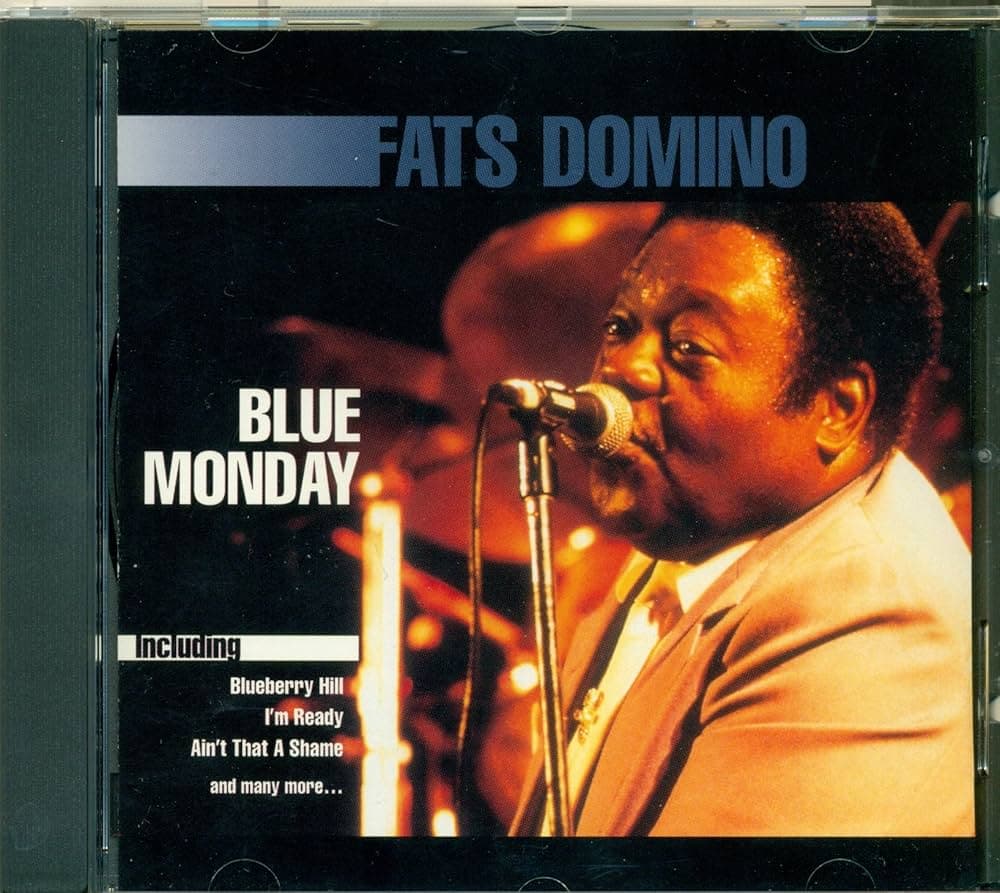
A weary week etched into song becomes a timeless portrait of working class longing and quiet resilience.
In 1956, Fats Domino released Blue Monday, a track that quickly secured its place within the upper ranks of the Billboard R&B Best Sellers, reaching the top five and affirming his stature as one of the era’s most influential voices. Featured on the influential This Is Fats album, the song extended Domino’s reach beyond New Orleans and into the national consciousness. Its success reflected more than chart momentum. It captured a truth many listeners recognized immediately: the fatigue, frustration, and fragile hope that shape the rhythm of everyday life.
The story of Blue Monday begins long before its ascent on the charts. Originally written by Dave Bartholomew and first recorded by Smiley Lewis, the composition did not achieve its full expressive potential until Domino approached it with his signature blend of warmth and melancholy. Domino’s musical partnership with Bartholomew had already defined much of the New Orleans sound during the mid fifties, and Blue Monday exists at the intersection of their shared instincts. The track carries the lilt of New Orleans rhythm and blues, yet within that steady pulse lies a deeply human narrative. Domino’s voice, gentle but weighted, turns each line into a confession of exhaustion that feels almost universally familiar.
Lyrically, Blue Monday maps the emotional geography of the laboring individual. The progression from Monday’s dread to Friday’s relief creates a vivid cycle that mirrors the relentless grind of American working life. The song does not romanticize hardship, nor does it dwell in despair. Instead, it frames the week as a lived reality in which brief moments of joy, like the promise of Saturday night, become essential sources of renewal. This balance between burden and hope gives the song its enduring resonance. Domino’s delivery reinforces that balance. His phrasing feels unhurried, as if he is recounting the week to a trusted friend instead of merely performing a lyric.
Musically, the composition highlights Domino’s mastery of emotional understatement. The rolling piano lines move with a subtle sway, evoking both resignation and persistence. The horns contribute a muted brightness, a reminder that even the bleakest Monday contains the seed of a better day. The entire arrangement rests on a groove that is deceptively simple yet profoundly evocative. It feels like the heartbeat of someone rising before dawn to do it all again.
Across decades, Blue Monday has remained a cultural touchstone because it speaks to the rhythm of real life. Domino’s interpretation gave voice to millions who understood exactly what it meant to push through fatigue with nothing but determination and the promise of the weekend. The song endures not only as a classic of New Orleans R&B but as a testament to the quiet heroism embedded in ordinary days.