
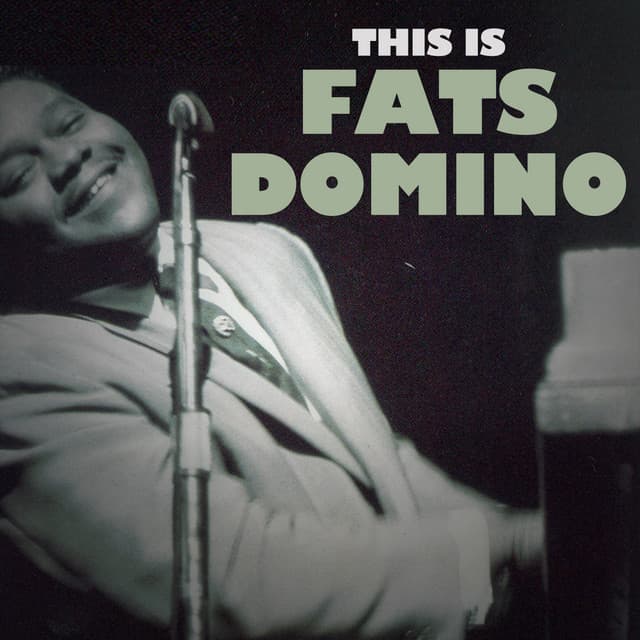
A SIMPLE LIFE, LOVE-STRUNG AND UNPOLISHED, SINGING WITH JOY
When Country Boy first reached the public’s ears in 1960, it served as a modest but telling entry in the catalogue of Fats Domino — a snapshot of innocent devotion that glided into the lower rungs of mainstream charts while quietly echoing his New Orleans R&B roots. According to record-chart archives, the song charted in the UK, peaking at No. 19 during an 11-week run. Meanwhile on the U.S. chart, it appears in some listings among entries in the early 1960s. To many listeners it belonged to the era’s flood of romantic, piano-driven 45s: not a blockbuster hit, but a gentle testament to simplicity, youth, and longing.
Country Boy does not boast the dramatic cultural weight of “Blueberry Hill” or “Ain’t That a Shame,” but it occupies an important place in Fats Domino’s oeuvre: a moment of tenderness amidst his rollicking boogie and rock – and – roll output. The track is credited to Domino and longtime collaborator Dave Bartholomew, rooted in the same musical partnership that shaped much of Domino’s defining style.
At its core, Country Boy offers an uncomplicated narrative — a young man’s confession of love and contentment. The lyrics speak simply, almost child-like: “Have you heard the story of the little country boy? He is always happy and full of joy… All he really cares for is the one he loves and the moon above, stars above, heaven above.” There is no pretense, no swagger. It is a humble soul speaking across the distance of city lights or lonely nights, wanting nothing more than to belong to the one who gives him peace. The “country boy” is neither bruised nor embittered — he is hopeful, wide-eyed, and utterly sincere.
Musically, the track reflects Domino’s signature sound: warm piano chords flowing with restraint, a gentle rhythmic pulse that draws on New Orleans R&B’s subtle swing rather than the rough-hewn urgency of full-throttled rock and roll. The arrangement lends itself to soft swaying rather than dancing — appropriate for a lyric that embraces quiet devotion over showmanship. Throughout his career, Domino excelled at such breezy intimacy, blending his Creole-inflected vocal drawl with understated instrumentation.
To appreciate Country Boy fully, one must position it within the trajectory of Domino’s career. By 1960, he was already a veteran of rock & roll’s birth — a figure who had helped define the transition from rhythm and blues to mainstream pop. He had scored many major hits throughout the 1950s, selling millions of records and bridging racial and cultural divides with his melodic charm and accessible sound.
Yet “Country Boy” reveals a quieter dimension of Domino’s artistry. It is a song that does not demand attention with assertive piano licks or a booming backbeat. Instead, it invites the listener to lean in a little closer, to imagine a simpler life — perhaps a rural homestead under a wide, starry sky — and to feel the earnest, uncomplicated love of someone whose greatest treasure is not fame or applause, but the tender affection of another.
In that sense, the track feels like a secret communion: Domino lowering the volume not because he lacked the power — he had proven that many times over — but because at that moment, the song called not for spectacle, but for sincerity.
Though Country Boy never ascended to monumental status in the history of rock and roll, it remains a subtle gem. It exemplifies what made Fats Domino special not only as a pioneer of rock but as a storyteller — a singer who could pivot effortlessly from chart-busting hits to songs of delicate emotional weight. For devotees who dig beneath the hits, Country Boy stands as a reminder that even in the midst of revolution, there is room for softness, for love, for humanity.
In hearing it today — perhaps played on a crackling vinyl 45, or in digital clarity on a streaming playlist — one experiences that humble sincerity across time. This is Fats Domino not as showman, but as the little country boy who loves simply and deeply.