
A Quiet Promise of Breakout Triumph and Self-Belief
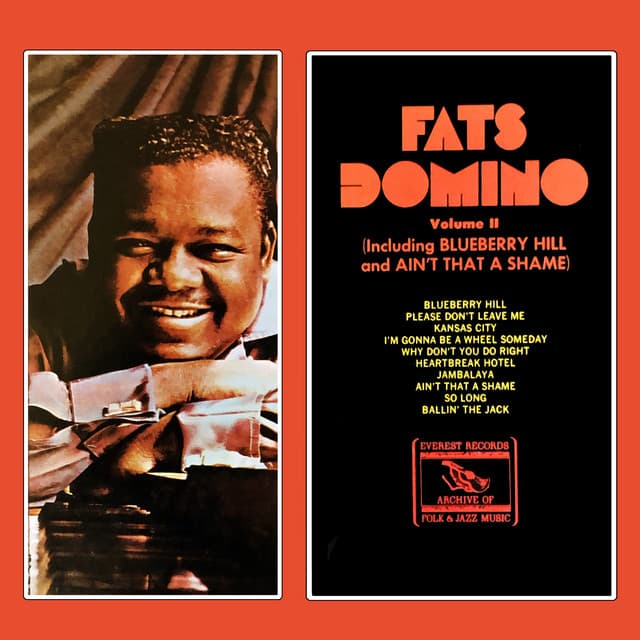
When “I’M GONNA BE A WHEEL SOMEDAY” unfurls its gentle New Orleans shuffle, it carries more than the bounce of piano keys — it carries the quiet promise of transformation, of a man certain he is destined to roll beyond the edges of hardship and anonymity.
In 1959, Fats Domino released the song as the B-side to “I Want to Walk You Home”. As part of the album Let’s Play Fats Domino, the track caught fire in both the pop and R&B charts, peaking at number 17 on the US Billboard Hot 100 and number 22 on the Billboard R&B chart.
From that tidy chart placement springs a deeply human story: a man staking his claim not on grandeur, but on the slow, steady momentum of self-belief.
Long before Fats Domino’s version gave the song its iconic shape, Bobby Mitchell first recorded it in 1957 under the guidance of producer and co-writer Dave Bartholomew. The words themselves came from a Louisiana factory worker, Roy Hayes, whose passing remark to a coworker — a small boast, half in jest — was transmuted into lyric. Hayes handed that spark to Bartholomew, who recognized in it the raw outline of aspiration.
Yet that original version, while locally appreciated, failed to break through nationally. It was Domino’s smooth, global-ready delivery that made the song into something more. He didn’t shout the promise. He didn’t brandish it like a flag. Instead, his voice is warm, confident, easy — that of a man who knows the weight of every note and the value of subtlety.
Musically, the track exemplifies Domino’s art: rhythm that moves like a secondline parade in mid-afternoon New Orleans, piano triplets rolling like wheels turning, subtle saxophones and a restrained backbeat. There is no bombast — just a light, sure groove, the kind that invites you to tap your foot and dream along with him. In that groove lies conviction: the speaker doesn’t demand attention — he simply announces that he’s coming, and when he does, things will be different.
Lyrically the song is spare. It does not promise riches or glory. Instead, it promises movement. “I’m gonna be a wheel someday. I’m gonna be somebody.” That “somebody” isn’t necessarily famous or adored. It might simply mean someone who is no longer waiting in the corners of dance halls, someone alert to the pulse of opportunity, someone ready to ‘roll’ into a better place.
That humble certainty — the idea that destiny does not always roar — is precisely what makes the song timeless. It speaks to the listener who feels stuck, overlooked, under-recognized. It speaks to the heart of anyone who has vowed quietly, sometime between chores and paychecks, that one day they will rise.
In the context of Domino’s career, the song stands as a bridge between old-school rhythm & blues roots and the broader pop-rock sensibility that was sweeping America by the late 1950s. It helped carry the weight of Southern sincerity into mainstream success. By placing quiet ambition over brash sentiment, Domino offered a different kind of anthem — one not of proud swagger, but of hopeful resolve.
Decades later the song continues to resonate because its promise remains universal. Every time the piano rolls out and the drums shuffle in, the listener is invited to lean forward, to see what might come next. In that moment, “I’m gonna be a wheel someday” becomes less a boast and more a vow — one voiced softly, but with the weight of a lifetime’s quiet dreams.