
A PLAYFUL SALUTE TO UNLIKELY LOVE IN THE CITY
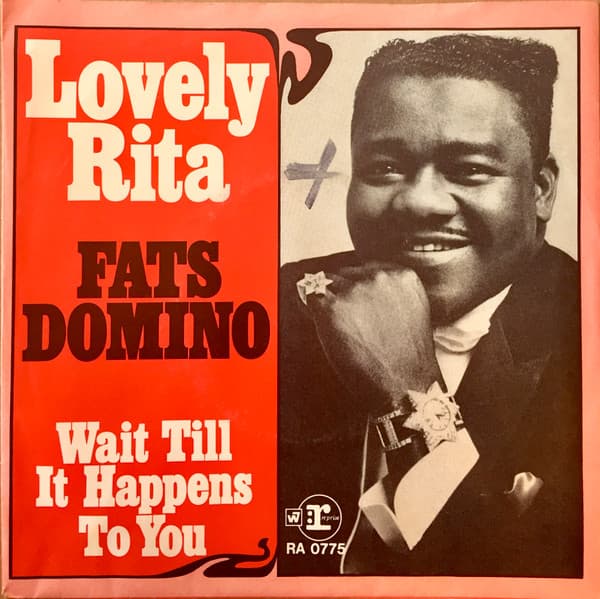
When Fats Domino chose to record Lovely Rita on his 1968 album Fats Is Back, he did more than cover a hit—he renewed a connection between his New Orleans-inflected R&B world and the effervescent pop-psychedelia of The Beatles. The song was not released as a major chart-topping single for Domino and did not chart notably in its own right.
In that single moment of reinvention, Domino acknowledged a lineage of influence and offered his own soulful spin on a track originally built from whimsy and affection.
Originally written by Paul McCartney (credited Lennon-McCartney) for the 1967 album Sgt. Pepper’s Lonely Hearts Club Band, “Lovely Rita” was conceived as a playful little song about an American-style “meter maid,” a female traffic warden—and the humorous, tender attraction felt by the narrator despite cultural disdain for such figures at the time. McCartney once admitted the song began as a “hate song,” but he decided instead to make it an ode to unexpected affection.
The Beatles’ original recording sessions spanned February and March 1967, layering piano, acoustic guitars, bass and drums with backing vocals and experimental sound-effects—among them hand-made comb-and-paper kazoos, sighs, moans and other odd little noises that give the song a playful, slightly surreal charm. When producer George Martin added the piano solo, he employed tape-manipulation to create a honky-tonk timbre, giving the song a ragtime-like mischievousness.
Less than two years later, in 1968, Fats Domino revisited that whimsical world—but through his own lens of weathered soul, honky-tonk piano tradition, and the deep grooves of New Orleans-style R&B. On “Fats Is Back,” the inclusion of “Lovely Rita” and another Beatles cover, “Lady Madonna,” signaled an attempt to bridge generational and stylistic divides—acknowledging The Beatles’ debt to Domino’s earlier rock and roll innovations even as he re-asserted his own identity.
Critics at the time and since have regarded “Fats Is Back” as a genuine, if bittersweet, comeback. The album’s production—helmed by the label and featuring studio musicians such as pianist James Booker—meant that Domino himself did not always play piano on every track, diluting somewhat the raw authenticity many fans associated with him. Nonetheless, the album remains a noteworthy example of an elder statesman of rock and R&B trying to find his place amidst the rapidly shifting musical landscape of the late 1960s.
Domino’s rendition of “Lovely Rita” lifts the tune from its British psychedelia-music-hall roots and transplants it into a world where the piano carries the weight of longing, horns might lurk beneath the mix, and vocals draw from decades of blues-inflected feeling. The playful absurdity of a traffic warden becomes, in Domino’s hands, a more human, even rueful moment—a modest desire, expressed without artifice, in a world that has grown complex.
Where The Beatles’ take sounds buoyant and cheeky, Domino’s feels like a knowing wink; it honors the original while subtly acknowledging the restless, evolving reality of American rhythm and blues at a time when rock had splintered into countless subgenres. It stands as a testimony to the fluidity of popular music—how a light-hearted pop song can travel across genres, time, continents, and find new life through a different voice, a different soul.
In that sense, “Lovely Rita” under Fats Domino becomes more than a cover—it is a bridge. It links the swagger of 1950s rock and roll with the audacious creativity of 1960s record-making. It reminds us that the songs we love rarely belong to just one era or style. They belong to all of us, shaped anew each time another artist dares to breathe fresh life into them.
And so this version lingers—not because it outshines the original, but because it deepens the circle of musical kinship. It invites listeners to hear one of rock’s founding voices reach across years and oceans, tipping his hat to more recent fellow travelers, while still playing with the same worn-in keys, the same heavy heart.