
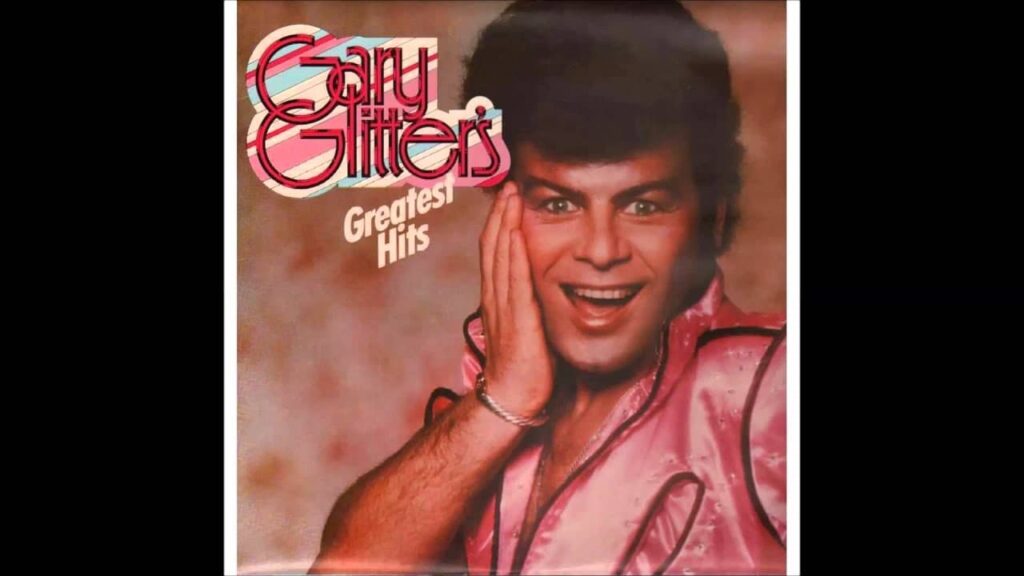
A glam rock revelation where desire awakens in the roar of the crowd and never fully lets go.
Upon its release in 1972, I Didn’t Know I Loved You surged to No. 4 on the UK Singles Chart, becoming one of the defining early hits from Gary Glitter and a cornerstone of his debut album Glitter. Arriving at a moment when British pop was shedding restraint and embracing spectacle, the song announced itself not merely as a single, but as a declaration of a new, brash identity in early 1970s rock culture. Chart success cemented its place in the era’s soundtrack, while the album positioned Gary Glitter as a figure capable of distilling raw instinct into mass appeal.
At its heart, I Didn’t Know I Loved You is a song about sudden awakening. The title itself frames love not as something carefully cultivated, but as an involuntary realization triggered by sound, motion, and presence. The lyrics do not dwell in poetic subtlety. Instead, they lean into repetition and immediacy, mirroring the way infatuation can strike without warning. This was not accidental. Glam rock thrived on exaggeration and physicality, and this track embraces that ethos fully. Love here is less a private confession and more a public eruption, discovered in the heat of performance rather than the quiet of reflection.
Musically, the song is built to feel inevitable. The pounding, almost militaristic rhythm anchors everything, giving the track its relentless forward momentum. Over this foundation, the chant like chorus functions as both hook and ritual, inviting listeners into a shared experience rather than a solitary one. This approach blurred the line between performer and audience, a hallmark of glam rock’s theatrical power. The song does not ask the listener to interpret emotion. It commands them to feel it, bodily and immediately.
Thematically, I Didn’t Know I Loved You captures a specific cultural moment. In the early 1970s, rock music was increasingly about identity as performance. Loving someone because of how they move, how they command attention, how they transform sound into spectacle, reflects a generation discovering desire through amplified experience. The song suggests that love can be born not from familiarity, but from witnessing someone fully inhabit their power. That idea resonated deeply in an era when stages were becoming temples and musicians, larger than life figures.
Decades later, the song endures not because of lyrical complexity, but because of its honesty about impulse. It acknowledges that some emotions arrive uninvited, fully formed, and undeniable. I Didn’t Know I Loved You remains a document of that moment when glam rock taught pop music to celebrate instinct over introspection. For listeners returning to it now, the track still pulses with the shock of first recognition, the instant when noise turns into meaning, and admiration crosses the invisible line into love.