
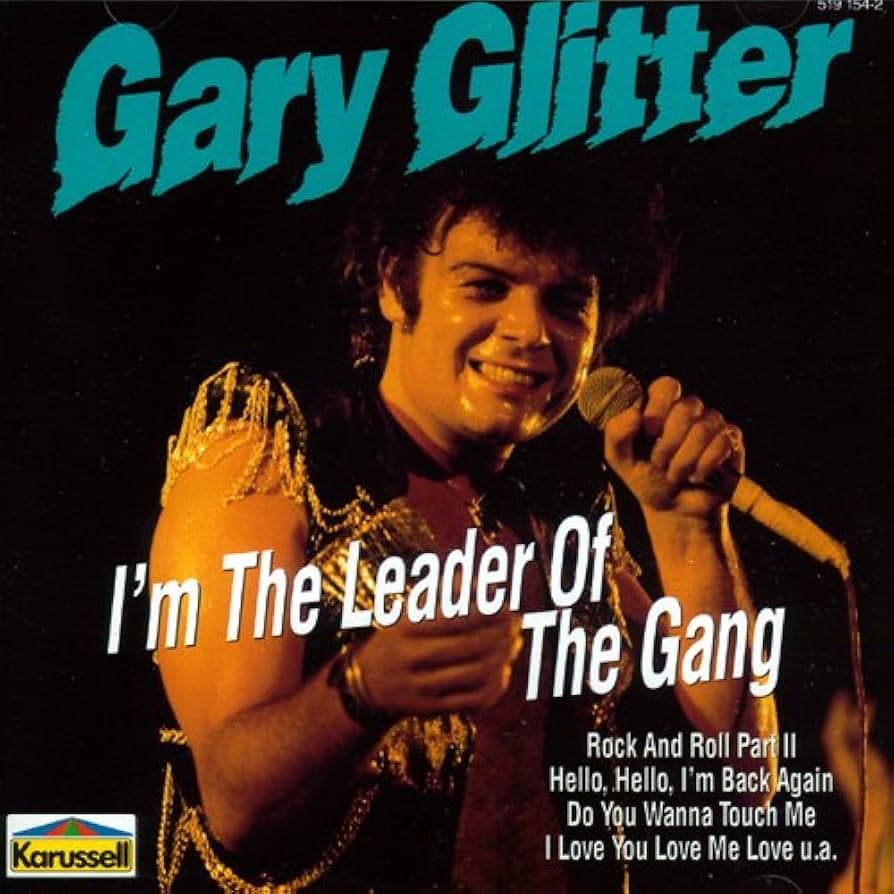
A chant of swagger and belonging that turns teenage bravado into a communal roar
Released in 1973, I’M THE LEADER OF THE GANG (I AM) announced itself as both provocation and invitation. The single by GARY GLITTER surged to the top of the UK Singles Chart and crossed the Atlantic as a Top 10 hit in the United States, anchoring its momentum on the album TOUCH ME. In commercial terms, it was a decisive moment in the artist’s rise. In cultural terms, it was something rarer and more revealing, a pop record that understood how to turn attitude into architecture and crowd energy into a permanent groove.
At its core, I’M THE LEADER OF THE GANG (I AM) is less a narrative than a declaration. The lyric does not bother with backstory or justification. It opens its chest and shouts identity. This was a defining move in early glam rock, where character mattered as much as chord changes and where music thrived on theater, exaggeration, and the thrill of being seen. The song’s chant like refrain is built to be answered. Every shouted line feels designed for a room full of voices, collapsing the distance between performer and audience. Authority here is playful, performative, and instantly shared.
Musically, the track is blunt by design. The beat marches forward with almost military simplicity, while the handclaps and stomps turn the recording into a ritual. There is no attempt to hide the mechanics. Instead, the song foregrounds them, inviting listeners to participate in the machinery of the performance. The call and response structure borrows as much from playground bravado as from rock tradition, which explains its instant grip on youth culture at the time. This was not about virtuosity. It was about posture, confidence, and the intoxicating feeling of standing at the center of the noise.
Lyrically, the song captures a universal adolescent fantasy. To lead, to be noticed, to claim space without apology. Yet there is irony embedded in its simplicity. The leadership proclaimed here is not rooted in wisdom or responsibility, but in volume and presence. It mirrors the fleeting hierarchies of youth itself, where status is loud, temporary, and fiercely defended. That tension between confidence and fragility gives the record its lasting intrigue. Beneath the chant is an unspoken question about how identity is formed and how easily it can be borrowed, performed, or lost.
Within the broader context of glam rock, I’M THE LEADER OF THE GANG (I AM) stands as a textbook example of the genre’s populist instinct. It strips rock music of mystique and replaces it with accessibility and spectacle. The song does not ask to be interpreted quietly. It demands to be felt collectively. Decades later, its echo remains recognizable, not because of lyrical depth, but because of its instinctive understanding of crowd psychology. It captures a moment when rock music learned how to lead by letting everyone shout back.