
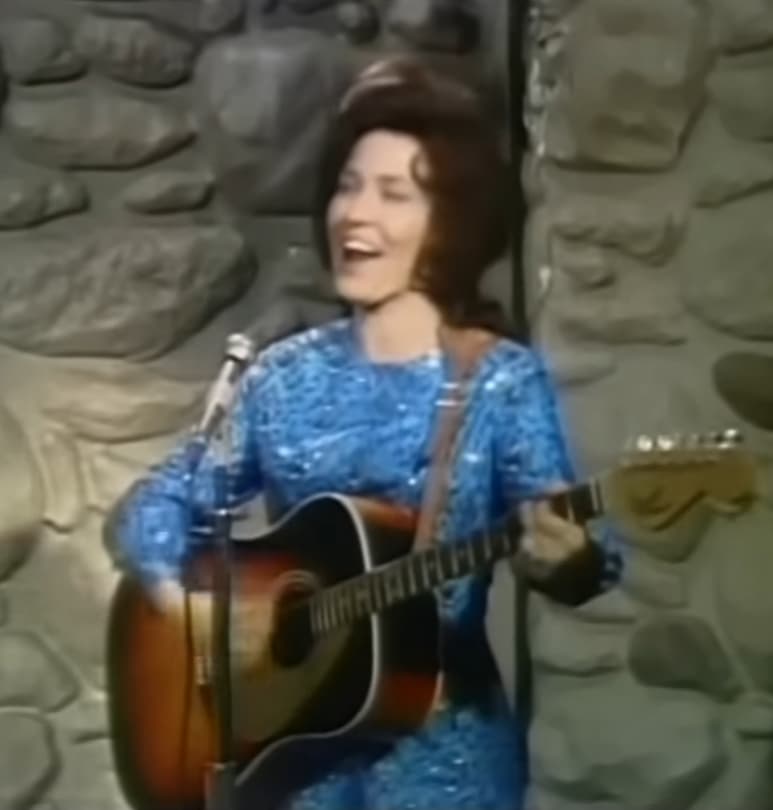
A Defiant Voice at the Doorway of Marriage, Demanding Respect Before Love
When Loretta Lynn released “Don’t Come Home A-Drinkin’ (With Lovin’ on Your Mind)” in late 1966, country music heard something it had rarely allowed a woman to say so plainly. The single became Lynn’s first No. 1 hit on the Billboard Hot Country Singles chart in early 1967, while the album Don’t Come Home A-Drinkin’ (With Lovin’ on Your Mind) would also rise to the top of the country album charts, cementing her arrival as one of the genre’s most important voices. More than a commercial breakthrough, the song marked a cultural turning point—a moment when everyday female frustration was transformed into a country music anthem.
What makes “Don’t Come Home A-Drinkin’ (With Lovin’ on Your Mind)” endure is its remarkable balance of simplicity and rebellion. On the surface, the premise could not be more ordinary: a wife confronts a husband who stumbles home drunk, expecting affection after a night of neglect. Yet beneath that domestic scene lies a radical assertion of personal dignity. Country music of the era was filled with songs about heartbreak, loyalty, and marital struggle, but Lynn’s narrator refuses to remain passive. She is not pleading for attention, nor is she quietly suffering. She is drawing a line.
The song was co-written by Loretta Lynn and her sister Peggy Sue Wright, and its inspiration grew from experiences familiar to both women. Rather than disguising those realities in metaphor, Lynn delivered them with the directness that became her trademark. The result was controversial for its time, yet that controversy only highlighted how rarely women’s perspectives had been granted such authority in popular country music.
Musically, the record exemplifies the elegance of classic Nashville production. The arrangement is lean and purposeful, allowing Lynn’s voice to carry the emotional weight. There is no dramatic orchestration competing for attention. Instead, every element serves the story. Her vocal performance is especially striking because it avoids theatrical anger. She sounds tired, disappointed, and resolute—a combination that makes the song feel less like a performance and more like a real conversation taking place across a kitchen table in the early hours of the morning.
In hindsight, the song can be seen as an early declaration of themes that would define much of Lynn’s career. Long before broader cultural conversations about women’s autonomy entered mainstream country music, she was singing about unequal expectations, marital power dynamics, and the right of women to speak openly about their lives. Later classics such as “Fist City”, “Rated X”, and “The Pill” would continue that tradition, but “Don’t Come Home A-Drinkin’ (With Lovin’ on Your Mind)” was among the first records to reveal just how fearless she could be.
Nearly six decades later, the song remains a masterclass in country storytelling. Its power lies not in grand gestures but in its honesty. Loretta Lynn understood that some of the most profound acts of defiance happen not on public stages but behind closed doors, when an ordinary person finally decides that respect must come before affection. That truth resonates through every line of “Don’t Come Home A-Drinkin’ (With Lovin’ on Your Mind)”, ensuring its place among the most influential and enduring recordings in country music history.