
A Farewell Whispered Through the Noise of a Fractured World
When Mark Knopfler and Emmylou Harris released “If This Is Goodbye” on their 2006 collaborative album “All the Roadrunning,” the song never arrived with the thunder of a chart-dominating single. It moved differently — quietly, almost cautiously — finding its audience not through commercial spectacle but through emotional permanence. The live rendition captured in “Real Live Roadrunning” deepened that intimacy even further, preserving the fragile chemistry between two artists whose restraint often speaks louder than excess ever could. In an era increasingly crowded by noise, “If This Is Goodbye” stood as a meditation on the things people fail to say before time suddenly closes the door.
The song’s emotional gravity is inseparable from the atmosphere surrounding its creation. Written in the shadow of the London bombings of July 2005, the composition reflects a world shaken by abrupt loss and unfinished conversations. Yet Knopfler never approaches tragedy with theatricality. That has always been one of his greatest gifts as a songwriter. He writes like a man observing life through rain-streaked glass — detached enough to remain precise, but emotionally close enough to wound the listener when the truth finally lands.
Rather than constructing a protest song or a political statement, “If This Is Goodbye” becomes something far more enduring: a reflection on ordinary love interrupted by catastrophe. The lyrics revolve around imagined final words, the aching possibility that someone left home one morning without realizing they had already spoken to their loved ones for the last time. It is this devastating simplicity that gives the song its lasting power. No grand metaphors are needed. The fear itself is universal.
Musically, the arrangement is almost weightless. Mark Knopfler’s guitar does not dominate the room; it lingers like memory. Every note feels carefully rationed, as though silence itself is part of the instrumentation. Meanwhile, Emmylou Harris enters not as a dramatic counterpoint but as a compassionate echo. Her voice carries the warmth of someone trying to soothe grief without pretending it can truly be healed. Together, they create a dialogue that feels less like performance and more like two souls quietly sharing the burden of human vulnerability.
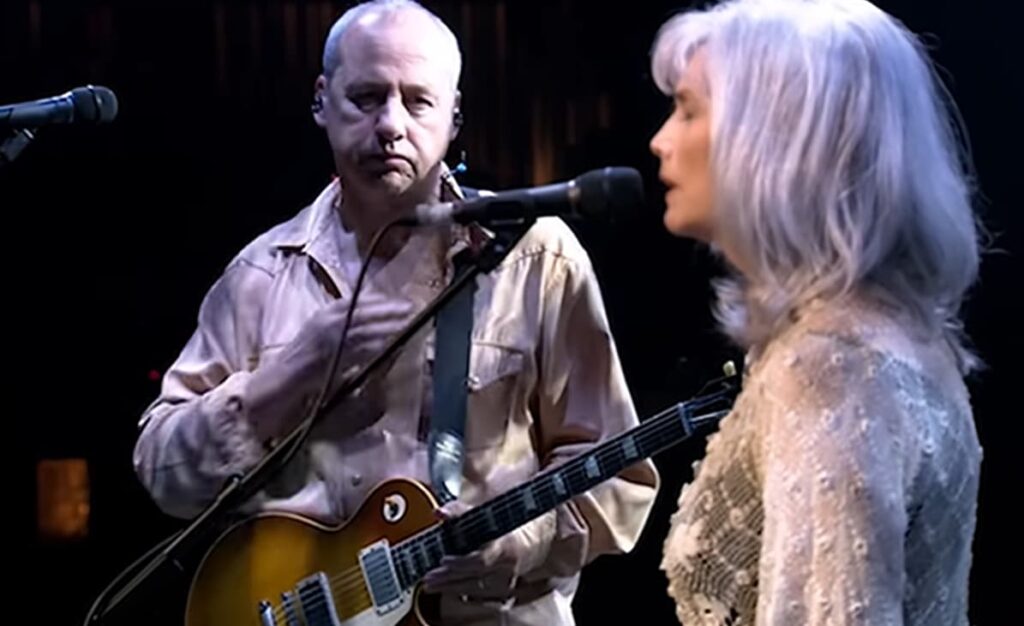
What makes the live version especially affecting is its absence of spectacle. There is no desperate attempt to manufacture emotion because the song already carries enough emotional truth on its own. The camera captures the musicians almost reverently, allowing the tension between stillness and sorrow to breathe naturally. For longtime listeners of Knopfler, it recalls the narrative subtlety that once elevated songs like “Brothers in Arms” beyond traditional rock balladry. For admirers of Harris, it reinforces why her voice has long been one of the most emotionally trusted instruments in American music.
Over time, “If This Is Goodbye” has become one of those songs that quietly follows listeners through different stages of life. Its meaning changes as people accumulate losses, regrets, reconciliations, and unfinished sentences of their own. The song does not offer closure. It offers recognition — the painful understanding that love is often measured not by what was perfectly said, but by what people wish they had said before the silence arrived.