
Love as Surrender, Not Defeat, in a Quiet Country Confession
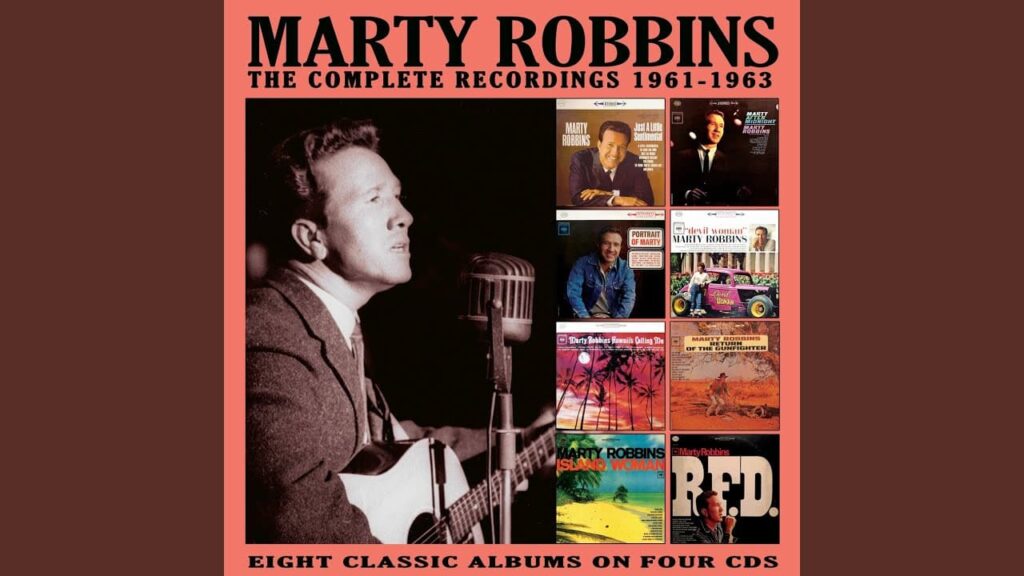
Released in 1966, “A Woman Gets Her Way” became a Top 10 hit on the Billboard Hot Country Singles chart, further solidifying Marty Robbins as one of the most perceptive voices in American country music. The song appeared on the album The Drifter, a record that captured Robbins in a period of artistic maturity, when his storytelling instincts were fully refined and his interpretive restraint had become a signature strength. By the time this single reached radio audiences, Robbins was already a seasoned figure whose credibility rested not on novelty or trend, but on emotional intelligence and narrative clarity.
At first glance, “A Woman Gets Her Way” might appear to rest comfortably within the conventions of mid 1960s country music, a male narrator reflecting on love, compromise, and inevitability. Yet Robbins elevates the song beyond stereotype by approaching its central theme not with resentment or bravado, but with quiet acceptance. The title itself is not delivered as a complaint. It is stated as an observation, almost a law of human nature, delivered by someone who has learned through experience rather than defeat.
The lyric centers on the slow realization that emotional strength often lies not in control, but in yielding. Robbins does not portray the woman in the song as manipulative or overpowering. Instead, she is presented as emotionally perceptive, someone who understands patience, timing, and the subtle power of constancy. The narrator’s surrender is not forced. It is earned. That distinction is crucial to the song’s enduring resonance. Robbins sings not of being overrun, but of being outmatched by sincerity.
Musically, the arrangement supports this emotional posture with deliberate simplicity. The rhythm moves at a measured pace, allowing each line to settle before the next arrives. Robbins’ vocal delivery is calm and conversational, free of excess ornamentation. This restraint reinforces the song’s message. Nothing here is rushed, and nothing needs to be proven. The performance feels lived in, as though the narrator has already made peace with his conclusion before the song even begins.
Within the broader arc of Marty Robbins’ career, “A Woman Gets Her Way” reflects his unique ability to articulate male vulnerability without diminishing dignity. At a time when country music often leaned on rigid emotional roles, Robbins offered a portrayal of love grounded in realism rather than posturing. His narrator learns that affection does not always announce itself through conflict or conquest. Sometimes it arrives quietly and stays.
Decades later, the song endures because it speaks to a universal truth that transcends era and genre. Love, in Robbins’ telling, is not about winning arguments or holding ground. It is about recognizing when resistance no longer serves the heart. In “A Woman Gets Her Way,” Marty Robbins leaves listeners with a gentle but lasting insight. The strongest moments in love often come when pride steps aside and understanding is allowed to take its place.