
A Quiet Declaration of Emotional Distance Disguised as Gentle Courtesy
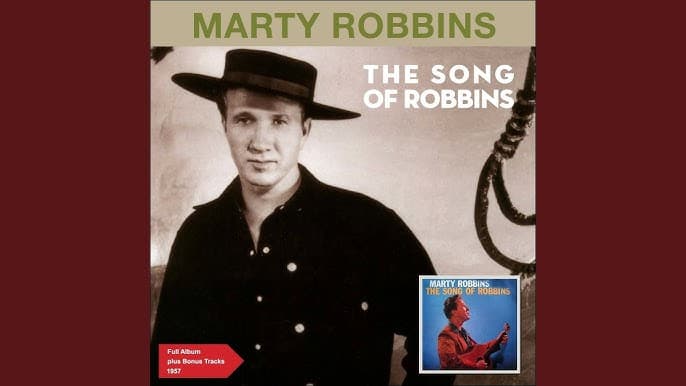
Upon its release in 1957, I Never Let You Cross My Mind emerged as an unexpected companion to one of Marty Robbins’ most defining successes. Issued as the B side to The Story of My Life, the single nonetheless climbed to the Top 5 on the Billboard Country chart, an uncommon achievement that underscored Robbins’ rare ability to command attention even in understatement. Both songs appeared on the album The Story of My Life, a record that solidified Robbins as a leading voice in post war country music, balancing emotional restraint with melodic sophistication.
At first listen, I Never Let You Cross My Mind sounds almost polite, even courteous. The title itself carries a veneer of civility, as though the speaker is offering reassurance rather than dismissal. Yet this is where Robbins’ quiet mastery reveals itself. Beneath the gentle phrasing lies a decisive emotional boundary. This is not a song of heartbreak in the traditional sense. There is no pleading, no regret, no longing for reconciliation. Instead, Robbins delivers something far more unsettling. Emotional indifference presented with calm certainty.
The lyric unfolds as a series of measured refusals. The narrator does not rage against love lost. He simply states that the other person never occupied space in his inner world. In the emotional economy of country music, where memory and longing are often sacred currencies, such a declaration is radical. Robbins is not saying that love failed. He is saying it never mattered. That distinction gives the song its lasting sting.
Musically, the arrangement mirrors this emotional distance. The melody is smooth, unhurried, and deceptively warm. Robbins’ vocal performance is restrained to the point of intimacy, never pushing for drama. His phrasing suggests control, even comfort, as though the act of letting go required no effort at all. This calm delivery stands in sharp contrast to the emotional devastation implied by the words, creating a tension that lingers long after the final note.
Within the broader arc of Marty Robbins’ career, I Never Let You Cross My Mind occupies a fascinating space. Known for grand narratives, dramatic ballads, and later the cinematic sweep of his western songs, Robbins here proves that emotional power does not require scale. The song demonstrates his command of subtlety, his understanding that sometimes the most devastating truths are spoken softly.
Culturally, the song reflects a moment in country music when emotional maturity began to replace melodrama. The late 1950s saw artists exploring themes of resignation, self awareness, and emotional self protection. Robbins did not merely follow this trend. He refined it. The narrator of this song is not broken by love. He is defined by his refusal to be.
Decades later, I Never Let You Cross My Mind endures because it articulates a rarely acknowledged emotional experience. The quiet realization that not every relationship leaves a mark. In the hands of a lesser artist, such a theme might feel cold or cruel. In Robbins’ voice, it feels honest. Calm. Final. And in its stillness, profoundly human.