
A tender island reverie where longing drifts on warm air and love speaks in hushed, ceremonial tones.
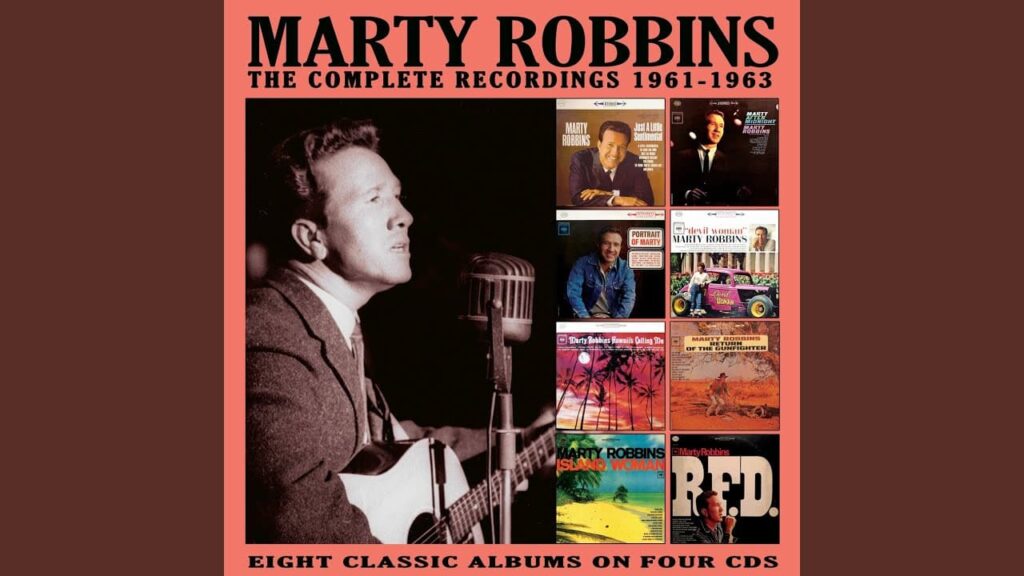
Love Song of Kalua arrives not as a chart chasing single but as a deep album meditation, released in 1960 on Marty Robbins’ evocative LP Hawaiian Style, a record that expanded his already formidable catalog beyond Nashville and into the imagined soundscape of the Pacific. The song was not issued as a standalone single and therefore made no appearance on the Billboard pop or country singles charts, yet its placement within a successful period of Robbins’ career gave it a quiet permanence. At the time, Marty Robbins was already a dominant commercial force, known for balancing crossover hits with ambitious concept albums, and Hawaiian Style stands as a testament to that artistic confidence.
The power of Love Song of Kalua lies not in commercial metrics but in its devotion to atmosphere and emotional restraint. Robbins approached Hawaiian themed material with a seriousness that resisted novelty. Rather than parodying island music or leaning into exaggerated tropes, he treated the genre as a vessel for intimacy. The song unfolds slowly, carried by gentle steel guitar lines and soft rhythmic pulses that evoke moonlit beaches rather than postcard spectacle. This restraint is essential to its emotional credibility.
Lyrically, Love Song of Kalua is built on yearning and idealization. Kalua is not merely a name but a symbol of devotion shaped by distance, reverence, and cultural imagination. Robbins sings with an almost ceremonial calm, allowing each phrase to breathe. There is no urgency here, only patience, as if love itself must respect the rhythm of tides and tradition. The vocal performance is measured and warm, showcasing Robbins’ ability to convey sincerity without overt dramatics.
Within Hawaiian Style, the song functions as an emotional anchor. The album as a whole reflects Robbins’ fascination with romantic storytelling across cultures, a theme that runs parallel to his cowboy ballads and narrative epics. Just as he once mythologized the American West, Robbins here mythologizes the islands, not as escapism but as a place where love is spoken softly and remembered deeply. The production supports this vision, favoring clarity and space over ornamentation, allowing emotion to emerge naturally.
Over time, Love Song of Kalua has become one of those quiet tracks that reward patient listeners. It is rarely cited among Robbins’ greatest hits, yet it reveals a crucial aspect of his artistry. He was not only a chart maker or storyteller of dramatic tales but also a curator of mood and feeling. This song exemplifies his respect for melody, culture, and emotional subtlety.
In the long arc of Marty Robbins’ career, Love Song of Kalua stands as a reminder that some of the most enduring music does not shout for attention. It waits. Like a remembered shoreline or a name spoken once and never forgotten, it lingers, asking the listener to slow down and listen with the heart rather than the clock.