
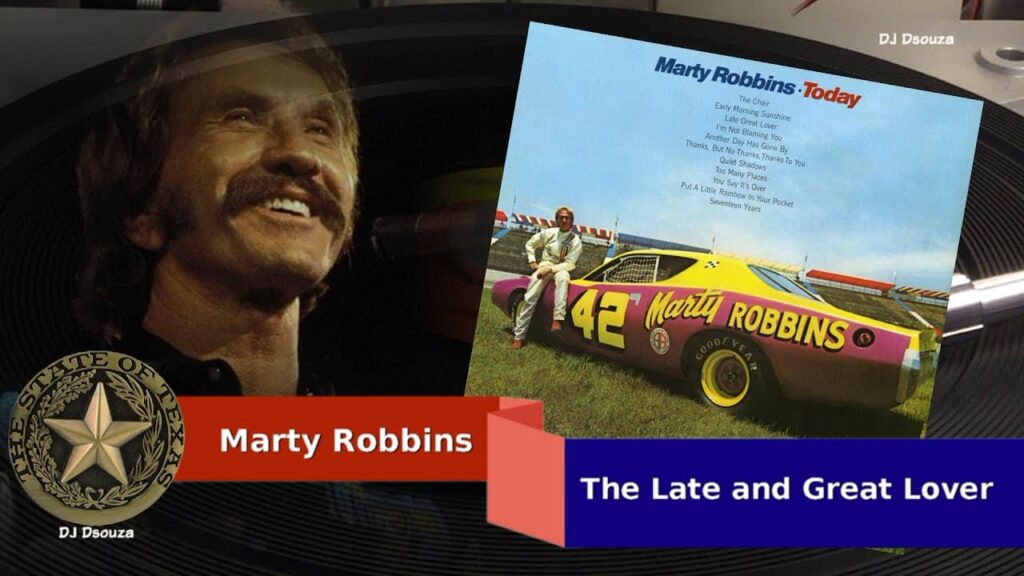
A wry confession from a man who knows that love, like time, always collects its due
Released by Marty Robbins in the late 1970s, Late Great Lover entered the Billboard country listings upon its release and served as the title track of the album Late Great Lover, a record that arrived during Robbins’ mature, reflective period. Coming decades after his first chart breakthroughs, the song did not announce a commercial reinvention. Instead, it reaffirmed Robbins’ enduring presence as a storyteller who understood how aging, memory, and romance intertwine in country music.
At its heart, Late Great Lover is built on irony sharpened by self awareness. The title itself carries a double meaning, suggesting both belated greatness and affectionate obituary. Robbins sings not as a youthful romantic chasing first love, but as a man taking inventory of emotional victories and losses, aware that reputation often lags behind reality. The narrator positions himself as someone whose passion may arrive too late to save a relationship, yet sincere enough to deserve remembrance. This tension gives the song its quiet gravity.
Musically, the arrangement reflects Robbins’ seasoned restraint. The tempo is unhurried, allowing each lyric to settle. Traditional country instrumentation anchors the track, but nothing feels overstated. The production leaves room for Robbins’ voice to do the real work. By this stage in his career, his baritone had deepened, carrying a subtle rasp that conveys lived experience. Every line sounds considered, as though spoken by someone who has made mistakes and learned which ones are worth repeating.
Lyrically, the song explores the cost of emotional distance and the consequences of realizing love’s value only after it has been tested or lost. Robbins does not plead for absolution. He offers reflection. The narrator accepts that timing can be as decisive as intention, and that even genuine affection can arrive after the moment has passed. This sense of belated clarity is what elevates Late Great Lover beyond novelty or self parody. It becomes a meditation on emotional accountability.
Within Robbins’ broader catalog, the song stands apart from his gunfighter ballads and sweeping epics. It belongs to the quieter lineage of his work, alongside songs where character replaces spectacle. In this phase of his career, Robbins often sang about men looking backward rather than charging ahead. That perspective resonates deeply with listeners who recognize that maturity brings not certainty, but sharper questions.
Culturally, Late Great Lover endures as an example of how country music can address aging without sentimentality. It refuses nostalgia for nostalgia’s sake. Instead, it acknowledges the humor, regret, and dignity that coexist in long emotional lives. For a mature audience, the song feels less like entertainment and more like recognition.
In Late Great Lover, Marty Robbins leaves behind legend and bravado, offering something rarer. A voice that understands that being remembered fondly may be the final, and perhaps truest, measure of love.