
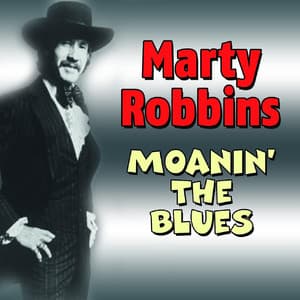
A solitary voice wrestling with heartbreak, pride, and the quiet dignity of country music sorrow
When Marty Robbins recorded Moanin’ the Blues, he was engaging with a song that already carried deep cultural weight, a composition that had reached the top of the Billboard country chart in its original incarnation and had quickly become part of the shared emotional language of postwar American music. Robbins’ interpretation appeared on the album Song of the Rolling Plains, released in 1956, during a period when he was still defining his artistic identity at Columbia Records. Rather than chasing novelty or reinvention, Robbins approached the song with restraint and respect, understanding that its power resided not in embellishment but in emotional clarity.
At its core, Moanin’ the Blues is a meditation on loneliness that refuses melodrama. The narrator does not plead for sympathy, nor does he dramatize his pain. He simply states it, night after night, bar after bar, letting repetition become a form of truth. Robbins’ voice, already known for its warmth and steadiness, gives the song a weary calm that feels earned rather than performed. Where other singers might lean into anguish, Robbins leans into acceptance, portraying a man who has learned that sorrow is not a crisis but a condition.
Musically, the arrangement mirrors that emotional economy. The slow tempo, the measured phrasing, and the uncluttered instrumentation allow silence to do as much work as sound. Each pause feels intentional, as if the song itself is thinking before it speaks. Robbins understands that heartbreak, especially the kind portrayed here, does not rush. It lingers. It waits. It returns at closing time, when the lights are low and the world feels far away.
What elevates Robbins’ version is his instinct for narrative distance. He does not inhabit the song as a confession but as an observation. This choice transforms Moanin’ the Blues from a personal lament into a universal portrait. The listener is not invited to peer into the singer’s wounds but to recognize their own reflection in the quiet persistence of grief. It is country music as emotional reportage, documenting how loss settles into everyday life.
Within the broader arc of Robbins’ career, this recording reveals an artist deeply attuned to tradition, even before his later epics and Western ballads would define him. It shows a singer willing to stand still, to let a song breathe, and to trust that understatement can carry more weight than spectacle. Decades later, Moanin’ the Blues endures not because it shocks or surprises, but because it tells the truth plainly. In the careful hands of Marty Robbins, that truth feels timeless, like a late night radio signal that keeps returning, long after the story itself has already been told.