
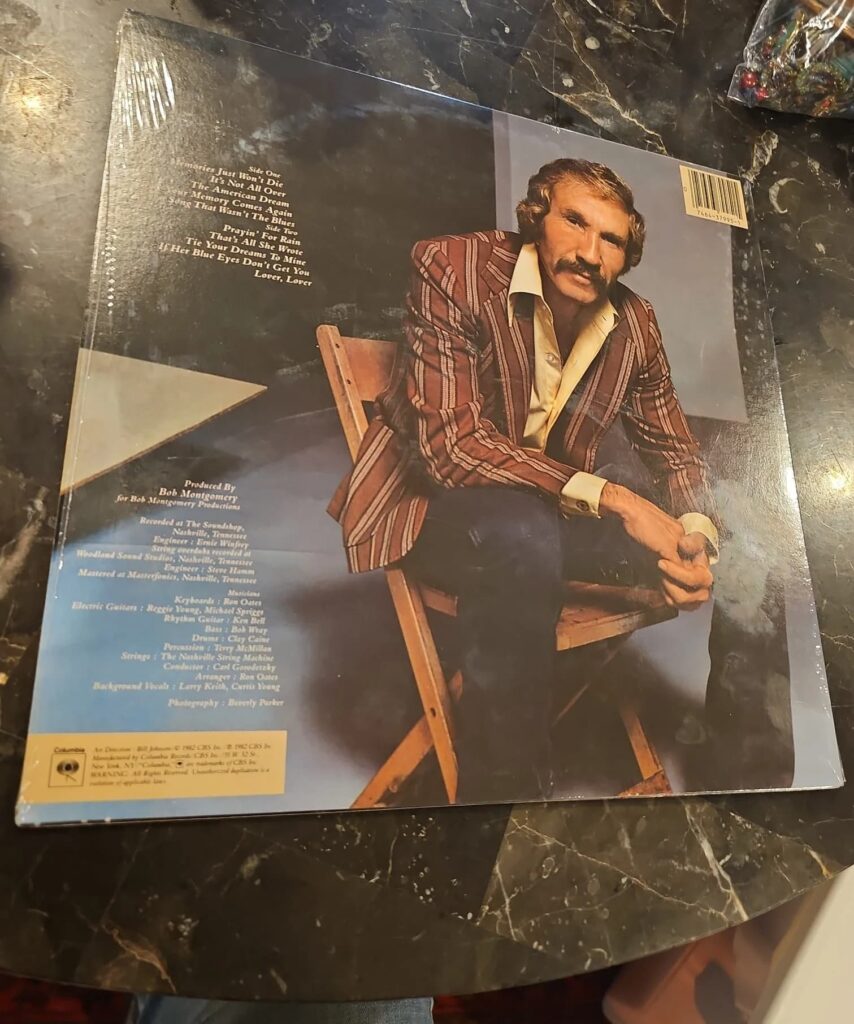
PRAYIN FOR RAIN EXPRESSES THE QUIET DESPERATION OF A HEART LONG THIRSTING FOR RELIEF
Prayin For Rain is a poignant track by Marty Robbins that appears on his 1982 studio album Come Back To Me. The album itself reached a modest position on the country album charts, peaking at number 25 on the Billboard Country Albums list that year, and stands among Robbins’s final completed works before his death later in 1982. Come Back To Me bridged the enduring traditions of classic country storytelling with the smoother production sensibilities of the early 1980s Nashville sound. While Prayin For Rain was not released as a charting single in its own right, it remains an evocative deep cut often rediscovered by devoted listeners who explore beyond Robbins’s better known hits such as “Some Memories Just Won’t Die” which did reach the Top Ten from the same album.
There is no widely documented backstory of a specific event or personal moment that inspired Prayin For Rain in the way that some of Robbins’s more famous compositions were grounded in autobiographical experience. Rather, the song’s power resides in the nuance of its emotional language and the subtle tension between lyric and melody. Robbins performs a song steeped in yearning, describing a lover’s departure that leaves the narrator with an internal drought far more damaging than any absence of literal water. In country music, rain has often functioned as a symbol of cleansing or renewal. In this song, however, rain becomes a metaphor for reprieve that stubbornly fails to arrive. Robbins vocalizes a desire not merely for solace but for an elemental transformation that will extinguish the smoldering ache left in the aftermath of love.
Lyrically, Prayin For Rain draws its strength from simple yet resonant imagery. Robbins’s character speaks in elemental terms: fire and rain, thunder and dry skies, embers and floods. The narrator confronts the paradox of longing for a deluge to quench an internal blaze that refuses to be doused. These metaphors suggest not only emotional hurt but a deep recognition of the sometimes futile nature of hope. It is a meditation on enduring desire and the stubborn persistence of feeling long after circumstance has rendered it untenable. Rather than dramatize this condition, Robbins delivers it with a wearied sincerity—his voice carrying the weight of a lifetime of wandering through both physical and emotional landscapes.
Musically, the arrangement of Prayin For Rain sits comfortably within the late style of Robbins’s career. Strings and layered instrumentation accentuate the tension between restraint and passion, creating an atmosphere that feels restrained yet laden with unspoken emotion. The song avoids grand dramatic gestures, opting instead for a subtle articulation of yearning that echoes long after the final note fades. In this way, Prayin For Rain reflects Robbins’s gift for evoking the internal weather of the heart: the climates of hope, loss, endurance, and quiet resignation that define so many human stories.
Over time the track has found appreciation among listeners who revisit Come Back To Me as more than a historical artifact. It stands as a testament to Robbins’s capacity to give voice to the intangible experiences of longing and resilience. While not a commercial hit, Prayin For Rain embodies a core facet of country music’s enduring appeal: its ability to render the emotional terrain of life with clarity, depth, and compassion.