
That’s All Right Captures the Defiant Heart of Mid-Century America Through Its Easygoing Resilience
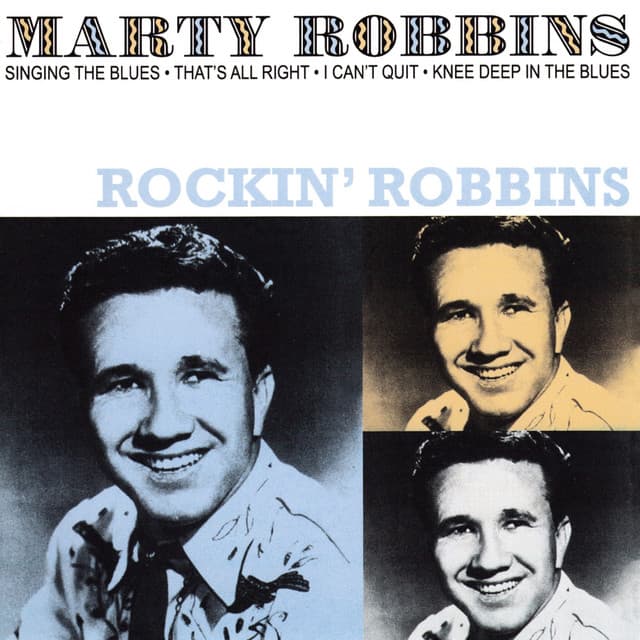
When Marty Robbins recorded “That’s All Right” in late 1954 for release in early 1955, he breathed new life into a blues standard and, in doing so, delivered a Top Ten hit on the Billboard Hot Country Singles chart, where it peaked at number seven — a testament to his ability to bridge musical worlds with unforced ease. Though the song has appeared on retrospective collections such as The Essential Marty Robbins 1951-1982, its impact stems less from the album format and more from the way Robbins made an existing tune his own within the rapidly shifting musical landscape of mid-1950s America.
Robbins’ rendering of “That’s All Right” belongs to a lineage of reinterpretation and reinvention. The song itself was born out of the blues tradition, first penned and recorded by Arthur “Big Boy” Crudup in 1946 and later popularized by Elvis Presley as a rockabilly anthem in 1954. By the time Robbins approached it, the tune had already traveled through musical subcultures — from Delta blues to the nascent rumble of rock and roll — and was ripe for the stamp of an artist whose sensibilities rested equally in honky-tonk and heartfelt storytelling.
What sets Robbins’ version apart is the warmth and subtlety he brings to its seemingly casual refrain — “that’s all right now mama, anyway you do.” In Robbins’ baritone, there is none of the raw, electrified pulse of Presley’s Sun Records take; instead, there is a reflective calm, a country singer’s acceptance of life’s irrational rhythms and the necessity of moving on, even when the heart lingers. Where Crudup’s original carries the weary weight of post-war blues, and Presley’s interpretation ignites youthful rebellion, Robbins’ performance feels like a conversation with the open road, the fiddle’s lyricism coloring each phrase with a gentle ache.
Lyrically, the song is a study in resignation and self-assertion: a young narrator heeding parental counsel about a wayward love, yet ultimately choosing departure over stasis. The repeated “that’s all right” becomes a mantra not of indifference but of courage — the courage to turn from the familiar toward the uncertain. In Robbins’ hands, this resignation isn’t bitter; it’s an elegiac acceptance of the human condition. He invites listeners into the emotional space between loss and liberation, where the bruised but unbroken heart dares to sing its own freedom.
Musically, Robbins’ adaptation nods to the hybridization that defined much of his work. His fluid blending of country instrumentation and blues-rooted phrasing gave his audience something both grounded and expansive. In an era when genre boundaries were dissolving and re-forming, Robbins stood among those who understood that authenticity need not be confined. His “That’s All Right” is a quiet testament to the porous edges of American music — where blues, country, and the early intimations of rockabilly interlace to reveal a deeper emotional truth.
The legacy of Robbins’ version lies not in its domination of pop charts, but in its subtle affirmation of resilience. It remains a reflective waypoint in his catalog — a reminder that even amid shifting cultural tides, the singer’s voice can articulate the universal ache of letting go and the tender optimism buried within that act.