
A Languid Promise Etched Across Languages and Hearts
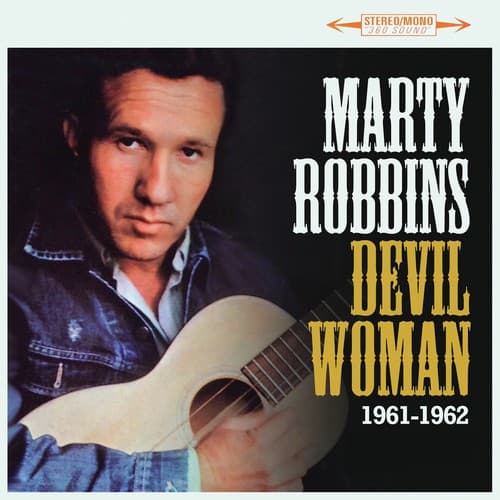
From the warm swirl of mariachi-tinged balladry to the hushed confession of eternal devotion, “Yours (Quiereme Mucho)” as performed by Marty Robbins stands as one of the most affecting cross-cultural gems in the vast tapestry of 20th-century popular music.
Though it was not a chart-topping single in the American marketplace in the way that Robbins’ classics like “El Paso” and “Big Iron” were, the song occupies a respected place within his extensive catalog and has been preserved on numerous anthologies and compilations of his work. It exemplifies his remarkable versatility — a country artist equally at ease with western ballads, honky-tonk laments, and the warm romanticism of Latin forms — and reflects his deep engagement with the musical traditions of Mexico and the Spanish-speaking world that informed much of his artistry across the 1950s and 1960s.
Originally composed in the early 20th century as the Cuban criolla-bolero “Quiéreme Mucho” by Gonzalo Roig, with English lyrics later added by Albert Gamse and Jack Sherr, the song had already been interpreted by a host of artists long before Robbins embraced it. Its lineage includes classic recordings by orchestras and vocalists of the big-band era, and by the time Robbins recorded it, the melody had become a standard — cherished, familiar, and ripe for reinterpretation.
In Robbins’ hands, “Yours (Quiereme Mucho)” becomes a study in restraint and fervor. Where many covers lean toward lush orchestral accompaniment, Robbins’ version — often presented within collections that emphasize his balladry — places the voice front and center, supported by gentle instrumentation that underscores rather than overwhelms. His baritone, warm and resonant, conveys a vulnerability that belies its measured delivery: a lifetime of longing compressed into simple phrases like “Yours till the stars lose their glory.” The bilingual interplay of English and Spanish lyrics does more than pay homage to the song’s origins; it embodies a musical dialogue between cultures, an acknowledgment of love’s universality beyond linguistic borders.
Lyrically, “Yours (Quiereme Mucho)” is a vow, a testament to belonging that feels almost too expansive for language alone. Its imagery — stars fading, birds silenced, distant shores — situates love not as a fleeting emotion but as an enduring covenant, as immovable as the heavens. Robbins’ interpretation doesn’t sentimentalize this pledge; it inhabits it, recognizing that true devotion is not merely declared but lived through quiet certainty.
Within the broader narrative of Marty Robbins’ career, this recording reveals an artist reaching beyond genre confines and commercial expectations to touch something elemental. It is a reminder that Robbins was never solely a storyteller of cowboys and desert nights. He was also an interpreter of passion’s many dialects, capable of giving voice to the tender, the melancholic, and the transcendent. “Yours (Quiereme Mucho)” is thus more than a song in his repertoire — it is a bridge between worlds, and in Robbins’ evocative delivery, a space where hearts speak plainly, without pretense, and with undiminished devotion.