
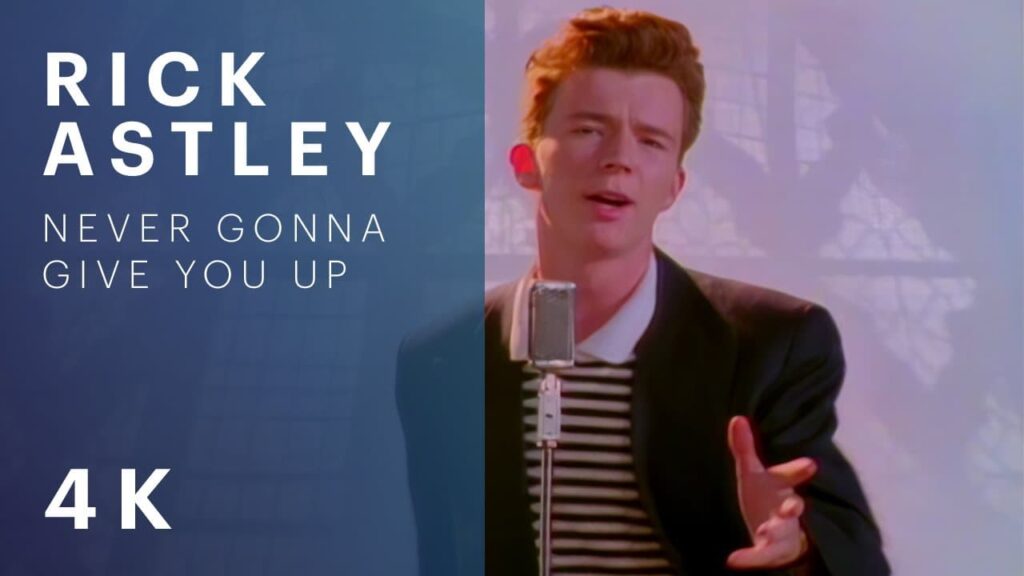
A vow of unwavering devotion delivered with a steady pulse and a disarming smile.
Released in 1987, Rick Astley’s Never Gonna Give You Up arrived as the lead single from his debut album Whenever You Need Somebody, and it moved with immediate authority. The record climbed to No. 1 on the UK Singles Chart, held the summit for weeks, and crossed the Atlantic to top the US Billboard Hot 100, becoming a global chart leader that announced a new voice with uncommon certainty. For a first statement, its reach was astonishing. For its era, its clarity was unmistakable.
The song’s creation sits squarely within the late 1980s pop laboratory of Stock Aitken Waterman, architects of a sound that prized momentum, melody, and clean emotional lines. Yet what distinguishes Never Gonna Give You Up from countless dance floor contemporaries is not merely its production polish, but the tension between surface and substance. Beneath the buoyant synth figures and disciplined drum machine lies a pledge sung with almost solemn resolve. Astley’s baritone does not flirt or tease. It commits. That tonal gravity, rare among youthful pop leads of the time, anchors the song’s promise and gives its chorus an unusual credibility.
Lyrically, the text is plainspoken to the point of audacity. Each refrain enumerates what love will not do: never give up, never let down, never run around, never desert. The repetition is not laziness but insistence. In a decade fascinated by irony and gloss, the song insists on sincerity. There is no narrative twist, no confession of doubt. The speaker offers fidelity as a constant, not a negotiation. This directness, paired with a melody that climbs without strain, creates a feeling of emotional steadiness. The key change near the end, often cited as a pop trope, functions here as affirmation rather than spectacle, lifting the vow into a brighter register without breaking its composure.
Musically, the arrangement is a study in restraint dressed as exuberance. The bassline walks with purpose, the chords resolve cleanly, and the chorus opens like a well lit room. Astley’s voice remains centered and unforced, cutting through the mix with warmth rather than bravado. It is a performance that trusts the song. He does not oversell the promise because the promise is the point.
Decades later, the song’s cultural afterlife has only deepened its resonance. Its unexpected rebirth as an internet prank did not erode its core. Instead, it reframed the track as a shared memory, a joke that endures because the song itself endures. Listeners who arrive by surprise often stay because the craft holds them. What began as a chart conquering single has become a kind of pop folk standard, instantly recognizable, endlessly replayed, and quietly dependable.
For Rick Astley, Never Gonna Give You Up remains both a beginning and a signature. It captures a moment when pop dared to be earnest without apology, when a simple vow, sung with conviction, could circle the world and still sound true.