
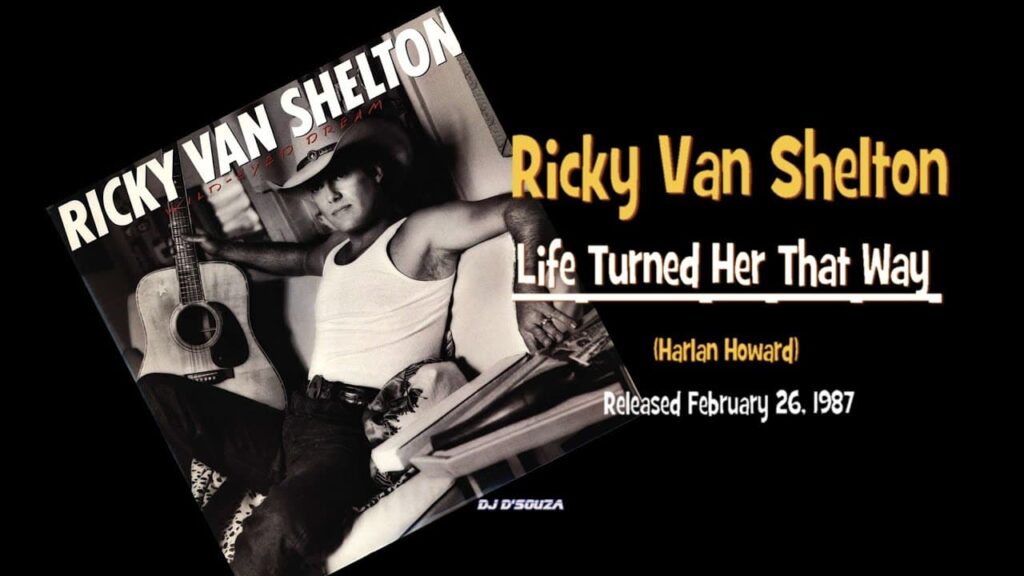
A Ballad of Betrayal That Chooses Compassion Over Condemnation
When Ricky Van Shelton released “Life Turned Her That Way” in 1988 as a single from his album Loving Proof, it rose to No. 1 on the Billboard Hot Country Singles chart, reaffirming his place as one of the defining traditionalist voices of the late 1980s. Though the song itself dates back to the 1960s, having first been recorded by Mel Tillis and later taken into the Top 20 by Little Jimmy Dickens, it was Shelton’s resonant baritone and unhurried phrasing that carried it to its most commercially triumphant moment. In an era leaning increasingly toward polished production, Shelton reached backward, grounding the song in classic country restraint.
At its core, “Life Turned Her That Way” is a study in empathy. The narrator does not deny the woman’s flaws. He acknowledges them plainly. But instead of judgment, he offers context. The title alone reframes the narrative. Her coldness, her mistrust, her emotional distance are not inherent defects. They are the scars of experience. Life, not malice, shaped her. That distinction is everything.
Shelton’s interpretation thrives on understatement. He resists theatrical heartbreak. There is no vocal grandstanding, no overwrought crescendo. Instead, his delivery is steady, almost protective, as though the singer himself stands between the woman and a world eager to misunderstand her. The production mirrors this sensibility. Steel guitar weaves softly through the arrangement, never intruding, while the rhythm section maintains a gentle, deliberate pace. The result is a soundscape that feels intimate, confessional.
Lyrically, the song belongs to a long country tradition of defending the misunderstood woman, yet it avoids romantic martyrdom. The narrator does not present himself as a savior. He simply understands. That humility is what gives the song its quiet power. In country music, blame often fuels the drama. Here, compassion becomes the drama.
Shelton arrived in Nashville during a revival of neotraditional country, alongside artists who sought to restore clarity and emotional directness to the genre. His voice, rich and rounded, evokes George Jones without imitation. On “Life Turned Her That Way,” that tonal warmth becomes a moral instrument. He sings as though he has seen the damage life can inflict and chosen mercy anyway.
The song’s ascent to No. 1 in 1988 was not merely a commercial achievement. It signaled that audiences still craved storytelling rooted in emotional intelligence. In a catalog filled with hits, this performance stands as one of Shelton’s most revealing moments. It reminds us that country music, at its best, does not rush to condemn. It pauses. It listens. And sometimes, it dares to say that pain explains more than it excuses.