
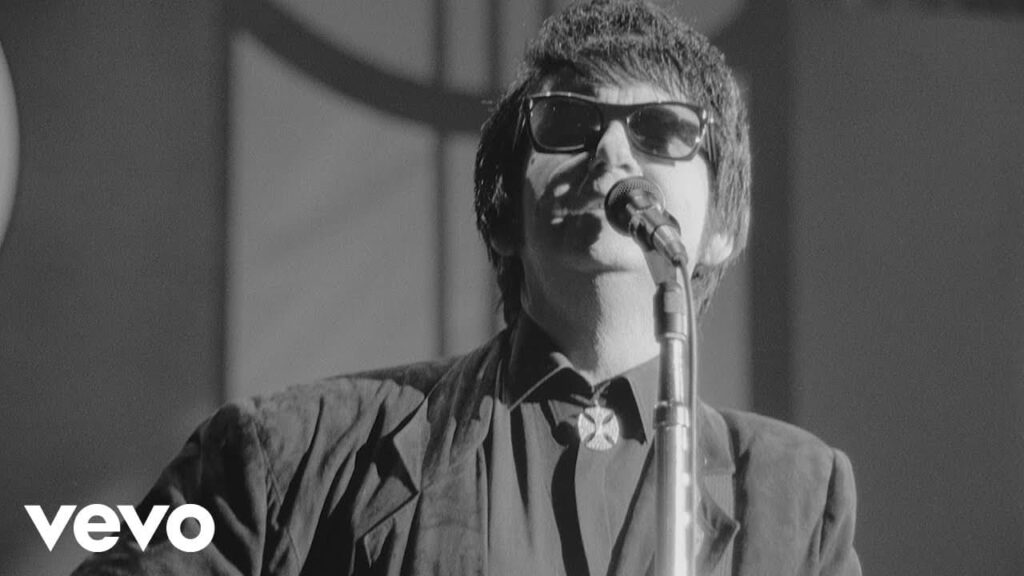
The Last Waltz of the Big O: How a Posthumous Ballad Became the Quintessence of Heartbreak
To speak of Roy Orbison is to invoke a sound that stands apart—a three-octave range that could turn a simple plea into an operatic tragedy, delivered by a man shrouded in black, behind those perpetually dark glasses. While many of his hits define the early 1960s, few songs capture the melancholic essence of the man quite like “(All I Can Do Is) Dream You.” Yet, for those of us who cherished Roy in his prime, this song carries a unique poignancy, for it was one of the last breathtaking sighs we ever heard from “The Big O.”
The Final Chapter and Chart Impact
“(All I Can Do Is) Dream You” was a key track released posthumously on Roy Orbison’s triumphant final album, Mystery Girl, in 1989, mere weeks after his untimely passing in December 1988. It was part of a powerful resurgence—a comeback cemented by his work with the Traveling Wilburys and the re-release of his classic material.
While the album Mystery Girl was a worldwide smash, peaking at #5 on the US Billboard 200 and reaching #1 in the UK, this specific track was not chosen as one of the main singles like the enduring hit “You Got It” or the gorgeous “She’s a Mystery to Me.” Instead, its chart position is measured by its indispensable contribution to the album’s incredible success and the cultural impact of his final legacy. It was an essential deep cut that demonstrated Roy had lost none of his heart-stopping vocal power.
Story, Meaning, and The Black & White Night
The story behind this song connects directly to the final, brilliant flourish of Orbison’s life. It was written for him by Billy Burnette (son of rockabilly legend Johnny Burnette) and David Malloy, an aching ballad tailor-made for his voice. It addresses the theme that Orbison perfected throughout his career: the agonizing distance between desire and reality.
The meaning of “(All I Can Do Is) Dream You” is an affirmation of the dreamer’s fate—that for a love that cannot be held, touched, or won, the only sanctuary left is the world of sleep. The narrator is so utterly consumed by the object of his desire that his entire waking life is a void, and his only moment of emotional fulfillment comes when his consciousness fades. The chorus, “Baby, all I can do is dream you, all I can do is dream you,” isn’t a simple lament; it’s a fatalistic acceptance of his romantic exile.
The song gained early recognition not just from the studio recording on Mystery Girl, but from its inclusion in the iconic 1987 concert special, Roy Orbison and Friends: A Black and White Night. Seeing Roy perform this track live, surrounded by his admirers and collaborators like Bruce Springsteen, Elvis Costello, and k.d. lang, is to witness rock royalty in awe of the master. That performance, captured two years before the studio version’s release, allowed us to hear him pour his soul into the melody, cementing the song’s place as a cornerstone of his late-career renaissance.
For those of us who remember those days, the song feels like a whisper from the past, reminding us that even in his final years, Roy Orbison remained the unchallenged poet of vulnerability and loss. His unique persona—the velvet voice paired with lyrics of raw, almost masochistic heartache—challenged the rigid masculinity of the rock and roll landscape. “(All I Can Do Is) Dream You” is the perfect coda to his career; a beautiful, agonizing reminder that for “The Big O,” the deepest emotions were always found in the shadows, or, as he sang, only in dreams.