
A Love That Refused Distance, Time, and Even Mortality
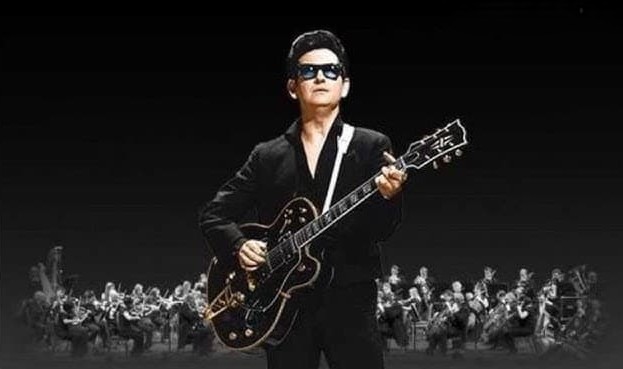
When Roy Orbison first recorded “I Drove All Night,” the song would not reach the public until years after his death, eventually becoming one of the defining chapters of his posthumous legacy. Released as a single from King of Hearts in 1992, Orbison’s version climbed to No. 7 on the UK Singles Chart, proving that the power of his voice remained undiminished even after he was gone. Decades later, the song found new life in the orchestral project A Love So Beautiful, where Orbison’s original vocal was paired with Ward Thomas and the Royal Philharmonic Orchestra, creating a sweeping reinterpretation that bridges generations of listeners.
There are love songs that whisper, and there are love songs that ache. “I Drove All Night” belongs firmly to the latter category. Written by the celebrated songwriting team of Billy Steinberg and Tom Kelly, the composition is built around one of the most dramatic declarations in popular music: a lover crossing impossible distances simply to be near the person who occupies every waking thought.
What makes Orbison’s interpretation so extraordinary is that he never sings the song as a reckless romantic adventure. Instead, he approaches it as a confession. His voice carries the weight of longing, exhaustion, desire, and relief all at once. The journey described in the lyrics is physical, but it is also emotional. Every mile traveled becomes a symbol of devotion; every hour on the road becomes a measure of yearning. The destination is not merely a place—it is a person.
In the 2017 duet version, that emotional landscape expands dramatically. The addition of Ward Thomas introduces a new perspective, transforming the song from a solitary declaration into something closer to a conversation across time. Orbison’s unmistakable voice emerges from the original recording with all its velvet darkness intact, while the modern harmonies add warmth and tenderness. Behind them, the Royal Philharmonic Orchestra amplifies every emotional contour, turning the song into a cinematic experience rather than a simple rock ballad.
Yet the true magic of this recording lies in its symbolism. Orbison, whose career was defined by songs about loneliness, longing, and impossible love, seems perfectly matched to this narrative. The man who gave the world classics such as “Only the Lonely,” “Crying,” and “In Dreams” understood better than almost any singer how to inhabit emotional vulnerability without sacrificing dignity. In “I Drove All Night,” he does not plead for love; he pursues it with unwavering determination.
Listening today, the song feels almost mythic. The road stretches endlessly through the darkness, headlights cutting through the night, driven by a heart that refuses surrender. The orchestral arrangement only heightens that imagery, giving the performance a grandeur that echoes the timeless quality of Orbison’s artistry.
More than three decades after its original release, this duet version stands as a remarkable reminder that great recordings do not belong to a single era. They continue their journey, finding new voices, new audiences, and new meanings. And in the case of Roy Orbison’s “I Drove All Night,” that journey remains every bit as compelling as the one described in the song itself.