
A Carnival of Lights Hiding a Meditation on Hope, Chance, and Human Longing
When Roy Orbison released “Penny Arcade” in 1969, few could have predicted that this buoyant, colorful single would become one of the most enduring international successes of his later career. Included on The Big O album in 1970, the song reached No. 1 in Australia, where it remained a major hit during the summer of 1969–70, while also climbing to No. 27 on the UK Singles Chart. At a time when Orbison’s commercial fortunes had become less certain in the United States, “Penny Arcade” proved that his voice and emotional instincts still possessed a remarkable ability to connect with audiences around the world.
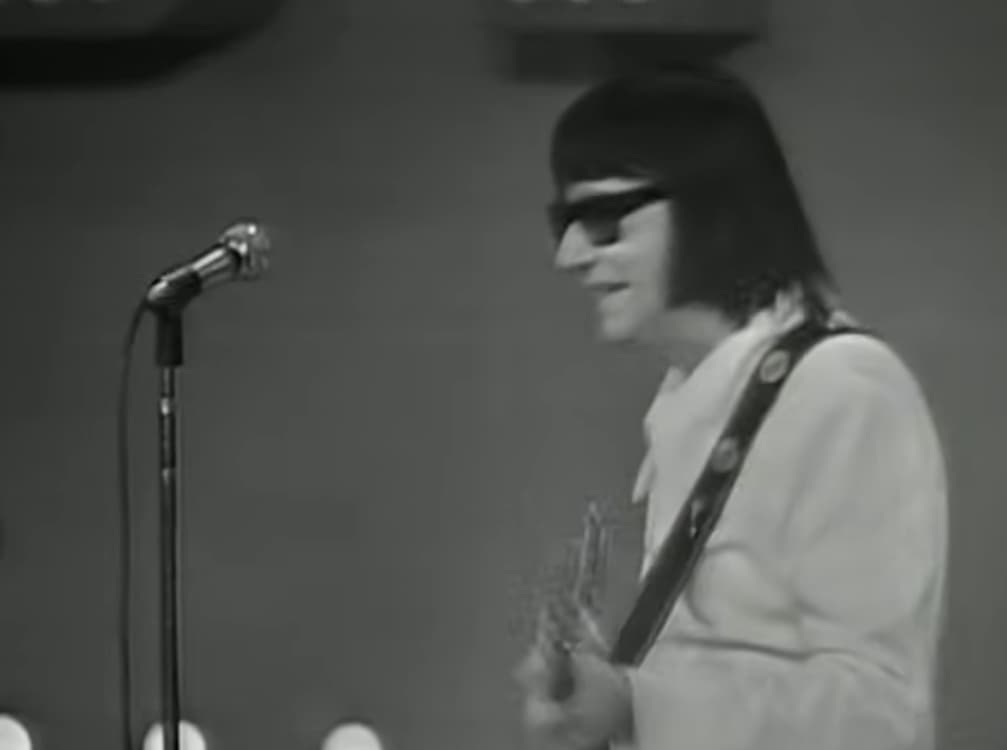
The 1972 Australian performance captures an artist who had already lived through extraordinary triumphs and devastating personal losses. By then, Roy Orbison was no longer the chart-dominating figure who had defined the early 1960s with classics such as “Only the Lonely”, “Running Scared”, and “Crying”. Yet there is something deeply revealing about his embrace of “Penny Arcade” on stage. The song may appear cheerful on the surface, but beneath its bright melodies lies a theme that had always fascinated Orbison: the fragile relationship between dreams and reality.
Written by Sammy King, “Penny Arcade” unfolds like a walk through a glowing amusement hall filled with flashing lights, ringing bells, and endless possibilities. The arcade becomes more than a physical place—it serves as a metaphor for life itself. Every machine promises a reward. Every coin represents another chance. Every light suggests hope just beyond reach. The narrator is drawn into this dazzling world, captivated by the possibility that the next attempt might finally bring fulfillment.
What makes the song particularly compelling is the tension between innocence and obsession. The repeated invitation to “roll up and spend your last dime” carries a meaning that extends far beyond the arcade floor. It reflects the human tendency to keep believing, to keep investing emotionally in dreams, relationships, and ambitions even when certainty remains elusive. In that sense, “Penny Arcade” shares more DNA with Orbison’s great heartbreak ballads than casual listeners often realize. The setting may be brighter, but the emotional questions are strikingly familiar.
Musically, the record stands apart from many of Orbison’s most famous recordings. Instead of dramatic operatic crescendos, it rides on an infectious rhythm and a melody that feels almost hypnotic in its repetition. Yet Orbison’s unmistakable voice brings gravity to every line. He transforms what could have been a simple novelty song into something richer and more reflective. The excitement of the arcade never completely masks the wistfulness beneath it.
Watching the 1972 Australian performance today, one can understand why audiences embraced the song so enthusiastically. It offered optimism without naivety and nostalgia without sentimentality. More importantly, it showcased an artist capable of finding emotional depth in unexpected places. The flashing lights of “Penny Arcade” may illuminate a carnival scene, but through Roy Orbison’s interpretation they also illuminate something timeless about the human condition: our willingness to keep feeding the machine of hope, believing that the next turn, the next chance, or the next dream might finally make all the colored lights cascade.