
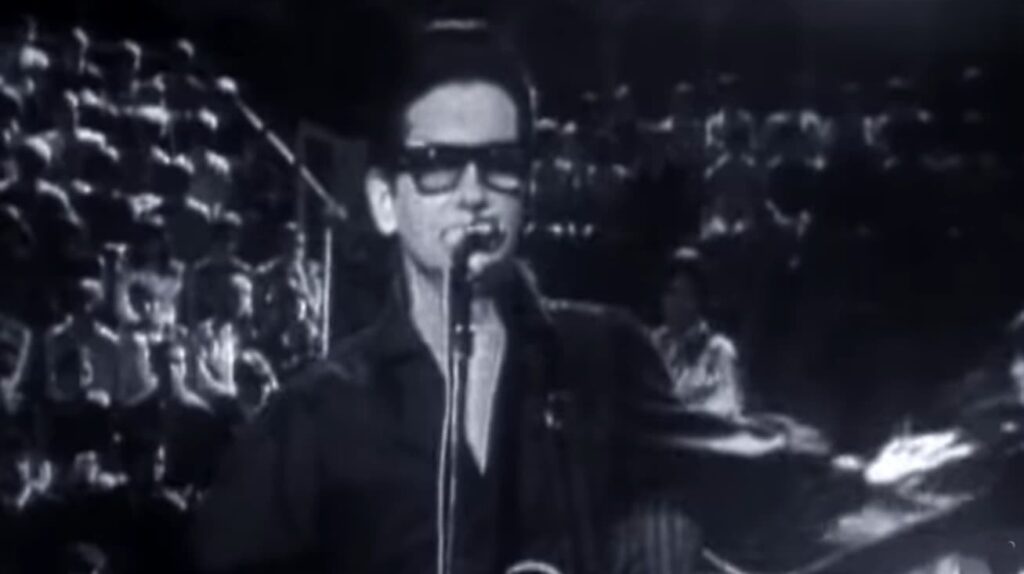
A Voice From Beyond Time Turns Heartbreak Into a Shared Conversation
When Roy Orbison, the Royal Philharmonic Orchestra, and country singer Cam came together for Heartbreak Radio, the result was far more than a simple remake. Released in 2018 on the album Unchained Melodies, the recording reimagined one of the most poignant songs from Orbison’s posthumous 1992 album King of Hearts. The original Heartbreak Radio reached No. 36 on the UK Singles Chart upon its release, becoming one of the notable late entries in Orbison’s remarkable catalog.
There is a particular kind of magic in Roy Orbison’s music—a quality that allows sorrow to feel intimate rather than overwhelming. Heartbreak Radio embodies that gift perfectly. Written by Troy Seals and Frankie Miller, the song unfolds as a lonely meditation on memory, regret, and the inability to escape the echoes of a lost love. The title itself is brilliant in its simplicity. Orbison imagines a world where every station seems dedicated to reminding him of what has been lost, where every melody becomes another messenger carrying old emotions back into the present.
The 2018 interpretation adds a fascinating new dimension to that narrative. Orbison’s original vocal, preserved from another era, is surrounded by the sweeping arrangements of the Royal Philharmonic Orchestra, while Cam enters not merely as a guest vocalist but as a conversational partner. Her presence transforms the song from a solitary confession into something closer to a dialogue across generations. The contrast between Orbison’s unmistakable voice—rich with vulnerability and longing—and Cam’s modern country warmth creates an emotional depth that feels both timeless and contemporary.
What has always distinguished Orbison from many of his peers is his refusal to hide emotional fragility. In an age when rock and country music often celebrated toughness, he specialized in exposing the raw nerves beneath the surface. Heartbreak Radio continues that tradition. There is no anger here, no dramatic confrontation. Instead, there is resignation, reflection, and the quiet realization that some wounds never fully disappear. The song recognizes a universal truth: music has an uncanny ability to preserve emotions long after the moments that created them have passed.
The orchestral arrangement amplifies that idea beautifully. Strings rise and fall like waves of memory, while the rhythm moves with a gentle inevitability, mirroring the way certain thoughts return uninvited. Rather than modernizing Orbison, the arrangement magnifies what was already present in his work—his gift for turning heartbreak into something cinematic and deeply human.
More than three decades after his passing, Roy Orbison remains one of popular music’s most distinctive emotional storytellers. Heartbreak Radio serves as a reminder that great songs do not belong to a single decade. They endure because the feelings they express endure. In this version, Orbison’s voice feels almost suspended outside time itself, carried forward by a new generation of musicians who understand that true heartbreak never becomes outdated—it simply finds new listeners.