
A Glittering Farewell to the Dancehall Dream Beneath Britain’s Fading Neon Lights
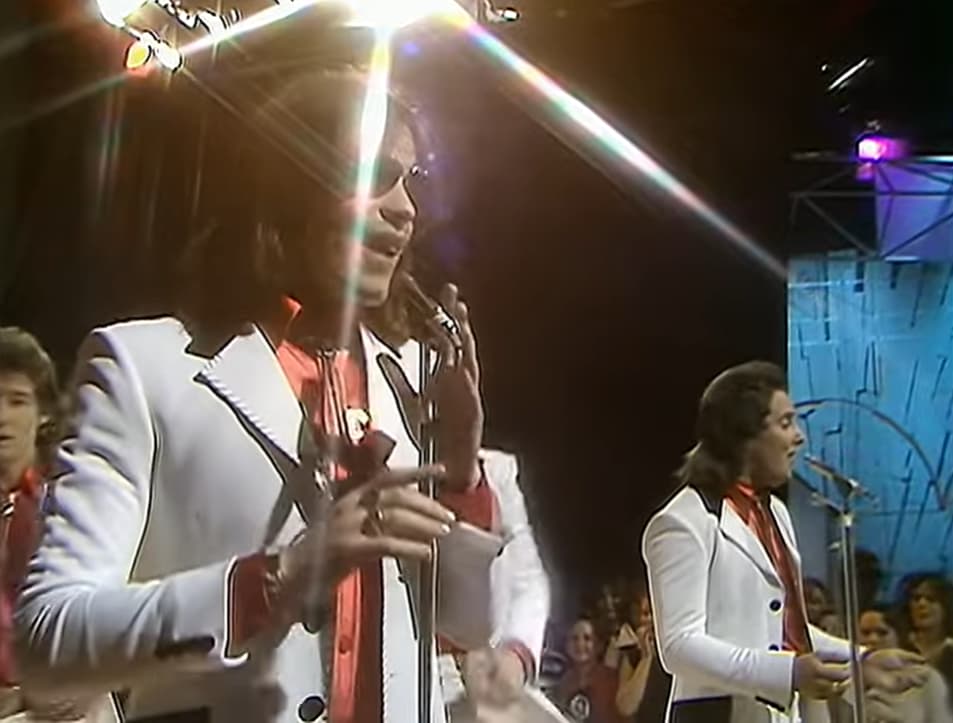
When Showaddywaddy performed “Trocadero” on Top of the Pops in May 1976, the group was already one of Britain’s most dependable hit-making machines, carrying the torch for 1950s rock ’n’ roll revivalism into an era increasingly dominated by glam excess and the first murmurs of punk rebellion. Released as a single from the album “Red Star,” “Trocadero” climbed into the UK Singles Chart’s Top 40, peaking at No. 24 in 1976 — a respectable showing for a band whose appeal rested not in fashionable reinvention, but in their stubborn devotion to melody, harmony, and the romance of an earlier age. Yet beneath its polished rhythm and nostalgic sheen, “Trocadero” carried something more wistful than many of the band’s celebratory rock-and-roll throwbacks.
The title itself evokes an almost cinematic sense of place. The word “Trocadero” had long been associated with grand ballrooms, dance halls, and glamorous nightlife — places where ordinary people briefly stepped into elegance beneath chandeliers and mirrored walls. By the mid-1970s, however, Britain was changing rapidly. Old dance palaces were disappearing, youth culture was fragmenting, and nostalgia had become not merely entertainment, but emotional refuge. That atmosphere hangs quietly over the song.
Unlike the swaggering confidence found in many revival hits of the period, “Trocadero” feels haunted by memory. The arrangement is smooth and carefully layered, balancing upbeat percussion with harmonies that suggest distance rather than immediacy. Even in performance, Showaddywaddy projected less the rebellious danger of original rock pioneers and more the warmth of men preserving a fading social ritual. Their music was never simply imitation. It was preservation — an attempt to hold onto the communal joy of dancehall culture before it vanished beneath modern cynicism.
The group’s appearance on Top of the Pops on 20 May 1976 captured this tension perfectly. British television at the time was becoming a battleground between generations of pop music. On one side stood polished entertainers like Showaddywaddy, heirs to the clean harmonies and choreographed charm of earlier decades. On the other side, a harsher future was approaching fast. Within a year, punk would begin dismantling much of the nostalgia-driven pop establishment. Seen from that historical distance, “Trocadero” almost plays like a final slow dance before the lights came on.
Musically, the song leans heavily on emotional accessibility rather than innovation. That was always part of Showaddywaddy’s genius. Their records understood that memory itself could function like an instrument. The harmonies are rich with familiarity, and the rhythm moves with the gentle confidence of a couple crossing a polished ballroom floor. There is very little aggression in the recording. Instead, there is yearning — the ache of wanting one more evening inside a world already slipping away.
What makes “Trocadero” endure is not simply its chart history or its television appearance, but its emotional timing. In retrospect, the song now sounds like a cultural snapshot of Britain standing between eras: old dancehall romanticism on one side, social and musical upheaval on the other. Many records from the 1970s chased the future. Showaddywaddy, by contrast, found their power in looking backward with sincerity. And in “Trocadero,” they transformed nostalgia into something unexpectedly poignant — not just a celebration of youth, but a quiet elegy for places, feelings, and nights that could never fully return.