
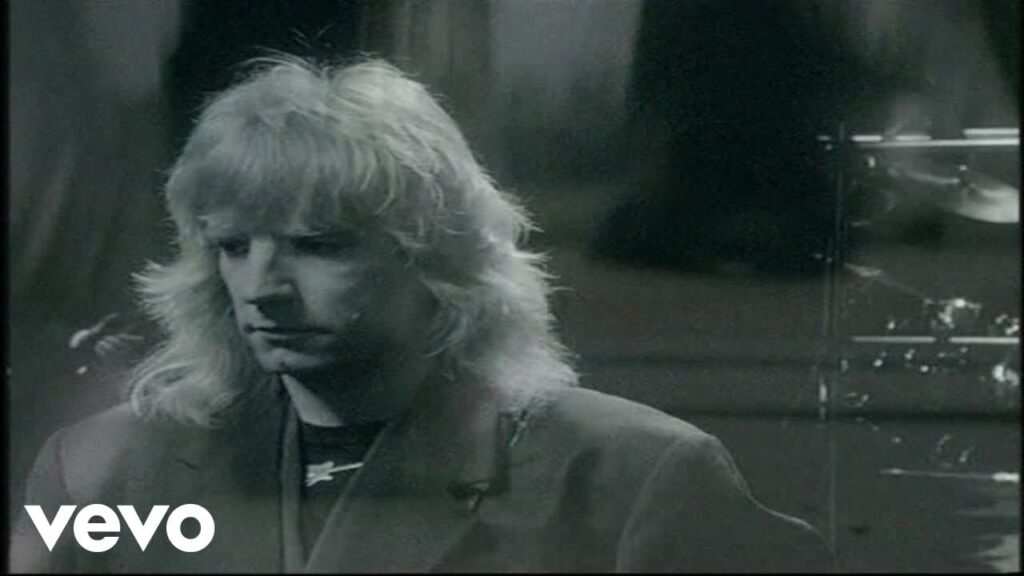
Duty, distance, and disillusionment collide in a soldier’s quiet reckoning with reality
When Status Quo released In The Army Now in 1986 as the title track of their album In The Army Now, the band found themselves returning to the upper reaches of the charts with renewed clarity of purpose. The single climbed to No. 2 on the UK Singles Chart, marking one of their most significant late-career successes. Originally written and recorded by the Bolland brothers earlier that same year, Status Quo’s interpretation transformed the composition into something broader in cultural resonance, aligning their signature directness with a theme that transcended generations.
At its core, In The Army Now is not a glorification of military life, but rather a stark, almost understated meditation on the abrupt transition from civilian innocence to the rigid, often unforgiving structure of armed service. Unlike the band’s earlier boogie-driven anthems, this track adopts a more measured, synthesizer-laced arrangement, reflecting the sonic landscape of the mid-1980s while reinforcing the narrative’s tension. The mechanical pulse of the rhythm mirrors the discipline imposed upon the individual, while the melody carries a subdued, almost weary resolve.
The narrative voice within the song is strikingly impersonal, which is precisely where its emotional weight resides. There is no grand heroism here, no cinematic battlefield glory. Instead, the lyrics unfold like fragments of experience: the uncertainty of deployment, the letters from home, the quiet dread of the unknown. This fragmented storytelling allows listeners to project their own understanding onto the song, making it as much about internal conflict as external circumstance.
Status Quo, long associated with a more straightforward rock identity, reveal a different dimension of their artistry through this performance. The restraint in In The Army Now is deliberate. Francis Rossi’s vocal delivery avoids dramatics, opting instead for a steady, almost resigned tone that underscores the inevitability of the situation being described. It is this restraint that gives the song its enduring authenticity. The absence of overt emotional cues invites the listener to sit with the reality rather than be guided through it.
Culturally, the song arrived at a time when public consciousness around military service was shaped by both Cold War tensions and shifting attitudes toward conflict. Without referencing specific wars or political stances, In The Army Now captures a universal experience: the moment when youthful certainty is replaced by the gravity of obligation. Its lack of specificity becomes its strength, allowing it to resonate across borders and eras.
Over time, the track has maintained a presence not only as a chart success but as a reflective piece within Status Quo’s catalog. It stands apart, less about the swagger of rock and more about the human condition under pressure. In The Army Now endures because it speaks in a quiet voice, one that does not demand attention, yet lingers long after the final note fades.