
A Voice from Glam Rock’s Golden Ruins Still Searching for One More Night of Applause
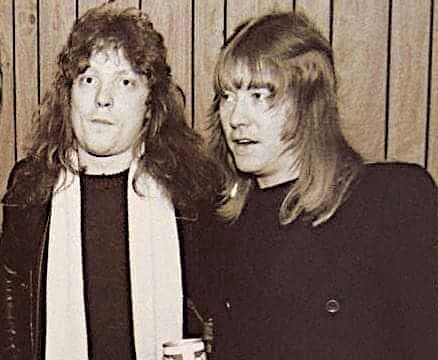
By the time Brian Connolly and Steve Priest stood together again to perform songs associated with Sweet, the moment carried far more weight than nostalgia alone. The original recordings by Sweet had once dominated British charts throughout the early 1970s, producing a remarkable run of hits including “Block Buster!”, “Ballroom Blitz”, and “Fox on the Run”, many of them tied to landmark albums such as “Desolation Boulevard” and “Give Us a Wink.” Their music was not merely successful; it helped define the theatrical heartbeat of glam rock itself, where hard-edged guitar riffs collided with towering harmonies and glitter-coated bravado. Yet performances involving Connolly and Priest in later years always carried another dimension entirely: the ache of survival after fame had already passed through the room.
What makes these appearances so emotionally compelling is the contrast between the image Sweet once projected and the fragility that eventually emerged behind it. In their prime, Sweet sounded almost invincible. Their records exploded with confidence, layered vocals, and enormous hooks engineered for packed arenas and teenage hysteria. But beneath the glitter makeup and stomping rhythms lived musicians navigating the brutal machinery of fame during one of rock’s most excessive decades. Few voices embodied that collision more painfully than Brian Connolly’s.
Connolly possessed one of glam rock’s most instantly recognizable voices, a sharp yet vulnerable tenor capable of sounding triumphant and wounded within the same phrase. Over time, personal struggles and physical decline altered that voice dramatically. By the era of later reunion appearances and revival shows with figures like Steve Priest, audiences were no longer simply hearing old songs performed again. They were witnessing the remains of an era trying to hold itself together under the weight of memory.
That is precisely why these performances resonate so deeply among longtime listeners. Songs associated with Sweet were never built on subtlety. They were loud, flamboyant, euphoric records designed to fill every available inch of space. But decades later, when sung by aging survivors of that movement, the material transforms. Lyrics once heard as playful or rebellious suddenly feel haunted by time itself. The choruses remain enormous, yet the human voices delivering them reveal exhaustion, resilience, and undeniable mortality.
Steve Priest, meanwhile, often served as the grounding force in Sweet’s mythology. His stage presence balanced menace and humor, while his bass playing anchored the band’s most explosive recordings. Watching him beside Connolly in later years created an almost cinematic contrast between past and present. The glam-rock fantasy still flickered in the lights and costumes, but reality stood plainly beside it: these were men carrying the echoes of a cultural earthquake they had once helped create.
What endures about Sweet is not merely the hit records or glitter-era spectacle. It is the emotional contradiction embedded within their legacy. Their music sounded celebratory, yet so much of it now feels tied to loss: lost youth, lost momentum, lost versions of themselves frozen forever in vinyl grooves and television broadcasts. That tension gives performances involving Brian Connolly and Steve Priest a rare emotional gravity. They remind listeners that rock history is not preserved in perfect condition. It ages with the people who made it.
And perhaps that is the true power of Sweet’s surviving performances. They no longer feel like reenactments of fame. They feel like conversations with time itself, sung by men who once stood at the center of glam rock’s loudest storm and lived long enough to hear its echo fade into silence.