
When the Glitter Finally Settles, What Remains Is the Man Beneath the Applause
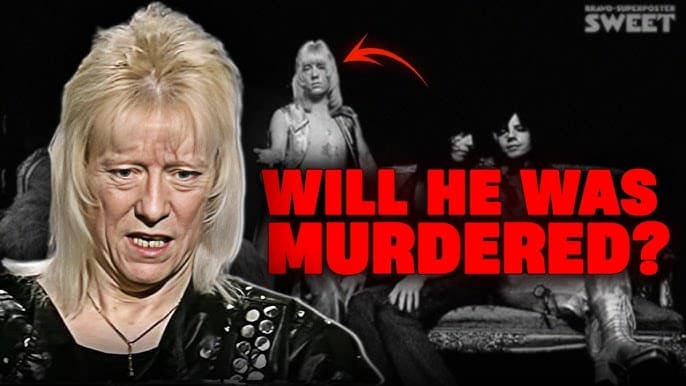
By the time Brian Connolly sat down for the deeply revealing 1995 UK Living interview, the towering commercial peak of The Sweet already belonged to another era. Yet the shadow of those years still lingered in every pause, every memory, every weathered expression. This was the voice that had once driven glam rock into the mainstream with seismic singles like “Blockbuster!”, “Ballroom Blitz,” and “Fox on the Run,” records that transformed The Sweet into one of Britain’s defining chart forces of the 1970s. In 1995, Connolly had recently released Let’s Go, an album tied to the later incarnation of Brian Connolly’s Sweet, but the interview itself was less about promotion than reflection. It felt like a reckoning with fame, survival, and identity after the machinery of stardom had long moved on.
What makes this interview so haunting decades later is not scandal, nor nostalgia alone. It is the stark contrast between the image the public remembered and the fragile humanity now sitting before the camera. During the height of glam rock, Connolly had embodied excess, charisma, and theatrical swagger. The Sweet were loud, flamboyant, irresistible. Their records exploded with stomping drums, razor-edged harmonies, and choruses built for arenas before arena rock had fully codified itself. But the UK Living appearance strips away the mythology. What remains is a man trying to separate his real life from the caricature that fame had fossilized around him.
Connolly speaks with a calmness that carries the weight of exhaustion. There is little self-pity in the interview. Instead, there is the unmistakable tone of someone who has seen how quickly public adoration can become historical footnote. His health struggles, particularly the series of heart attacks and physical decline that followed years of hard living, had already become part of rock folklore by then. Yet hearing him discuss those experiences directly gives them a different gravity. The conversation ceases to be about celebrity tragedy and becomes something quieter, almost painfully human.
Equally compelling is the way Connolly reflects on identity itself. He discusses his upbringing, his foster family, and the late discovery of his biological roots with surprising openness. Those revelations seem to explain something deeper beneath the glam image: a lifelong search for belonging. In hindsight, the explosive energy of The Sweet often masked emotional instability beneath layers of glitter, platform boots, and deafening hooks. Connolly’s vulnerability in this interview reveals the emotional cost of sustaining an invented persona for too long.
And still, despite everything, music remained his language of survival. That is perhaps the most moving aspect of the 1995 conversation. Connolly does not speak like a defeated man. Wounded, certainly. Weathered beyond his years, undeniably. But not defeated. There is still pride when he speaks about performing. Still affection when discussing the songs that shaped an entire generation of British rock listeners. The voice may have roughened, the body may have slowed, but the instinct to connect through music never truly disappeared.
Seen now, the UK Living interview feels less like a television appearance and more like an epilogue written in real time. Not the sound of a fallen idol begging to relive former glory, but the testimony of an artist confronting what fame leaves behind once the lights go dark. In that honesty lies its lasting power.