
Devotion So Absolute It Redefines the Very Measure of Love
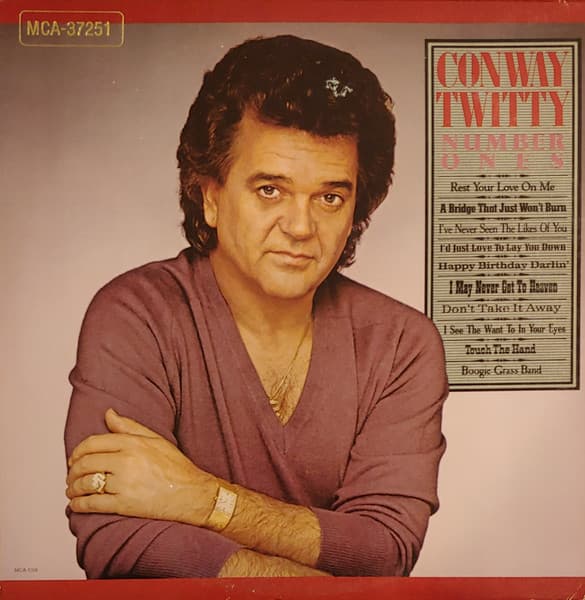
When Conway Twitty released “I’ve Never Seen The Likes Of You” in 1970, it ascended swiftly to the upper reaches of the country charts, securing the No. 2 position on Billboard’s Hot Country Singles chart and reinforcing Twitty’s formidable reign during the era. Featured on the album Hello Darlin’, the song arrived at a moment when Twitty was refining his transformation from rock and roll crossover star into one of country music’s most persuasive interpreters of romantic longing. The single’s commercial success was no anomaly; it was the product of a voice and sensibility that seemed engineered to articulate the deepest registers of devotion.
At its heart, “I’ve Never Seen The Likes Of You” is a study in astonishment—romantic awe rendered with the hushed reverence of a man who has encountered something, or someone, singular. The song’s premise is deceptively simple: a lover confesses that no one in his past compares to the woman before him. Yet in Twitty’s hands, this familiar theme becomes elevated, almost sacramental. His delivery lingers on each syllable as though testing the weight of its truth. This is not infatuation dressed in hyperbole; it is mature recognition, a seasoned heart startled by grace.
The arrangement underscores that sincerity. The production—characteristic of early 1970s Nashville—wraps Twitty’s vocal in warm strings and restrained rhythm, allowing the melody to unfold without distraction. There is a patience in the tempo, a refusal to rush toward emotional climax. Instead, the song breathes, giving space to the kind of measured reflection that only hindsight affords. Twitty, who had already navigated both the volatile highs of pop stardom and the steadier terrain of country acclaim, sings as a man acquainted with experience. That context deepens the lyric’s claim: when he says he has never seen the likes of her, the listener believes him.
This credibility was central to Twitty’s appeal. His baritone—rich, velvety, and tinged with vulnerability—carried an intimacy that felt almost confessional. In “I’ve Never Seen The Likes Of You,” he doesn’t simply describe admiration; he embodies it. Each line seems less a performance than a private revelation inadvertently overheard. The subtle tremor in his phrasing conveys gratitude as much as desire, suggesting that the song’s real subject is not beauty alone, but transformation—the way love can reorder a life long thought settled.
Within the broader arc of Twitty’s catalog, the song stands as a testament to his mastery of romantic balladry. It helped cement the persona that would define much of his 1970s output: the devoted, slightly awed lover whose emotional candor felt revolutionary in its restraint. While flashier hits might dominate casual retrospectives, “I’ve Never Seen The Likes Of You” endures for those who return to vinyl seeking something quieter but no less profound—a reminder that sometimes the most radical declaration in popular music is simple wonder.