
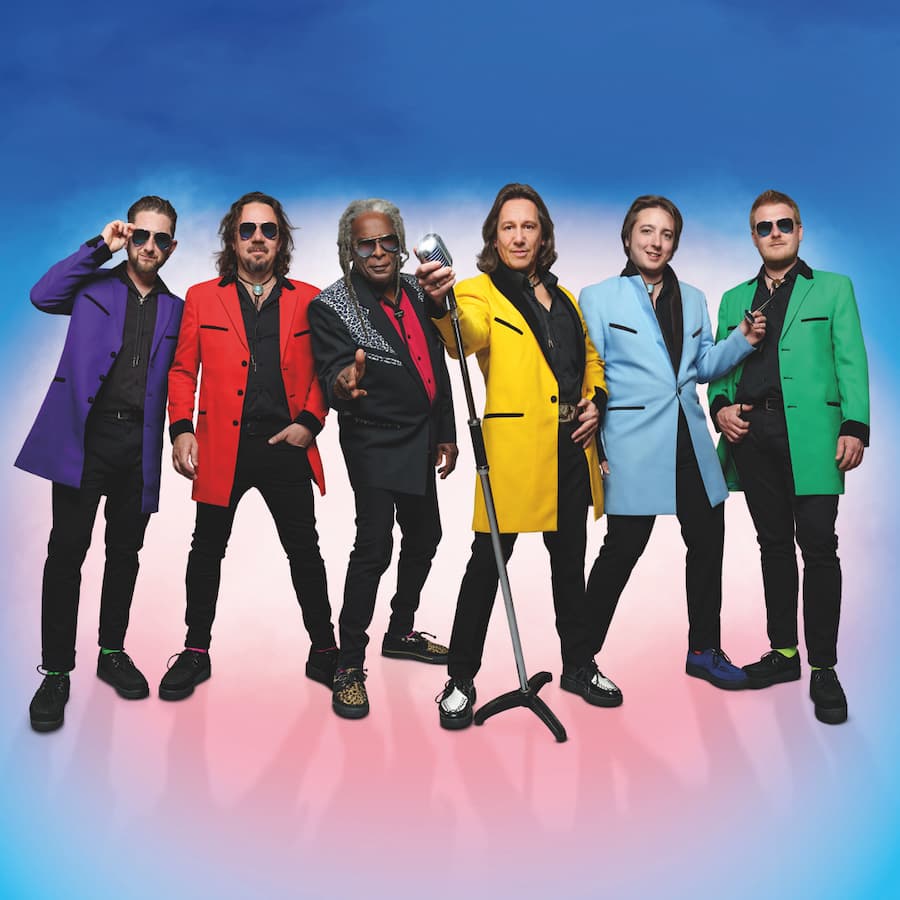
Tender echo of young love, where memory preserves what time inevitably erodes
When Showaddywaddy released Remember Then in 1979 as part of their album Crepes & Drapes, the track did not emerge as a chart-dominating single in the way some of their earlier rock and roll revivals had. Yet, within the broader arc of the band’s career, it occupies a more intimate and enduring space, one less concerned with commercial peak and more aligned with emotional permanence. Known primarily for their high-energy reinterpretations of 1950s rock and doo-wop, Showaddywaddy revealed through Remember Then a quieter devotion to the spirit of the era they so faithfully celebrated.
At its core, Remember Then is less a performance and more a recollection. The song draws deeply from the doo-wop tradition, echoing the sentimental balladry that once drifted from street corners and late-night radio waves. Its structure is deliberately simple, almost cyclical, mirroring the way memory itself functions. Lines return like familiar faces, harmonies rise and fall with a gentle inevitability, and the emotional weight is carried not by dramatic shifts, but by subtle repetition.
The narrative within the song is disarmingly universal. It is a reflection on young love, filtered through the lens of time. But unlike many nostalgic compositions that romanticize the past with broad strokes, Remember Then feels personal, almost diaristic. There is an intimacy in the phrasing, as though the singer is not addressing an audience, but speaking quietly to someone who already understands. The repeated invocation of shared moments transforms the song into a kind of emotional time capsule, preserving fleeting experiences that would otherwise dissolve into abstraction.
Musically, Showaddywaddy resist the temptation to modernize. Instead, they lean fully into the aesthetic vocabulary of the 1950s, employing layered vocal harmonies that carry a soft, almost velvety texture. The instrumentation remains restrained, allowing the voices to occupy center stage. This choice is crucial. It places the listener not in the polished studio environment of the late 1970s, but in an imagined past where emotion was conveyed through closeness and collective harmony.
What makes Remember Then particularly resonant is its awareness of time’s passage. The song does not attempt to reclaim youth, nor does it pretend that the past can be relived. Instead, it acknowledges the quiet transformation that occurs as memories age. There is a gentle acceptance woven into its fabric, a recognition that while moments fade, their emotional imprint lingers.
Within the broader legacy of Showaddywaddy, a group often associated with revivalism and energetic nostalgia, Remember Then stands apart as something more reflective. It is not simply a tribute to an earlier musical style, but an exploration of why that style continues to matter. It reminds the listener that beneath every harmony lies a human story, and beneath every melody, a moment that once felt infinite.
In the end, Remember Then endures not because it seeks to dazzle, but because it understands the quiet power of remembrance. It invites the listener to pause, to look backward without regret, and to recognize that even the most fleeting chapters of life can echo far longer than expected.