
A Night in London Where Two Country Voices Turned Heartbreak Into Harmony
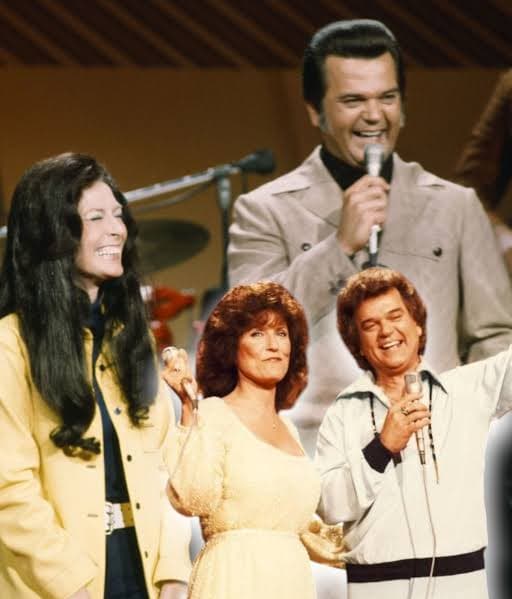
By 1985, Loretta Lynn and Conway Twitty were no longer simply country stars sharing microphone space—they had become one of the genre’s most dependable emotional institutions. Their appearance in Live at Wembley, captured during the celebrated Sing Country performances in London, arrived after nearly a decade of duet success that had already produced multiple No. 1 country hits, including “After the Fire Is Gone,” “Lead Me On,” and “Louisiana Woman, Mississippi Man.” Though the Wembley performance itself was not tied to a specific charting single, it stood as a living testament to the enduring popularity of their collaborations, forged through a remarkable run of albums on MCA Records during the 1970s and early 1980s. For British audiences especially, the concert carried the atmosphere of witnessing American country royalty in full command of their craft.
What makes this Wembley recording so enduring is not spectacle. There are no elaborate stage tricks, no desperate attempts to modernize the sound for the mid-1980s. Instead, the performance thrives on something far rarer: trust between two voices that understood the emotional grammar of country music better than almost anyone else of their era.
Conway Twitty possessed a voice that could sound velvet-soft one moment and devastatingly weary the next. He approached lyrics like private confessions overheard through a kitchen wall late at night. Loretta Lynn, by contrast, carried the sharp honesty of someone who had lived every line she sang. Together, they created tension without conflict—a conversation between masculine regret and feminine resilience that defined so much of classic country storytelling.
At Wembley, that chemistry becomes almost cinematic. One can hear the audience reacting not merely to famous songs, but to recognition itself. These were songs about marriages surviving disappointment, lovers carrying old wounds, and ordinary people trying to preserve dignity inside emotional wreckage. Country music had always excelled at transforming private pain into communal experience, and few artists embodied that tradition more naturally than Lynn and Twitty.
There is also something deeply symbolic about this performance taking place in London rather than Nashville. By the mid-1980s, American country music was evolving rapidly, increasingly polished and commercially streamlined. Yet here, thousands of miles from Tennessee, British fans embraced the older emotional architecture of country music with almost reverential attention. Wembley became less a concert venue and more a sanctuary for storytelling traditions rooted in honesty, restraint, and human imperfection.
The brilliance of these performances lies in their refusal to exaggerate emotion. Loretta Lynn never begs for sympathy, and Conway Twitty never oversings heartbreak. Their restraint becomes the source of the power. Every pause, every exchanged glance, every measured harmony suggests two seasoned survivors who understand that the saddest truths rarely need dramatic decoration.
Listening now, decades later, Live at Wembley feels almost like a preserved conversation from another America—one where country music still belonged primarily to working people carrying invisible burdens. The performance captures a generation of artists who sang not to impress audiences, but to recognize them.
And perhaps that is why these recordings continue to resonate. Long after trends fade and production styles age, sincerity remains timeless. On that London stage in 1985, Loretta Lynn and Conway Twitty reminded the world that country music’s greatest strength was never glamour. It was understanding.