
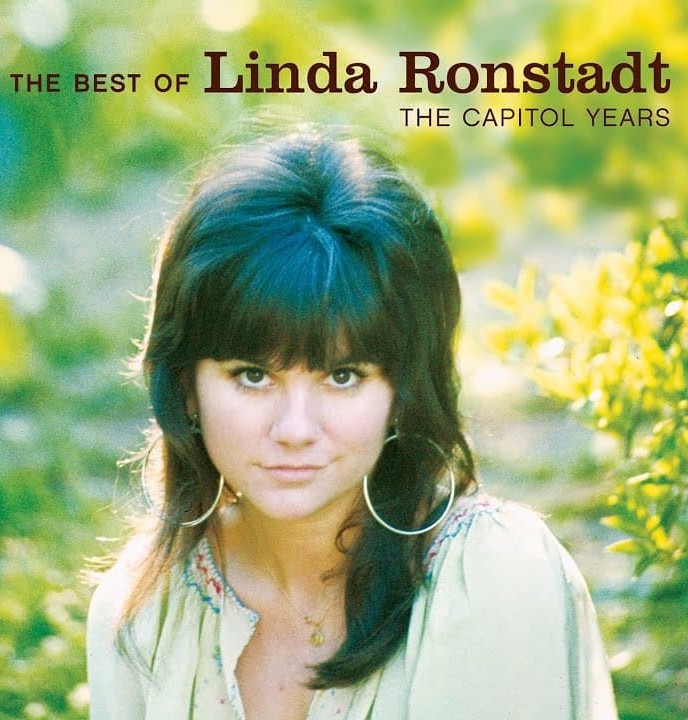
A love condemned to shadows, where desire burns brightest in secrecy and silence
Within the luminous arc of Linda Ronstadt’s mid-1970s ascent, her interpretation of Dark End Of The Street emerges not as a chart-dominating single, but as a deeply resonant album cut from the landmark record Heart Like a Wheel. Released at a time when Ronstadt was redefining the emotional vocabulary of American popular music, the album itself reached the summit of the Billboard 200, cementing her status as one of the era’s most expressive vocalists. In this context, Dark End Of The Street becomes something more intimate than a hit—it is a moment of shadowed confession nestled within a record of luminous clarity.
The song carries with it a lineage that predates Ronstadt’s voice, rooted in the soul tradition where moral conflict and emotional urgency intertwine. Yet her rendition reframes the narrative. Where earlier versions leaned into the raw ache of Southern soul, Linda Ronstadt introduces a kind of crystalline restraint. Her voice does not plead as much as it reveals, unfolding the story with a quiet inevitability that feels almost cinematic.
At its core, Dark End Of The Street is a study in contradiction. It speaks of love, yet it is a love that cannot exist in the light. The street itself becomes a metaphorical refuge, a place where truth can briefly surface before being swallowed again by societal judgment. Ronstadt’s phrasing lingers on this tension. Each line feels suspended between confession and concealment, as though the singer is both participant and observer in a narrative she cannot fully escape.
What distinguishes this interpretation is the interplay between vocal clarity and emotional ambiguity. The arrangement on Heart Like a Wheel is understated, allowing the song’s thematic weight to settle gently rather than overwhelm. Subtle instrumentation frames her voice without intruding, creating a sonic space where every inflection matters. In that space, Ronstadt’s control becomes her most powerful tool. She resists the temptation to dramatize, instead allowing the inherent tragedy of the lyrics to speak through nuance.
There is also a broader cultural resonance to consider. By the mid-1970s, Linda Ronstadt had become a bridge between genres—country, rock, and pop converged in her work with remarkable fluidity. Dark End Of The Street fits seamlessly into this synthesis. It carries the storytelling tradition of country music, the emotional directness of soul, and the polished sensibility of pop. In doing so, it reflects a moment in American music when boundaries were dissolving, and artists like Ronstadt were redefining what it meant to interpret a song.
Ultimately, Dark End Of The Street endures not because of spectacle, but because of its quiet honesty. It does not resolve its moral dilemma, nor does it seek redemption. Instead, it lingers in that dimly lit space where human desire and consequence coexist. Through Ronstadt’s voice, the listener is invited not to judge, but to understand—a far more enduring and unsettling experience.