
Love so consuming it transforms devotion into quiet suffering
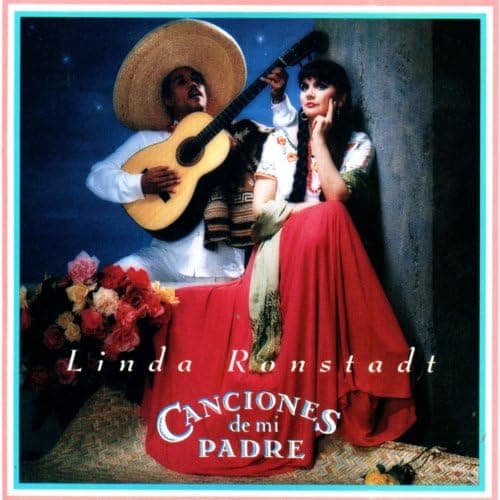
Within the rich tapestry of her musical journey, Linda Ronstadt approached Por Un Amor not as a mere interpretation, but as a profound act of cultural and emotional immersion. Featured on her landmark album Canciones de Mi Padre, a record that became one of the best-selling non-English-language albums in American history, the song stands as a pivotal moment in her career. Rather than chasing contemporary chart success, Ronstadt turned inward, honoring her Mexican heritage and, in doing so, reshaped the boundaries of mainstream American music.
Por Un Amor, a traditional ranchera often associated with the great voices of Mexican music, finds new life in Ronstadt’s hands. Her rendition does not attempt to outshine its lineage; instead, it leans into reverence. Backed by masterful mariachi arrangements, her voice rises with a clarity that feels both disciplined and deeply vulnerable. There is no theatrical excess here. Every note is placed with intention, every phrase carrying the weight of generations who have sung this lament before her.
At its core, Por Un Amor is a study in emotional surrender. The lyrics speak of a love so overwhelming that it borders on self-erasure, where devotion becomes indistinguishable from pain. This is not the fleeting heartbreak of popular radio ballads. It is something older, almost archetypal. Love, in this context, is not a choice but a condition, something endured as much as cherished. Ronstadt understands this implicitly. She does not perform the song as an outsider interpreting foreign sentiment; she inhabits it, allowing the language and its emotional cadences to guide her expression.
What makes her interpretation particularly striking is the balance between technical precision and emotional release. Ronstadt was already known for her versatility, moving effortlessly between rock, country, and pop. Yet in Canciones de Mi Padre, and especially in Por Un Amor, she strips away the familiar markers of her crossover success. What remains is something far more intimate. Her voice carries a restrained intensity, suggesting that the deepest pain does not always need to be shouted. It can exist in the quiet control of a sustained note, in the slight tremble at the edge of a phrase.
The cultural resonance of this recording cannot be overstated. At a time when English-language dominance in American music seemed absolute, Linda Ronstadt made a deliberate and deeply personal artistic statement. Por Un Amor became part of a larger narrative, one that reintroduced traditional Mexican music to a broad audience without dilution or compromise. It invited listeners not just to hear the song, but to feel the history embedded within it.
Listening now, decades removed from its release, Por Un Amor endures as more than a performance. It is a moment of alignment between artist and ancestry, between voice and memory. Ronstadt does not simply sing about love’s cost. She allows the listener to sit within it, to understand that some emotions are too vast for resolution, and too human to ever truly fade.