
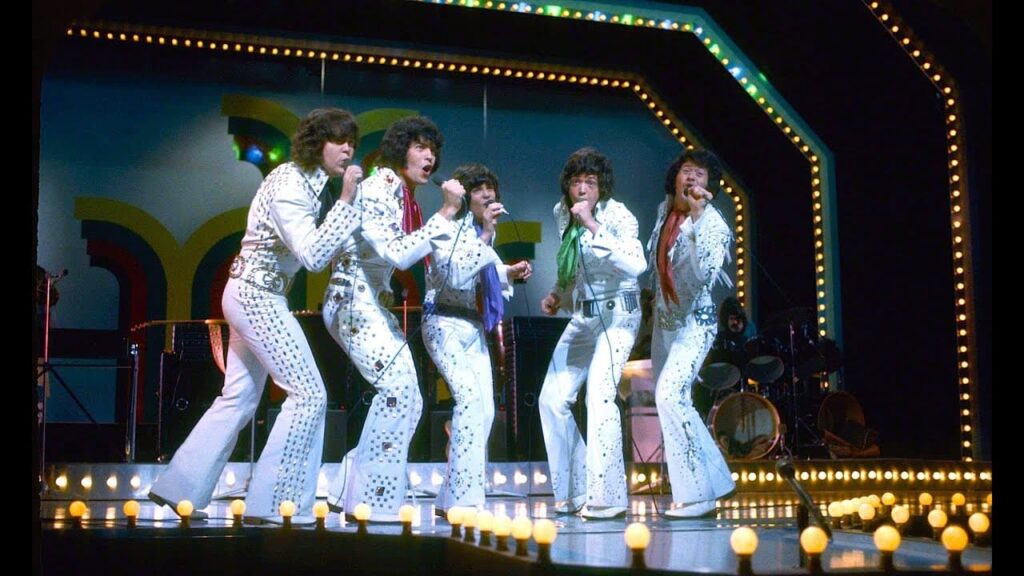
A family bound by harmony and ambition turning youthful energy into a spectacle of devotion, discipline, and pure pop momentum
When The Osmonds appeared in The Osmonds In Concert, later issued as part of The FirsTVision Release, the group stood at the height of a phenomenon that had already transformed them from family entertainers into international pop sensations. By the early 1970s, albums such as Crazy Horses and a succession of hit singles had propelled the brothers into massive commercial success across both the United States and the United Kingdom. Yet live performance remained central to their identity. Unlike many studio-crafted teen acts of the era, The Osmonds built their reputation through relentless touring, tight musicianship, and an unmistakable sense of familial unity that audiences found impossible to resist.
What immediately defines this concert experience is momentum. The performance moves with remarkable speed and enthusiasm, reflecting a group fully aware of the emotional electricity they generated in front of live audiences. Screaming crowds, synchronized movement, rapid transitions between songs, and a near-constant sense of exhilaration transform the concert into something larger than a conventional pop show. It becomes a cultural event, capturing a specific moment when youthful optimism and showmanship converged perfectly.
Yet beneath the excitement lies something more disciplined than casual observers often recognized. The Osmonds were not merely performers riding the wave of popularity. They were highly trained musicians whose harmonies, arrangements, and stage coordination required enormous precision. The live setting reveals this clearly. Even amid the frenzy of audience reaction, the group maintains impressive musical control, balancing vocal interplay with instrumental energy in a way that few family acts could sustain at such intensity.
Vocally, the concert highlights the distinctive dynamic that made The Osmonds unique. Their harmonies carry both polish and warmth, rooted in years of singing together long before fame arrived. This shared instinct creates a cohesion that feels organic rather than manufactured. Individual personalities emerge throughout the performance, yet the collective identity remains stronger than any single member. The result is music driven not by ego, but by ensemble energy.
Musically, the set reflects the transitional nature of early 1970s pop culture itself. Elements of bubblegum pop, rock, soul, and even harder-edged experimentation coexist within the performance. Songs from the Crazy Horses era, in particular, reveal a group attempting to move beyond teen-idol expectations toward a heavier, more contemporary sound. In concert, these ambitions become even more apparent. The guitars hit harder, the rhythms feel more aggressive, and the overall presentation carries a confidence that studio recordings sometimes softened.
The FirsTVision Release also preserves something increasingly rare in modern entertainment. A period when concert films served not only as documentation, but as emotional extensions of fandom itself. Watching The Osmonds live is not simply about hearing songs performed. It is about witnessing the reciprocal energy between artist and audience. The screams, the emotional reactions, the sheer sense of collective excitement all become part of the performance.
Within the broader history of popular music, the concert stands as a reminder that acts often dismissed as “teen sensations” can possess far deeper musical substance than critics initially allow. The Osmonds balanced accessibility with craftsmanship, creating performances rooted equally in entertainment and discipline.
And as the concert surges forward with harmonies, flashing lights, and relentless audience devotion, one truth becomes unmistakable. The Osmonds were never simply a family singing pop songs together. They were a fully realized live phenomenon, powered by ambition, unity, and the rare chemistry that only shared history can create.