
A Man Watching Desire Pass By at the Speed of a City Street
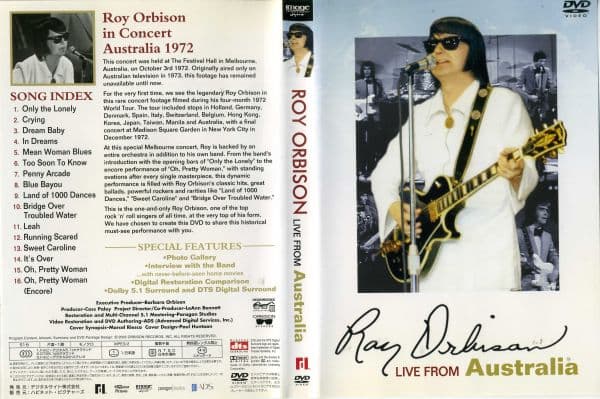
When Roy Orbison stepped onto Australian stages in 1972 to perform “Oh, Pretty Woman”, he was no longer merely the shy Texas songwriter who had stunned the world in the mid 1960s. He had become something more haunted, more weathered, and in many ways more powerful. The song itself had already carved its place into popular music history years earlier, reaching No. 1 on the Billboard Hot 100 in 1964 and anchoring the monumental success of the album Oh, Pretty Woman. Yet the 1972 live performances carried a different gravity altogether. What audiences witnessed in Australia was not simply a hit single recreated onstage. They witnessed a survivor revisiting the song that once made the entire world stop and turn its head.
By 1972, Orbison’s voice had already become mythic. Few singers in rock and roll history possessed such an unusual emotional architecture. Elvis Presley admired him deeply. Bruce Springsteen would later describe him as singing with “unearthly” beauty. But “Oh, Pretty Woman” remains fascinating precisely because it stands apart from the loneliness usually associated with Orbison’s catalogue. This was not the devastating heartbreak of “Crying” or the operatic despair of “Running Scared.” Instead, it moved with swagger, rhythm, and masculine uncertainty hidden beneath confidence.
The song reportedly emerged from an ordinary domestic moment. Orbison’s wife Claudette was leaving the house when he jokingly asked whether she had enough money for shopping. His songwriting partner Bill Dees answered the question musically, and within minutes the foundation of “Oh, Pretty Woman” had begun to take shape. Like many immortal songs, its genius rested in simplicity. The famous guitar riff enters like the sound of heels striking pavement. Immediate. Recognizable. Dangerous. Before Orbison even sings a full sentence, the listener already understands the atmosphere: a man frozen by beauty in the middle of everyday life.
Yet beneath its surface charm lies something more vulnerable. Orbison never sang flirtation like a rock star overflowing with ego. He sang like a lonely observer watching life move just beyond his reach. That is the emotional contradiction that gives “Oh, Pretty Woman” its lasting depth. The narrator calls out confidently, but there is trembling inside the performance. Even the line “don’t walk on by” feels less like seduction and more like pleading. Orbison understood longing better than almost anyone of his era, and even in a playful hit, longing still leaked through the cracks.
The 1972 Australian live rendition deepens that feeling considerably. Time had changed Orbison’s voice by then. It had grown darker, heavier, carrying traces of exhaustion and experience. Onstage, he stood almost motionless behind those famous dark glasses, allowing the voice itself to carry the drama. Unlike many performers of the era, Orbison did not rely on theatrical movement. His stillness became part of the performance. The audience leaned toward him because the emotion did not come from spectacle. It came from restraint.
Listening now, decades later, the performance captures a remarkable intersection in Orbison’s life. The roaring optimism of early rock and roll had faded. The cultural landscape was changing rapidly. Yet when Orbison sang “Oh, Pretty Woman” in Australia, the song still sounded eternal. Not because it celebrated beauty, but because it captured that universally human instant when desire interrupts ordinary existence and leaves someone emotionally exposed.
That is why the record survives beyond nostalgia. Beneath the rhythm and applause stands a man singing about distance, fascination, and the fear that beauty may disappear before you ever reach it. Few artists could transform a passing glance into something this timeless. Roy Orbison could.