
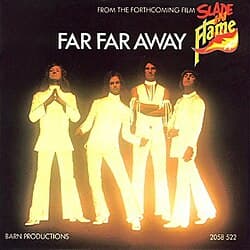
A Song About Distance That Had Nothing to Do With Miles
When Slade released “Far Far Away” in 1974 as the lead single from the album Slade in Flame, the band stood at a strange crossroads between superstardom and exhaustion. The song climbed into the UK Top 5 and became one of the group’s biggest international successes, yet beneath its bright acoustic shimmer lived something far more reflective than the rowdy stomp anthems that had made Slade famous. For audiences expecting another glam-rock celebration built for football terraces and pub singalongs, “Far Far Away” arrived like a quiet confession disguised as a hit single.
By 1974, Slade were no longer simply the loudest band in Britain. They were veterans of relentless touring, chart pressure, and the strange loneliness that comes with mass recognition. That emotional fatigue hangs over “Far Far Away” like winter fog. Written primarily by bassist Jim Lea and vocalist Noddy Holder, the song steps away from the stomping aggression of earlier hits and instead leans into melancholy acoustics, layered harmonies, and a wandering emotional ache that feels almost cinematic.
The genius of the record lies in how deceptively gentle it sounds. On the surface, it is melodic and accessible, even warm. But underneath, the lyrics speak to alienation, emotional disconnection, and the growing realization that fame cannot protect anyone from isolation. The recurring image of being “far far away” functions less as geography and more as spiritual displacement. It is the sound of a man surrounded by people yet emotionally unreachable. In many ways, the song captures the psychological cost of living constantly in transit, where hotel rooms blur together and applause begins to lose its meaning.
That emotional duality became central to Slade in Flame, an album tied to the band’s ambitious and unexpectedly dark film project Flame. Rather than portraying rock stardom as glamorous fantasy, the film exposed the manipulation, exhaustion, and internal fractures inside the music industry. “Far Far Away” carried that same atmosphere. It sounded like a hit record, but emotionally it belonged to something more bruised and introspective.
Musically, the track revealed a side of Slade many critics had overlooked. Dave Hill’s restrained guitar work, Lea’s melodic sensitivity, and Holder’s remarkable vocal control transformed the song into something unusually vulnerable for a glam-era single. Holder does not shout this lyric into existence; he almost sighs it. That choice matters. The emotional power comes not from theatrical heartbreak but from weary acceptance. The narrator is not raging against loneliness. He has already learned how permanent it can feel.
Over time, “Far Far Away” has endured precisely because it ages so well emotionally. The glitter of early-70s glam rock inevitably faded, but the song’s central feeling never did. Its themes of emotional exile, fading certainty, and searching for connection remain painfully recognizable decades later. Even listeners unfamiliar with Slade’s louder catalog often find themselves unexpectedly moved by this recording because it speaks in a quieter language than most rock singles of its era.
Watching the 1974 TopPop performance today only deepens that feeling. The platform boots, bright colors, and television spectacle belong to glam rock’s golden age, yet the song itself already sounds like it is looking back at that era from a distance. That tension is what gives “Far Far Away” its lasting power. It is not merely a song about being somewhere else. It is about realizing that success, noise, and movement cannot always bring a person any closer to home.