
A Voice Standing Perfectly Still While the Entire World Around It Changed
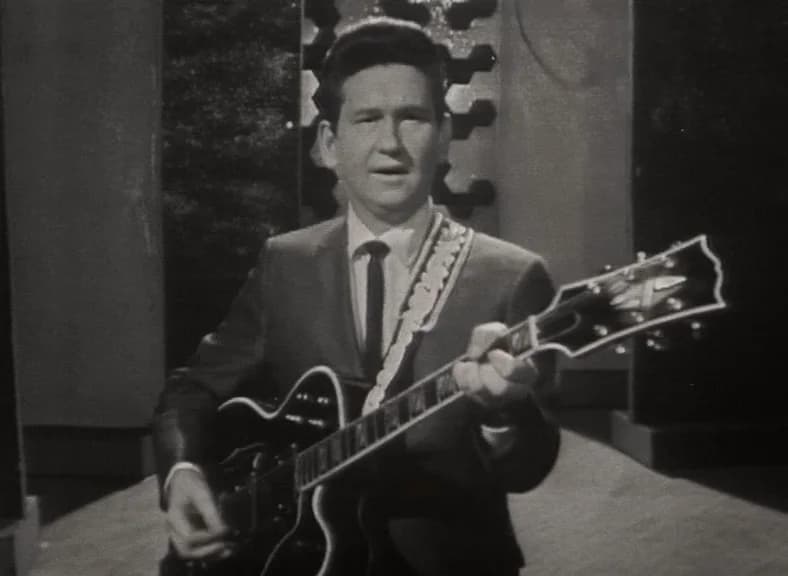
When Roy Orbison appeared on the Australian television program Sing Sing Sing in 1964 to perform “Crying,” he was already carrying the weight of one of the most emotionally devastating records of the early rock era. Originally released in 1961 from the album Crying, the song had climbed to No. 2 on the Billboard Hot 100 and further established Orbison as something far more unusual than a conventional rock-and-roll star. While many artists of the period relied on movement, swagger, or youthful rebellion, Orbison stood nearly motionless beneath the studio lights, dressed in black, hidden behind dark glasses, and sang as though he were revealing something too private for ordinary conversation.
That 1964 Sing Sing Sing appearance now feels almost ghostly in retrospect. The surviving footage captures a performer who understood that silence could be as powerful as sound. Orbison never rushed a lyric. He allowed each phrase to hover in the air like a confession left unfinished. In an age increasingly dominated by frantic television performances and the explosion of Beatlemania, his stillness became radical.
What makes “Crying” endure is not merely heartbreak itself, but humiliation. The song is built around emotional collapse witnessed in public. Orbison does not present himself as proud, defiant, or masculine in the traditional pop sense. Instead, he becomes painfully human. The narrator sees a former lover, attempts to maintain composure, then realizes too late that his emotions have betrayed him completely. That single admission, “I was all right for a while,” remains one of the most devastating openings in American popular music because it carries the exhausted dignity of someone already defeated before the song even begins.
Musically, the recording moves with almost operatic architecture. Orbison and songwriter Joe Melson constructed the song not around a catchy hook, but around escalation. Each verse climbs emotionally and vocally until Orbison’s voice finally breaks into that towering falsetto cry that feels less sung than released. By the early 1960s, few voices in rock music possessed that level of dramatic range. He could move from restraint to anguish in a matter of seconds without sounding theatrical or artificial. That was the miracle of Orbison. He transformed vulnerability into grandeur.
The Sing Sing Sing performance is especially fascinating because television often diminishes emotional subtlety. Orbison somehow achieved the opposite. The close-up camera work intensified the loneliness already embedded in the song. His expression barely changed, yet the emotional pressure kept building line by line. There is no need for spectacle because the performance itself becomes psychological theater.
More than sixty years later, those black-and-white broadcasts preserve something modern music television rarely captures anymore: patience. Orbison trusted the audience enough to stand still and simply sing the truth. And in that moment, on a modest Australian stage in 1964, “Crying” stopped sounding like a pop hit and began to resemble something timeless, a wounded man quietly trying to survive the memory of love.