
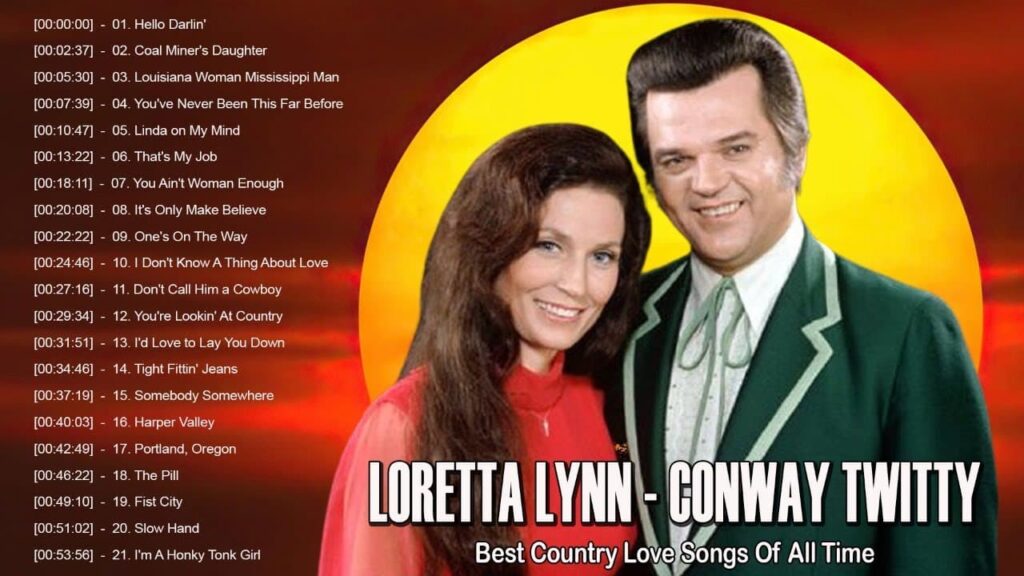
WHEN TWO LONELY VOICES MET, COUNTRY MUSIC FOUND ITS MOST HUMAN CONVERSATION
There are duet records that succeed because the harmonies are polished, and then there are duet records that endure because they sound painfully, beautifully real. The greatest hits gathered under the banner of Loretta Lynn & Conway Twitty were not merely successful country singles; they became emotional documents of working-class America, filled with desire, regret, temptation, reconciliation, and hard-earned tenderness. Beginning with the breakthrough success of “After the Fire Is Gone” from the album We Only Make Believe, the duo launched one of the defining partnerships in country music history, earning five No. 1 country hits and a remarkable run of Top 10 singles throughout the 1970s.
What made Loretta Lynn and Conway Twitty extraordinary together was never simple chemistry. It was contrast. Loretta carried the plainspoken honesty of Appalachian storytelling, her voice sharp enough to cut through pride yet warm enough to comfort heartbreak. Conway, meanwhile, brought velvet phrasing and a quiet masculine vulnerability that few male country singers of the era dared to reveal so openly. When those voices collided, the songs stopped sounding like performances. They became conversations overheard through thin apartment walls at midnight.
The genius of their catalog lies in how fearlessly it approached adult emotion. Country music had long spoken about broken hearts, but Conway and Loretta specialized in the emotional gray areas respectable society preferred not to discuss. “After the Fire Is Gone” explored longing after passion has faded inside marriage. “Lead Me On” turned infidelity into something sorrowful rather than sensational. “Louisiana Woman, Mississippi Man” carried flirtation and tension with the pace of a runaway riverboat. And perhaps most devastating of all, “As Soon as I Hang Up the Phone” transformed an ordinary telephone call into one of the loneliest moments ever captured on vinyl. The recording itself famously separated the singers physically, with Conway delivering his spoken lines through a phone connection while Loretta sang in the booth, giving the performance an eerie emotional realism.
What listeners still respond to decades later is the absence of theatrical excess. These songs never begged for sympathy. They simply told the truth. The arrangements, often guided by legendary producer Owen Bradley, avoided clutter and allowed silence, hesitation, and phrasing to carry emotional weight. Even the pauses between lines mattered. In an era increasingly moving toward polished crossover production, Conway and Loretta preserved something deeply Southern and deeply human: the sound of two adults trying to navigate love without illusions.
Their greatest hits playlist now feels less like a compilation and more like a time capsule from country music’s emotional golden age. These records came from jukeboxes in roadside diners, from dashboard radios on lonely highways, from couples dancing carefully across worn hardwood floors after midnight. They belonged to ordinary people who recognized themselves in every compromise and confession.
That is why the music survives. Not because it was fashionable. Not because it dominated charts. But because Loretta Lynn and Conway Twitty understood a timeless truth about country music: the saddest songs are often the most honest, and honesty never grows old.