
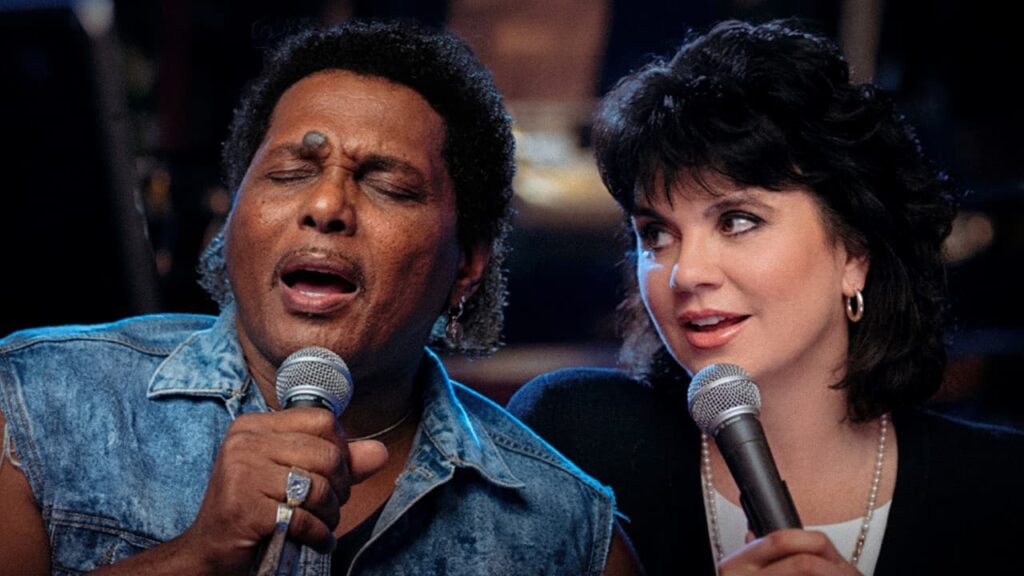
A love this devoted does not ask for perfection, only the chance to carry another soul through the storm.
When Linda Ronstadt and Aaron Neville recorded “When Something Is Wrong With My Baby” for the 1989 album Cry Like a Rainstorm, Howl Like the Wind, they were not reviving an old soul standard merely for nostalgia’s sake. They were resurrecting a philosophy of love that modern pop had nearly forgotten: the idea that true devotion means feeling another person’s suffering as if it were your own. Released during a period when polished production and spectacle often dominated adult contemporary radio, the duet became one of the emotional centerpieces of the album, which itself achieved major commercial success and earned multi platinum recognition. The song, originally made famous by Sam & Dave in the 1960s, found a second life through two voices that could not have been more different in texture, yet more spiritually aligned in feeling.
The genius of this recording lies in restraint. Linda Ronstadt had long established herself as one of the most versatile vocalists in American music, moving effortlessly between rock, country, mariachi, standards, and pop. Aaron Neville, meanwhile, carried one of the most instantly recognizable voices in soul music, fragile and trembling on the surface, yet anchored by extraordinary emotional control. Together, they approached the song not as performers trying to overpower each other, but as witnesses standing inside the same heartbreak.
The arrangement avoids unnecessary excess. The orchestra swells patiently rather than dramatically, allowing silence and pacing to do much of the emotional work. Every pause feels intentional. Every held note sounds lived in. Neville’s quivering tenor brings vulnerability, while Ronstadt answers with grounded warmth and quiet reassurance. They do not sing at each other. They sing beside each other, as though protecting the same wounded memory.
Lyrically, “When Something Is Wrong With My Baby” remains devastating because of its simplicity. There are no elaborate metaphors or poetic disguises. The song speaks in direct emotional language, and that honesty becomes its power. The central idea is almost frightening in its intimacy: when one person hurts, the other physically feels the pain too. Not sympathy. Not pity. Shared suffering. The song understands love as emotional interdependence, something sacred and dangerous at once.
What makes this version endure is the maturity both artists brought to the material. By the late 1980s, listeners no longer heard the song as youthful romantic idealism. In the hands of Ronstadt and Neville, it became something older and wiser. Their voices carry exhaustion, survival, tenderness, and hard earned compassion. The performance sounds less like a declaration and more like a vow that has already been tested by time.
The official music video deepens that emotional atmosphere with understated elegance. There is no elaborate narrative competing for attention. Instead, the focus remains almost entirely on expression and connection, allowing viewers to study the subtle communication between the singers. In an era increasingly driven by visual excess, this simplicity felt remarkably human.
Decades later, the recording still stands as one of the finest vocal duets of its era because it refuses to chase trend or fashion. It trusts emotion completely. And in doing so, Linda Ronstadt and Aaron Neville transformed an already beloved soul classic into something timeless: a portrait of love where loyalty is measured not by words, but by the willingness to hurt together.