
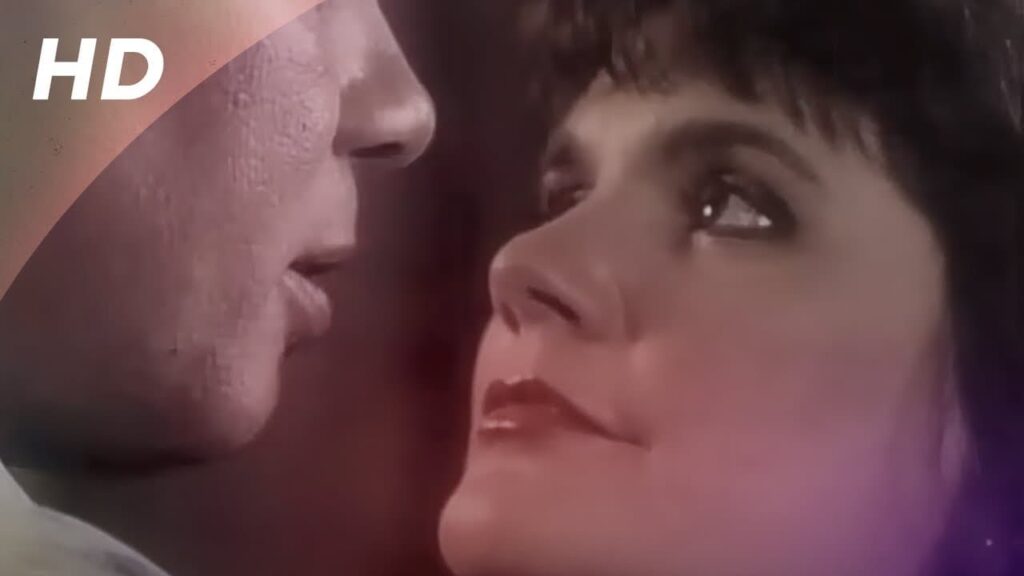
A fragile confession where two voices meet in the quiet uncertainty of love
When Linda Ronstadt released Don’t Know Much as a duet with Aaron Neville in 1989, it became one of the defining moments of her late-career renaissance, rising to No. 2 on the Billboard Hot 100 and anchoring the acclaimed album Cry Like a Rainstorm, Howl Like the Wind. In an era increasingly driven by polished production and bold spectacle, this recording stood apart through restraint, intimacy, and an almost disarming emotional honesty.
At its core, Don’t Know Much is built on a paradox. It is a love song that does not rely on certainty, but rather on the admission of ignorance. The opening lines dismantle the traditional posture of romantic confidence. Instead of grand declarations, the singers confess what they do not know, about science, history, or even the complexities of the world around them. Yet within that vulnerability lies the song’s central truth: love does not require mastery of facts, only sincerity of feeling.
The pairing of Linda Ronstadt and Aaron Neville is not merely a duet in the conventional sense. It is a study in contrast and complement. Ronstadt’s voice, rich and grounded, carries a quiet authority shaped by years of navigating genres from rock to standards. Neville, by contrast, delivers his lines with a trembling, almost ethereal falsetto that feels suspended in air. When their voices intertwine, the effect is not overpowering but deeply human, as though two separate emotional worlds have found a fragile equilibrium.
The arrangement reinforces this delicate balance. Orchestral elements sweep gently beneath the vocals, never intruding, always supporting. There is a sense of space in the recording, a deliberate avoidance of excess that allows each phrase to resonate fully. This was a hallmark of the production approach on Cry Like a Rainstorm, Howl Like the Wind, where clarity and emotional nuance were prioritized over density.
Lyrically, the song operates as a quiet rebellion against the idea that love must be justified through logic or explained through intellect. The repeated refrain becomes almost philosophical in its simplicity. Not knowing becomes a form of knowing. The absence of answers becomes, paradoxically, the answer itself. This thematic subtlety is what elevates Don’t Know Much beyond the framework of a typical pop ballad.
There is also a sense of maturity embedded in the performance. By 1989, Linda Ronstadt was no longer the restless voice of the 1970s rock scene. Her artistry had evolved into something more reflective, more deliberate. This song captures that evolution perfectly. It is not about the urgency of young love, but about its endurance, its quiet persistence despite uncertainty.
Over time, Don’t Know Much has endured as a testament to the power of understatement. In a landscape often crowded with declarations, it reminds us that the most profound emotional truths are sometimes spoken in the softest tones. Two voices, admitting what they do not understand, manage to articulate something timeless: that love, in its purest form, asks not for certainty, but for presence.