
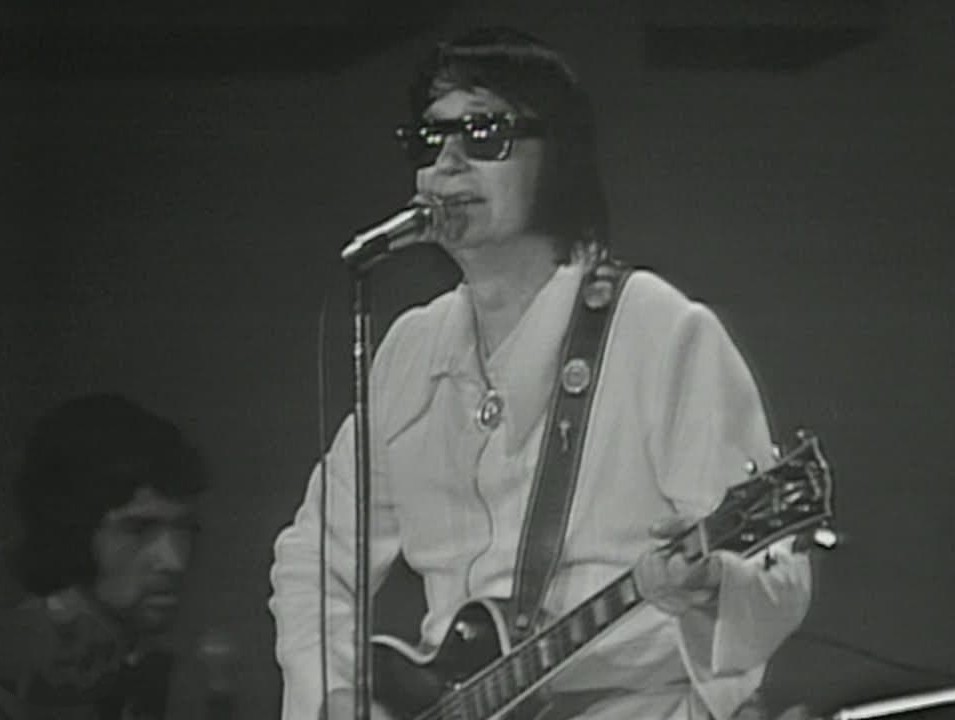
A Love Song About the Exact Moment the Heart Finally Accepts Defeat
By the time Roy Orbison stood before an Australian audience in 1972 to perform “It’s Over”, the song had already become one of the defining heartbreak records of the 1960s. Originally released in 1964 and later included on More of Roy Orbison’s Greatest Hits, the single climbed to No. 1 in the United Kingdom and reached No. 9 on the American Billboard chart during the height of the British Invasion, a period when very few American voices could still command that kind of emotional authority. Yet hearing the song live nearly a decade later reveals something even more fascinating than its chart success. It reveals an artist revisiting his own sorrow with deeper scars, greater restraint, and a voice that somehow sounded even lonelier with age.
There are breakup songs that plead. There are breakup songs that accuse. “It’s Over” does neither. That is what makes it so devastating.
Orbison and songwriter Bill Dees constructed the piece almost like a miniature opera. The melody rises slowly, cautiously, as if the narrator himself cannot quite bear to say the words aloud. Then comes the famous emotional climb, that towering Orbison crescendo where grief stops whispering and finally erupts into acceptance. Even in the studio recording, the arrangement feels cinematic. Strings swell. Drums march forward with quiet inevitability. The entire composition moves like someone walking toward a door they know will close forever behind them.
But the 1972 Australian performance carries a different emotional temperature.
By then, Roy Orbison was no longer merely the impeccably dressed hitmaker from Monument Records. He was a man who had already endured profound personal tragedy and professional upheaval. That history lingers in the live performance without ever being spoken aloud. His delivery becomes less theatrical and more haunted. The high notes are still there, astonishingly pure, but they arrive with the weight of lived experience rather than youthful anguish. When he sings the title phrase, it no longer sounds like disbelief. It sounds like exhausted recognition.
That distinction matters.
Many singers perform heartbreak as spectacle. Orbison performed it as truth. He understood that the most painful endings rarely arrive with screaming arguments or shattered glass. Often they arrive quietly, after the final attempt at hope has already failed. “It’s Over” captures that precise emotional moment with frightening clarity. The relationship is gone long before the narrator says the words. The song itself becomes an autopsy of love rather than the death itself.
Part of Orbison’s enduring power came from how dramatically he differed from other male stars of the era. In a decade obsessed with swagger, rebellion, and cool detachment, he sang with naked vulnerability. His voice trembled openly. His characters cried openly. He made loneliness sound grand rather than weak. That honesty helped songs like “It’s Over” survive long after trends changed and radio formats evolved.
The Australian performance also reminds listeners of another often overlooked quality in Orbison’s artistry: discipline. He never oversang the pain. Even at the emotional peak, there is control in every phrase. He understood that heartbreak becomes more believable when delivered with restraint. That balance between operatic intensity and emotional precision became one of his signatures, influencing generations of singers who followed.
More than sixty years after its release, “It’s Over” still feels startlingly modern because the emotional wound at its center never ages. People continue to recognize themselves inside it. Not in the dramatic collapse of romance, but in the terrible stillness that comes afterward, when acceptance finally arrives and there is nothing left to say except the truth.