
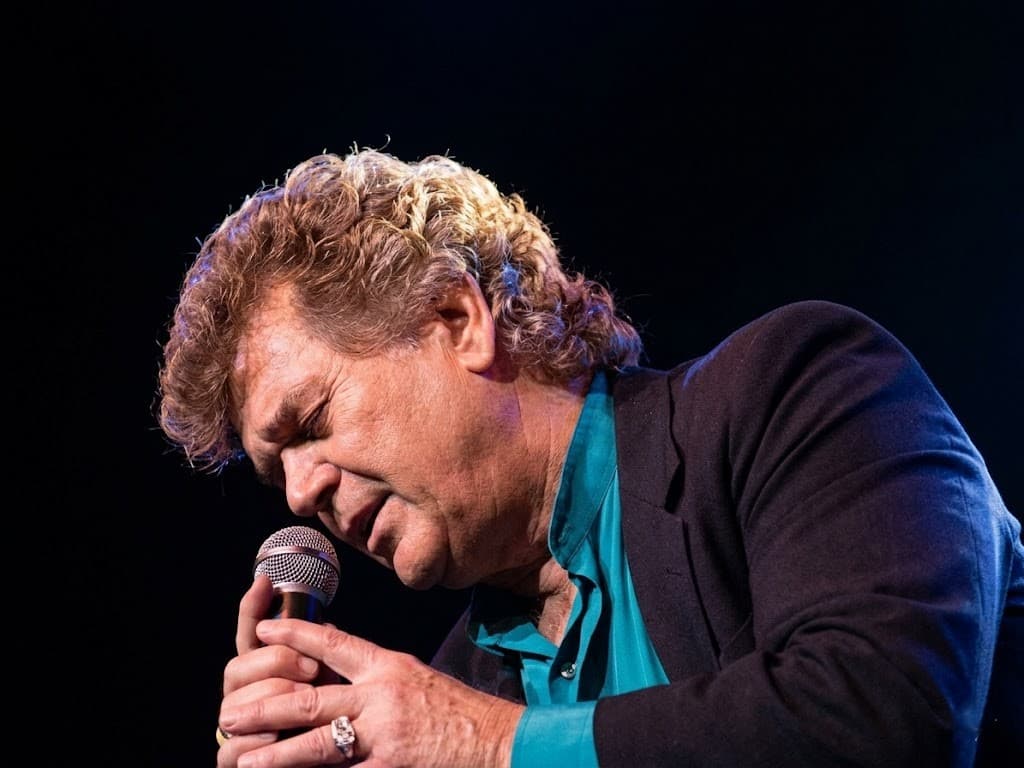
A Voice Built for Heartbreak Never Sounded More Human Than It Did on Stage
By the time Conway Twitty entered the era captured in 3 In 1 Concert Classics – Live Performances, he was no longer merely a country star chasing radio success. He was already a living institution of American music, a man who had carried rockabilly swagger into the aching emotional terrain of country music and emerged with one of the most recognizable voices ever pressed onto vinyl. Collections built around Twitty’s live performances arrived after decades of commercial dominance that included more than 40 No. 1 country hits, while albums such as Southern Comfort, Dream Maker, and his celebrated greatest-hits collections consistently charted throughout the late 1970s and early 1980s. But statistics alone never explained why audiences stayed loyal to him for so long. The answer lived in the stage performances themselves.
What these recordings preserve is not perfection in the polished studio sense. They preserve presence. That deep, slow-moving voice of Twitty’s always sounded as though it had already lived through the consequences of every lyric before he ever sang it. In concert, the emotional distance between performer and audience disappeared almost immediately. He did not sing about heartbreak as theatrical tragedy. He sang about it like a private confession reluctantly shared beneath dim lights and cigarette smoke.
That is what makes these live collections so enduring. Songs like Hello Darlin’, To See an Angel Cry, and You’ve Never Been This Far Before were already familiar to audiences long before these performances were recorded. Yet Twitty approached them onstage not as museum pieces, but as living conversations. He stretched pauses. He leaned into silence. Sometimes the crowd reaction became part of the rhythm itself. Few country singers understood anticipation the way Conway Twitty did. He knew that restraint could be more devastating than volume.
There is also something deeply revealing about hearing Twitty outside the carefully controlled architecture of Nashville studio production. His live performances expose how dependent country music once was on personality rather than spectacle. Modern audiences often associate arena performance with visual excess, but Twitty belonged to a generation where charisma alone could command a room for ninety minutes. The power came from phrasing, timing, and emotional credibility. Even when backed by a full band, his voice remained the gravitational center.
The emotional themes running through these performances are unmistakably adult. Twitty rarely dealt in youthful fantasy. His songs inhabited marriages under strain, lonely motel rooms, fading intimacy, temptation, regret, and the quiet exhaustion of ordinary people trying to hold love together one more night. That maturity gave his catalog unusual durability. Younger listeners may first hear romance in these songs, but older listeners hear compromise, memory, and resignation hidden beneath the tenderness.
Listening now, decades later, these performances feel less like archival material and more like evidence of a disappearing tradition in American music. Conway Twitty represented an era when country singers were expected to sound believable above all else. No irony. No distance. No performance persona standing between the man and the lyric. Just a voice carrying the full weight of experience into every line. And onstage, perhaps more than anywhere else, Conway Twitty made listeners believe every word.