
A SONG THAT SOUNDED LIKE THE FUTURE WHILE MOURNING THE END OF INNOCENCE
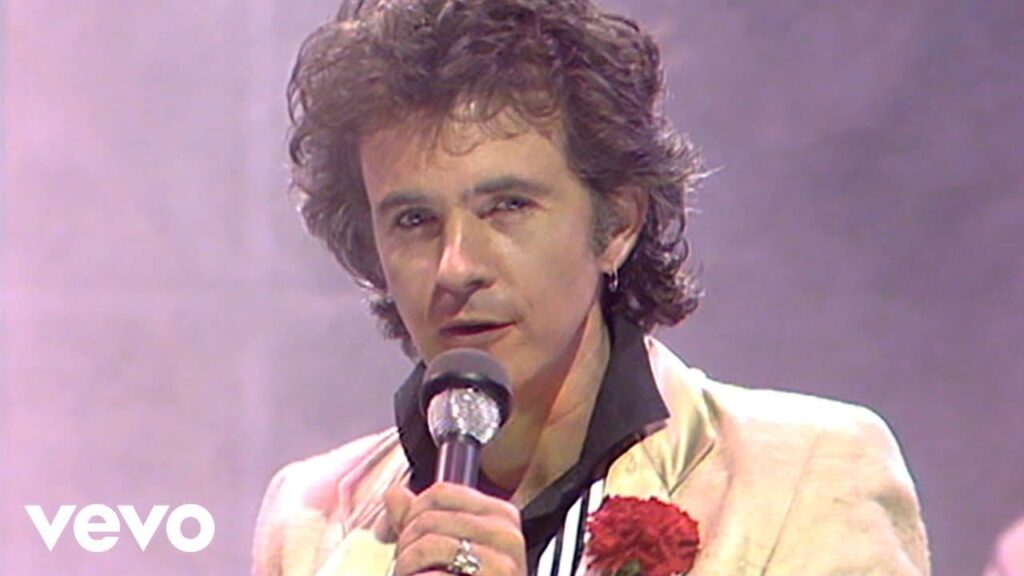
When David Essex released “Rock On” in 1973, the record did not arrive like a conventional glam-rock anthem. It crept in through the shadows. Built around a hypnotic bass pulse, sparse percussion, and Essex’s half-whispered vocal delivery, the song climbed to No. 3 on the UK Singles Chart and later became a Top 5 hit in the United States, appearing on his debut album “Rock On.” At a moment when rock music often celebrated excess and theatrical spectacle, Essex offered something stranger and more intimate: a song that sounded detached from time itself. The 1982 live showcase performance only deepened that mystery, revealing how the song had matured alongside the man who created it.
What made “Rock On” so arresting was not merely its chart success, but its atmosphere. The track carried the sensation of hearing a late-night transmission from somewhere beyond the neon glow of the early seventies. While many glam-era hits exploded with flamboyance, Essex stripped the arrangement down to something skeletal and haunting. The famous spoken refrain, delivered with cool restraint rather than aggression, became less a chorus and more a private confession drifting through static radio waves.
Beneath the song’s deceptively simple structure lies a portrait of youth caught between rebellion and disillusionment. The lyrics move through fragments of American pop culture, teenage longing, fast cars, movie idols, and restless desire, yet none of it feels celebratory. Essex sings as though he is observing the collapse of a dream in real time. The phrase “rock on” itself becomes layered with irony. It is not a triumphant command. It feels weary, almost defensive, as though the narrator is trying to convince himself that the spirit of rock and youth can survive the erosion of innocence.
That emotional ambiguity is precisely why the song endured. David Essex was never simply performing coolness; he was documenting vulnerability beneath the performance. His vocal phrasing on “Rock On” is crucial to its emotional weight. He rarely pushes the melody toward explosive release. Instead, he pulls inward, creating tension through restraint. There is loneliness in the spaces between the lines. Even at its most rhythmic, the song feels isolated, as though surrounded by empty midnight streets.
By the time of the 1982 showcase performance, the song had transformed again. Essex no longer sounded like the young man cautiously navigating fame and uncertainty. The years added gravity to the performance. Live, “Rock On” became less about youthful mystique and more about survival. The detached cool of the original recording gave way to something reflective, almost haunted. Audiences were no longer hearing a rising star experimenting with identity; they were witnessing an artist revisiting the emotional landscape that first defined him.
Part of the enduring power of “Rock On” lies in how impossible it is to fully place within one genre or era. It carries traces of glam rock, spoken-word experimentation, cinematic noir, and minimalist funk, yet it belongs completely to none of them. That refusal to settle into easy categorization allowed the song to age differently from many of its contemporaries. It never became trapped inside nostalgia because it always sounded slightly alien to begin with.
More than fifty years later, the song still feels like a lonely radio signal echoing through the darkness. In a decade obsessed with spectacle, David Essex created something quieter and ultimately more enduring: a meditation on youth, fame, and emotional distance disguised as a rock single. The pulse of “Rock On” continues not because it demands attention, but because it understands something timeless about the fragile theater of being young and trying not to disappear.