
A Cry for Hope in a Fractured America Became Elvis Presley’s Most Human Performance
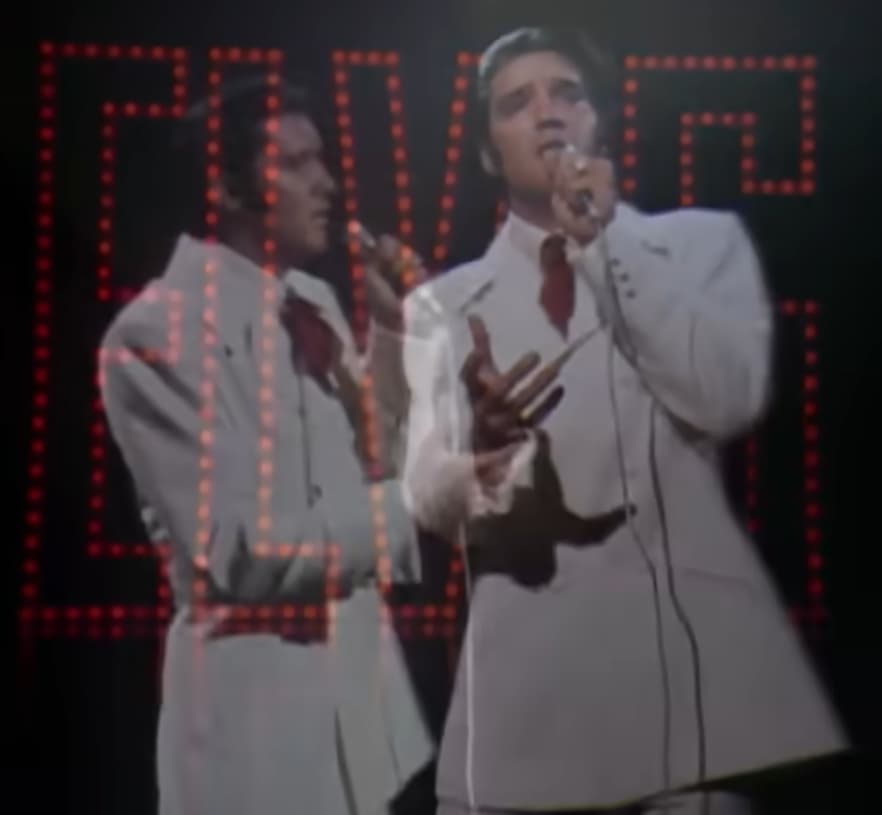
When Elvis Presley stepped beneath the glaring lights of NBC’s 1968 television special and delivered “If I Can Dream,” he was no longer merely the charismatic architect of rock and roll nostalgia. He was something far rarer: a wounded American voice searching for moral clarity in a turbulent age. Released in November 1968 following the broadcast of the legendary ’68 Comeback Special, the song climbed to No. 12 on the Billboard Hot 100 and later appeared on the album Elvis (commonly associated with the soundtrack material from the special). For an artist many critics had prematurely dismissed as trapped in Hollywood musicals and commercial routine, the performance marked a startling artistic resurrection.
The timing mattered. America in 1968 was exhausted by violence, division, and grief. The assassinations of Dr. Martin Luther King Jr. and Robert F. Kennedy had left the country emotionally hollowed out, while protests and social unrest dominated headlines. Into that atmosphere came “If I Can Dream,” written by Walter Earl Brown specifically for Presley after producers sought an ending more spiritually urgent than a conventional Christmas song. Brown reportedly drew direct inspiration from King’s speeches, and the song’s emotional architecture bears that unmistakable imprint: hope standing defiantly against despair.
Yet what transformed the composition into something unforgettable was not merely its lyrical message—it was the visible vulnerability in Elvis Presley’s performance. By 1968, Presley had spent much of the decade isolated within formulaic film productions that diluted the danger and emotional spontaneity that once defined him. The Comeback Special shattered that confinement. Dressed in black leather, sweating under the stage lights, Presley sang as though he were trying to reclaim not just his career, but his own spirit.
The lyrics avoid cynicism entirely. “There must be lights burning brighter somewhere” is not written with the detached poetry of a folk protest anthem; it is direct, almost pleading. That simplicity became the song’s strength. Presley was never a technically analytical vocalist in the academic sense. His genius lived elsewhere—in emotional transmission. He could make yearning sound physical. On “If I Can Dream,” every rising phrase feels wrestled from deep internal conflict. The performance swells with gospel intensity, borrowing from the church-rooted emotional traditions that shaped him in Mississippi and Memphis long before fame arrived.
Musically, the arrangement moves with cinematic grandeur: restrained piano passages building toward orchestral crescendos and soaring backing vocals. But the production never overwhelms the man at its center. Presley’s voice remains raw, urgent, and astonishingly alive. The final sustained notes are not polished perfection; they are emotionally frayed edges left deliberately exposed. That is precisely why the performance endures.
In retrospect, “If I Can Dream” occupies a singular place in Presley’s catalog. It was neither his biggest commercial hit nor his most revolutionary recording musically. Its power lies in what it represented. At a moment when popular culture increasingly fractured into political camps and generational conflict, Presley offered something deeply unfashionable yet profoundly sincere: belief. Not naïve optimism, but belief hard-earned through disappointment and exhaustion.
The performance also reintroduced Elvis Presley to a younger audience that had largely moved on to psychedelic rock, folk protest, and British invasion acts. Suddenly, he no longer looked like a relic from the 1950s. He looked timeless. The camera captured a man confronting the changing world in real time, and for perhaps the first time in years, audiences saw authenticity instead of myth.
More than half a century later, “If I Can Dream” remains one of the defining moments of televised music history because it transcends entertainment. It feels less like a performance than a public confession—an artist standing before a divided nation insisting, with trembling conviction, that hope itself was still worth singing about.