
A Song About Autumn Light Falling Across Lives Already Touched by Heartbreak
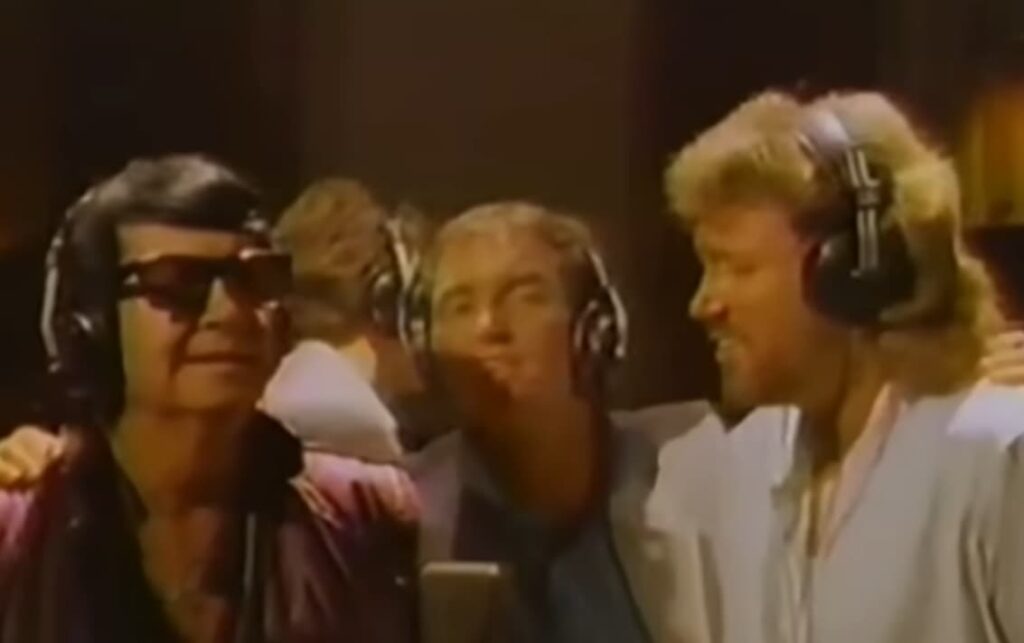
When The Gatlin Brothers, Roy Orbison, and Barry Gibb joined voices for “Indian Summer,” the result felt less like a commercial collaboration and more like three survivors of different musical worlds gathering around the same fading fire. Released on The Gatlin Brothers’ 1985 album Smile, the song never became a dominant chart phenomenon in the way many of their earlier country hits had, yet its quiet endurance has proven far more meaningful than chart arithmetic ever could. Written by Larry Gatlin and Barry Gibb, the recording arrived during a fascinating transitional period for all involved: the Gatlins were moving beyond their early-1980s commercial peak, Roy Orbison was approaching the late-career renaissance that would soon reintroduce him to a new generation, and Barry Gibb was navigating the changing musical climate that followed the immense disco era of the Bee Gees.
What makes “Indian Summer” extraordinary is the emotional intelligence embedded inside its restraint. The song does not plead. It does not explode into melodrama. Instead, it drifts through memory the way late autumn sunlight moves across an empty porch — beautiful precisely because it cannot last. The title itself carries enormous symbolic weight. An “Indian summer” is that brief return of warmth after the first chill of autumn, a final golden illusion before winter fully arrives. In the hands of lesser writers, the metaphor might have felt obvious. But here, it becomes something deeply human: a meditation on second chances that arrive too late, on tenderness rediscovered in lives already marked by disappointment.
The arrangement understands this emotional terrain perfectly. Roy Orbison’s voice, even in the mid-1980s, still carried that unmistakable operatic loneliness — a sound that seemed permanently suspended between yearning and dignity. Orbison never merely sang sadness; he monumentalized it. When his voice enters “Indian Summer,” the song suddenly acquires decades of emotional history. One hears echoes of “Crying,” “In Dreams,” and every solitary figure Orbison ever embodied. Meanwhile, Barry Gibb contributes not the glittering falsetto most associated with the Bee Gees, but a warmer, earthier presence that anchors the melody with understated melancholy. The Gatlins’ harmonies complete the atmosphere, adding a distinctly American pastoral texture — somewhere between country gospel and fading roadside nostalgia.
There is also an intriguing cultural collision inside the recording. Country music, classic pop, and orchestral rock balladry coexist without competing for dominance. The song feels suspended outside normal genre boundaries, which may explain why it continues to resonate quietly among devoted listeners decades later. It belongs to that rare category of recordings that mature with age. Younger audiences may admire it; older audiences understand it.
The lyric’s emotional architecture is built around impermanence. Every line seems aware that beauty often appears most vividly at the exact moment it begins disappearing. That awareness gives the song its haunting power. Unlike conventional love songs that promise forever, “Indian Summer” accepts fragility as part of love itself. The warmth matters because winter is coming. The memory matters because time refuses to stop.
Looking back now, the recording feels almost prophetic. Within a few years, Roy Orbison would experience one of popular music’s most moving late-career revivals through the Traveling Wilburys and Mystery Girl, before his sudden death in 1988 transformed his voice into something nearly mythic. Hearing him here — surrounded by collaborators who clearly understood the gravity and vulnerability he carried — is profoundly moving. “Indian Summer” stands not as a forgotten curiosity, but as a beautifully weathered document of artists confronting time, memory, and emotional survival with uncommon grace.